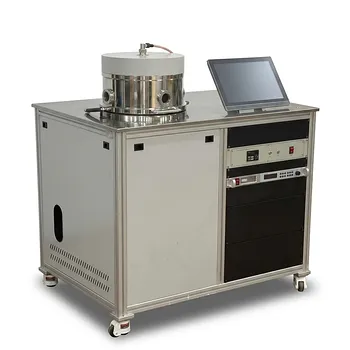
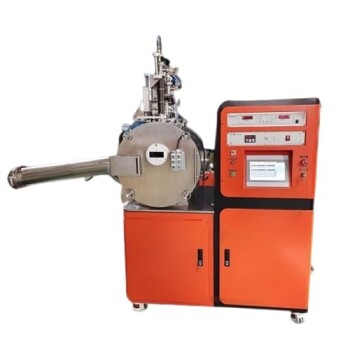
Plasma-Enhanced Chemical Vapor Deposition (PECVD) systems improve DLC coating performance by generating a high-concentration plasma environment that promotes the formation of hard, diamond-like sp3 carbon bonds while operating at temperatures low enough to protect the implant substrate. This process creates a chemically inert, low-friction surface with superior adhesion, directly addressing the twin challenges of biological wear and corrosion.
Core Takeaway PECVD transforms the utility of medical implants by decoupling high-performance surface creation from high-thermal processing. It delivers the hardness and lubricity of diamond-like carbon without compromising the structural integrity of the metal implant, ensuring long-term biocompatibility and mechanical stability.
The Mechanism of Performance Enhancement
Promoting sp3 Hybridization
The primary driver of DLC performance is the ratio of sp3 carbon bonds (diamond-like structure) to sp2 bonds (graphite-like structure).
PECVD systems utilize high-concentration plasma to energize carbon atoms, specifically promoting this critical sp3 hybridization.
By maximizing sp3 content, the system produces a coating with exceptional hardness and wear resistance, mimicking the properties of natural diamond.
Optimizing Surface Friction
In addition to hardness, the specific atomic structure created by PECVD results in a surface with a very low coefficient of friction.
For articular implants (like hip or knee joints), this reduction in friction is vital for maintaining smooth movement and reducing wear debris over time.
Ensuring Chemical Inertness
The dense carbon layers formed during the PECVD process provide a robust barrier against the physiological environment.
This chemical inertness prevents the body's fluids from corroding the metal substrate, thereby extending the lifespan of the implant.
Critical Process Advantages
Low-Temperature Deposition
Traditional coating methods often require high heat, which can warp or weaken precision metal implants.
PECVD creates a high-energy reaction environment via plasma, allowing the process to occur at relatively low temperatures.
This preserves the temper and dimensional accuracy of the underlying metal or alloy implant while still achieving a high-quality coating.
Superior Substrate Adhesion
A hard coating is useless if it delaminates under stress.
PECVD operates in a high-vacuum environment, which is critical for ensuring a contaminant-free interface between the coating and the substrate.
This results in strong adhesion between the DLC layer and the metal, providing reliable long-term protection against mechanical failure.
Understanding the Trade-offs
The Precision Requirement
While PECVD offers superior results, it relies on the precise regulation of deposition parameters.
If the plasma concentration, gas flow, or pressure fluctuates, the ratio of sp3 to sp2 bonds may shift, compromising the hardness of the coating.
Complexity of Control
Achieving the specific "nanocrystalline" structures often requires exact control over precursor gases (such as methane) and discharge methods (like Radio Frequency).
Operators must carefully balance these inputs to ensure the coating is dense and uniform across complex implant geometries.
Making the Right Choice for Your Goal
When evaluating PECVD for implant manufacturing, align the process capabilities with your specific mechanical requirements:
- If your primary focus is longevity and wear resistance: Prioritize systems that offer granular control over plasma concentration to maximize sp3 hybridization for peak hardness.
- If your primary focus is structural integrity of the metal: Leverage the low-temperature capabilities of PECVD to coat heat-sensitive alloys without altering their mechanical properties.
- If your primary focus is preventing delamination: Ensure the system maintains a rigorous high-vacuum environment to guarantee the strongest possible bond between the coating and the substrate.
PECVD is the definitive choice for applications requiring a synthesis of extreme surface durability and delicate substrate preservation.
Summary Table:
| Feature | PECVD Enhancement for DLC Coatings | Impact on Medical Implants |
|---|---|---|
| Bonding Structure | Promotes high sp3 (diamond-like) hybridization | Extreme hardness and superior wear resistance |
| Deposition Temp | Low-temperature plasma processing | Protects structural integrity of metal substrates |
| Surface Friction | Creates dense, smooth carbon layers | Low coefficient of friction for joint mobility |
| Adhesion Quality | High-vacuum interface cleaning | Prevents delamination and coating failure |
| Biocompatibility | Chemically inert carbon barrier | Prevents corrosion and minimizes wear debris |
Elevate Your Medical Device Engineering with KINTEK
Precision matters when lives are on the line. KINTEK specializes in advanced laboratory solutions, including high-performance PECVD systems designed for the meticulous deposition of DLC coatings. Whether you are optimizing hip joint longevity or ensuring the chemical inertness of sensitive alloys, our equipment provides the granular control over plasma concentration and vacuum integrity you need.
From high-temperature furnaces and vacuum systems to specialized crushing, milling, and hydraulic presses, KINTEK delivers the tools that drive medical and material science innovation. Contact our technical experts today to discuss how our PECVD technology can enhance your implant performance and manufacturing reliability.
References
- Michela Bruschi, Michael Rasse. Composition and Modifications of Dental Implant Surfaces. DOI: 10.1155/2015/527426
This article is also based on technical information from Kintek Solution Knowledge Base .
Related Products
- RF PECVD System Radio Frequency Plasma-Enhanced Chemical Vapor Deposition RF PECVD
- Chemical Vapor Deposition CVD Equipment System Chamber Slide PECVD Tube Furnace with Liquid Gasifier PECVD Machine
- Inclined Rotary Plasma Enhanced Chemical Vapor Deposition PECVD Equipment Tube Furnace Machine
- Inclined Rotary Plasma Enhanced Chemical Vapor Deposition PECVD Equipment Tube Furnace Machine
- 915MHz MPCVD Diamond Machine Microwave Plasma Chemical Vapor Deposition System Reactor
People Also Ask
- What is plasma enhanced chemical vapour deposition PECVD used for? Enable Low-Temp Thin Films for Electronics & Solar
- What is an example of PECVD? RF-PECVD for High-Quality Thin Film Deposition
- What is the role of RF-PECVD in VFG preparation? Mastering Vertical Growth and Surface Functionality
- What is plasma enhanced chemical Vapour deposition process used for fabrication of? A Guide to Low-Temperature Thin Films
- What is plasma chemical vapor deposition? A Low-Temperature Thin Film Coating Solution