Knowledge thermal elements How does a heating element stop working? A Guide to Diagnosing & Fixing Common Failures
Author avatar

Tech Team · Kintek Solution

Updated 2 months ago

How does a heating element stop working? A Guide to Diagnosing & Fixing Common Failures


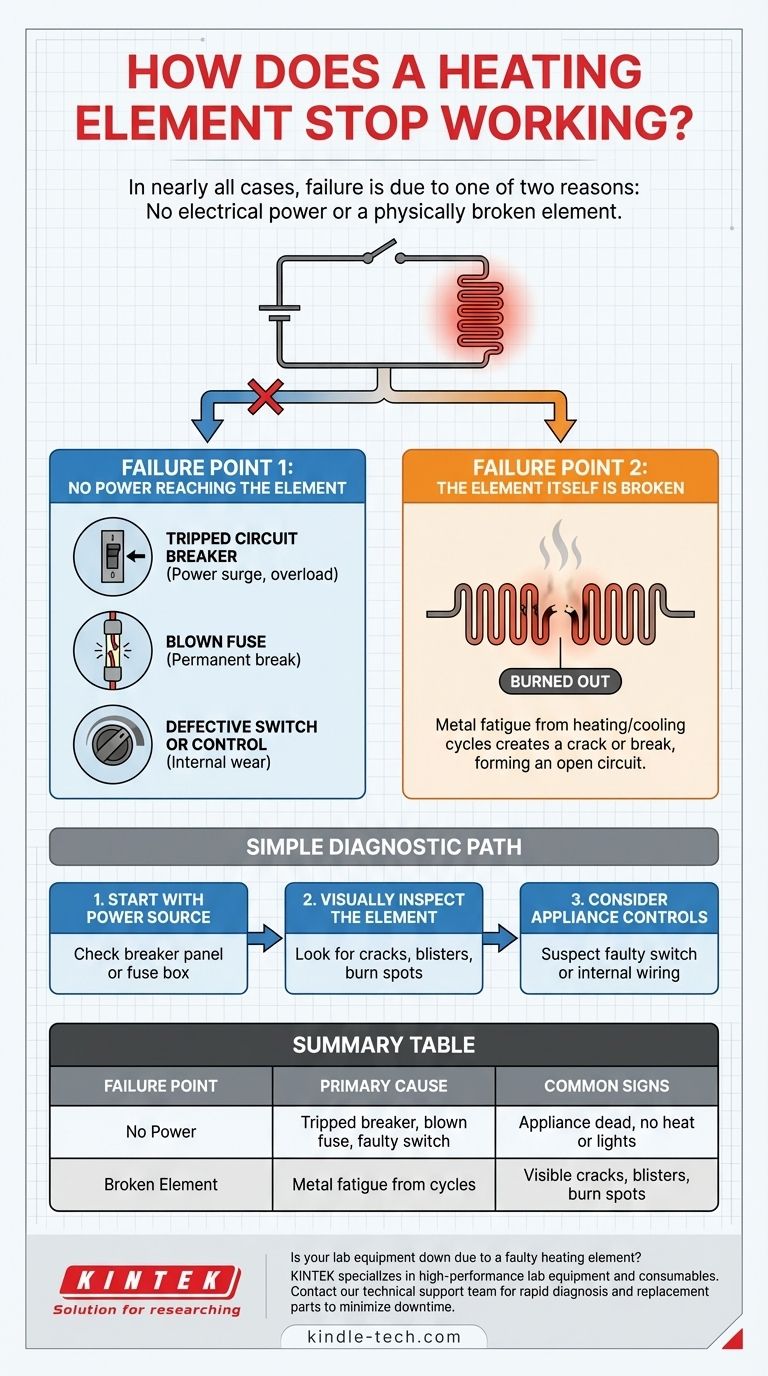
In nearly all cases, a heating element stops working for one of two reasons. It either isn't receiving electrical power, or the element itself has physically broken and can no longer complete the electrical circuit.

The core principle to understand is that a heating element is part of a simple circuit. Failure occurs when that circuit is interrupted, either because the power supply is cut off upstream or because the element—the final component in the path—has burned out.
How does a heating element stop working? A Guide to Diagnosing & Fixing Common Failures

The Two Core Reasons for Failure

To diagnose a non-functioning heating element, you must first determine which part of its electrical circuit has failed. The problem is almost always located in the power delivery system or within the element itself.

Failure Point 1: No Power Reaching the Element

A perfectly good heating element cannot function without electricity. An interruption in the power supply is a common and often easily fixable cause of failure.

This interruption can happen at several points:

  • Tripped Circuit Breaker: The most frequent cause. A power surge or overloaded circuit will cause a breaker in your home's electrical panel to trip as a safety measure.
  • Blown Fuse: In older homes or certain appliances, a fuse may blow to protect the circuit, permanently breaking the connection until it's replaced.
  • Defective Switch or Control: The knob or button you use to turn on the heat can wear out internally, preventing it from sending the signal for power to flow.

Failure Point 2: The Element Itself Is Broken

Heating elements work by resisting the flow of electricity, which generates intense heat. This process inevitably causes wear and tear on the element's material.

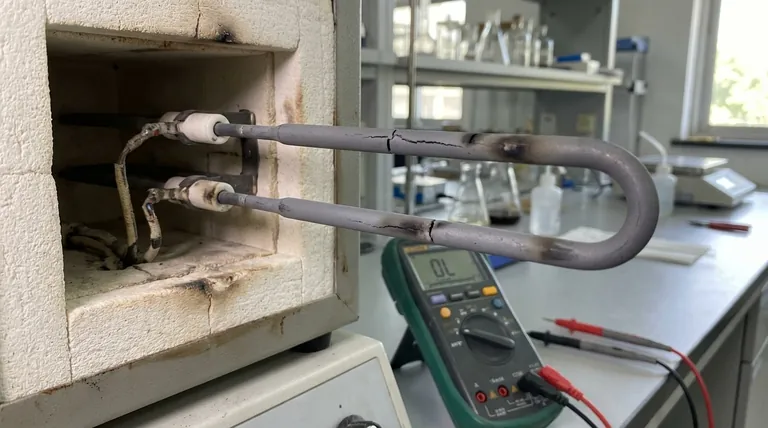
Over hundreds of cycles of heating up and cooling down, the metal coil becomes brittle. Eventually, a crack or break forms, creating a gap that electricity cannot cross. This is often referred to as "burning out," and at this point, the element has created an open circuit and must be replaced.

A Simple Diagnostic Path

Before assuming the worst, you can perform a logical, step-by-step diagnosis to isolate the problem.

Start with the Power Source

Always check the easiest things first. Go to your home's main electrical panel and look for a tripped circuit breaker or a blown fuse associated with the appliance. This resolves the issue in a significant number of cases.

Visually Inspect the Element

If the power supply is confirmed to be on, turn your attention to the element itself. A failed element often provides clear visual cues.

Look for obvious signs of damage, such as blisters on the surface, visible cracks or breaks in the coil, or distinct burn spots. If you see any of these, the element has failed and is the source of the problem.

Consider the Appliance Controls

If the breaker is on and the element looks physically intact, the issue may lie with the appliance's internal controls. A faulty switch or a loose internal wire can prevent power from ever reaching the element, even when everything else appears to be working correctly.

How to Make the Right Diagnosis

Your goal is to determine if the problem is external (power supply) or internal (the component). Following a logical path saves time and prevents unnecessary replacements.

  • If you suspect a power issue: Always start by checking your home's circuit breaker or fuse box, as this is the simplest and most common fix.
  • If the power is on but the element is cold: Carefully and safely inspect the heating coil for any visible cracks, blisters, or signs of burnout.
  • If the element appears fine but still doesn't work: The fault likely lies with a control switch or internal wiring, which is a more complex issue to diagnose.

Understanding whether the problem lies with the power supply or the component itself is the key to a fast and effective repair.

Summary Table:

Failure Point Primary Cause Common Signs
No Power Tripped circuit breaker, blown fuse, faulty switch Appliance is completely dead, no heat or lights
Broken Element Metal fatigue from heating/cooling cycles Visible cracks, blisters, or burn spots on the coil

Is your lab equipment down due to a faulty heating element? KINTEK specializes in high-performance lab equipment and consumables, ensuring your laboratory operates with precision and reliability. Our experts can help you diagnose issues and provide the right replacement parts to minimize downtime. Contact our technical support team today to get your equipment back online quickly!

Visual Guide
How does a heating element stop working? A Guide to Diagnosing & Fixing Common Failures Visual Guide

Related Products

People Also Ask

Related Products

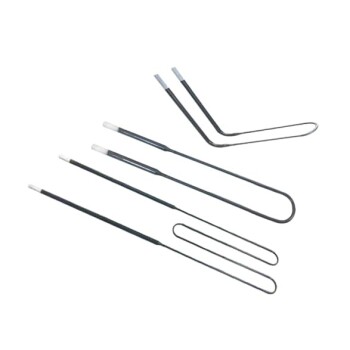
Molybdenum Disilicide (MoSi2) Thermal Elements Electric Furnace Heating Element

Molybdenum Disilicide (MoSi2) Thermal Elements Electric Furnace Heating Element

Discover the power of Molybdenum Disilicide (MoSi2) Heating Element for high-temperature resistance. Unique oxidation resistance with stable resistance value. Learn more about its benefits now!

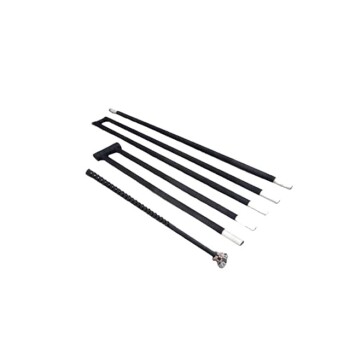
Silicon Carbide SiC Thermal Heating Elements for Electric Furnace

Silicon Carbide SiC Thermal Heating Elements for Electric Furnace

Experience the advantages of Silicon Carbide (SiC) Heating Element: Long service life, high corrosion and oxidation resistance, fast heating speed, and easy maintenance. Learn more now!

Silicon Carbide (SIC) Ceramic Sheet Flat Corrugated Heat Sink for Engineering Advanced Fine Ceramics

Silicon Carbide (SIC) Ceramic Sheet Flat Corrugated Heat Sink for Engineering Advanced Fine Ceramics

Silicon carbide (sic) ceramic heat sink not only does not generate electromagnetic waves, but also can isolate electromagnetic waves and absorb part of electromagnetic waves.

10L Heating Chilling Circulator Cooling Water Bath Circulator for High and Low Temperature Constant Temperature Reaction

10L Heating Chilling Circulator Cooling Water Bath Circulator for High and Low Temperature Constant Temperature Reaction

Experience efficient lab performance with KinTek KCBH 10L Heating Chilling Circulator. Its all-in-one design offers reliable heating, chilling, and circulating functions for industrial and lab use.

50L Heating Chilling Circulator Cooling Water Bath Circulator for High and Low Temperature Constant Temperature Reaction

50L Heating Chilling Circulator Cooling Water Bath Circulator for High and Low Temperature Constant Temperature Reaction

Experience versatile heating, chilling, and circulating capabilities with our KinTek KCBH 50L Heating Chilling Circulator. Ideal for labs and industrial settings, with efficient and reliable performance.

Double Plate Heating Press Mold for Lab

Double Plate Heating Press Mold for Lab

Discover precision in heating with our Double Plate Heating Mold, featuring high-quality steel and uniform temperature control for efficient lab processes. Ideal for various thermal applications.

High Temperature Constant Temperature Heating Circulator Water Bath Chiller Circulator for Reaction Bath

High Temperature Constant Temperature Heating Circulator Water Bath Chiller Circulator for Reaction Bath

Efficient and reliable, KinTek KHB Heating Circulator is perfect for your lab needs. With a max. heating temperature of up to 300℃, it features accurate temperature control and fast heating.

Engineering Advanced Fine Ceramics Aluminum Oxide Al2O3 Heat Sink for Insulation

Engineering Advanced Fine Ceramics Aluminum Oxide Al2O3 Heat Sink for Insulation

The hole structure of the ceramic heat sink increases the heat dissipation area in contact with the air, which greatly enhances the heat dissipation effect, and the heat dissipation effect is better than that of super copper and aluminum.

30L Heating Chilling Circulator Cooling Water Bath Circulator for High and Low Temperature Constant Temperature Reaction

30L Heating Chilling Circulator Cooling Water Bath Circulator for High and Low Temperature Constant Temperature Reaction

Get versatile lab performance with KinTek KCBH 30L Heating Chilling Circulator. With max. heating temp of 200℃ and max. chilling temp of -80℃, it's perfect for industrial needs.

100L Heating Chilling Circulator Cooling Water Bath Circulator for High and Low Temperature Constant Temperature Reaction

100L Heating Chilling Circulator Cooling Water Bath Circulator for High and Low Temperature Constant Temperature Reaction

Get all-in-one heating, chilling, and circulating capabilities with our KinTek KCBH 80L Heating Chilling Circulator. High efficiency, reliable performance for labs and industrial applications.

5L Heating Chilling Circulator Cooling Water Bath Circulator for High and Low Temperature Constant Temperature Reaction

5L Heating Chilling Circulator Cooling Water Bath Circulator for High and Low Temperature Constant Temperature Reaction

KinTek KCBH 5L Heating Chilling Circulator - Ideal for labs and industrial conditions with multi-functional design and reliable performance.

20L Heating Chilling Circulator Cooling Water Bath Circulator for High and Low Temperature Constant Temperature Reaction

20L Heating Chilling Circulator Cooling Water Bath Circulator for High and Low Temperature Constant Temperature Reaction

Maximize lab productivity with KinTek KCBH 20L Heating Chilling Circulator. Its all-in-one design offers reliable heating, chilling, and circulating functions for industrial and lab use.

Laboratory Small Constant Temperature Heated Magnetic Stirrer Heater and Stirrer

Laboratory Small Constant Temperature Heated Magnetic Stirrer Heater and Stirrer

The Laboratory Small Constant Temperature Heating Magnetic Stirrer is a versatile tool designed for precise temperature control and efficient mixing in various laboratory applications.

Automatic High Temperature Heated Hydraulic Press Machine with Heated Plates for Lab

Automatic High Temperature Heated Hydraulic Press Machine with Heated Plates for Lab

The High Temperature Hot Press is a machine specifically designed for pressing, sintering and processing materials in a high temperature environment. It is capable of operating in the range of hundreds of degrees Celsius to thousands of degrees Celsius for a variety of high temperature process requirements.

Electron Beam Evaporation Coating Conductive Boron Nitride Crucible BN Crucible

Electron Beam Evaporation Coating Conductive Boron Nitride Crucible BN Crucible

High-purity and smooth conductive boron nitride crucible for electron beam evaporation coating, with high temperature and thermal cycling performance.

Manual High Temperature Heated Hydraulic Press Machine with Heated Plates for Lab

Manual High Temperature Heated Hydraulic Press Machine with Heated Plates for Lab

The High Temperature Hot Press is a machine specifically designed for pressing, sintering and processing materials in a high temperature environment. It is capable of operating in the range of hundreds of degrees Celsius to thousands of degrees Celsius for a variety of high temperature process requirements.

Evaporation Boat for Organic Matter

Evaporation Boat for Organic Matter

The evaporation boat for organic matter is an important tool for precise and uniform heating during the deposition of organic materials.

Multi Heating Zones CVD Tube Furnace Machine Chemical Vapor Deposition Chamber System Equipment

Multi Heating Zones CVD Tube Furnace Machine Chemical Vapor Deposition Chamber System Equipment

KT-CTF14 Multi Heating Zones CVD Furnace - Precise Temperature Control and Gas Flow for Advanced Applications. Max temp up to 1200℃, 4 channels MFC mass flow meter, and 7" TFT touch screen controller.

Molybdenum Vacuum Heat Treat Furnace

Molybdenum Vacuum Heat Treat Furnace

Discover the benefits of a high-configuration molybdenum vacuum furnace with heat shield insulation. Ideal for high-purity, vacuum environments like sapphire crystal growth and heat treatment.

Laboratory Scientific Electric Heating Blast Drying Oven

Laboratory Scientific Electric Heating Blast Drying Oven

The desktop fast autoclave sterilizer is a compact and reliable device used for rapid sterilization of medical, pharmaceutical, and research items.


Leave Your Message