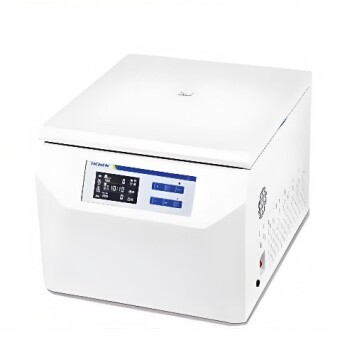
A high-pressure reactor acts as a precision instrument for creating a sealed, controlled hydrothermal environment. By strictly regulating temperature, pressure, and reaction time within a closed system, it facilitates chemical reactions that ensure high reproducibility. This precise control is the specific mechanism that enables the synthesis of substituted hydroxyapatite powders with defined mesoporous structures and optimal dispersion.
The reactor’s ability to sustain elevated pressures and temperatures allows for the precise engineering of phase composition and pore structure. This control is the fundamental requirement for transforming raw precursors into high-performance, multiphase catalysts.
The Role of the Closed System
Precise Regulation of Parameters
The core function of the high-pressure reactor is to maintain exact conditions for temperature and pressure. This regulation dictates the thermodynamic environment in which the hydroxyapatite precipitates.
Ensuring High Reproducibility
Because the system is closed, it eliminates external variables that could cause inconsistencies. This ensures that the synthesis process can be repeated with identical results, which is critical for industrial or scientific applications requiring standardization.
Reacting Above Boiling Points
The reactor allows aqueous solutions to remain in a liquid state at temperatures exceeding their atmospheric boiling point. This high-energy liquid environment accelerates the crystallization process and enables reaction pathways that are not accessible under ambient conditions.
Engineering the Material Structure
Controlling Phase Composition
The reactor provides the stability needed to fine-tune the chemical makeup of the powder. This includes the successful substitution of ions, such as the incorporation of molybdate anions, into the hydroxyapatite structure.
Creating Mesoporous Architectures
Hydrothermal treatment within the reactor facilitates the formation of mesoporous structures. These structures are characterized by a high specific surface area, which is a key factor in the material's effectiveness as a catalyst.
Optimizing Dispersion
The controlled environment ensures that the resulting powder consists of well-dispersed particles rather than large, irregular agglomerates. Good dispersion increases the active surface area available for catalytic reactions.
Understanding the Trade-offs
Sensitivity to Process Variables
While the reactor offers control, the quality of the final product is extremely sensitive to the chosen parameters. Slight deviations in temperature or pressure can significantly alter the phase composition or pore structure.
Complexity of Optimization
Determining the optimal balance of time, pressure, and temperature for specific molybdate doping levels requires rigorous experimentation. The "fine control" mentioned implies that the user must actively manage these variables to avoid phase impurities.
Making the Right Choice for Your Goal
To maximize the utility of high-pressure hydrothermal synthesis, align your process parameters with your specific material requirements:
- If your primary focus is Catalytic Performance: Prioritize the regulation of temperature to maximize the mesoporous structure and specific surface area.
- If your primary focus is Manufacturing Consistency: Leverage the closed system's stability to standardize reaction times and pressure for maximum reproducibility.
By mastering the variables within the high-pressure reactor, you ensure the production of a highly active, uniform, and stable heterogeneous catalyst.
Summary Table:
| Feature | Hydrothermal Synthesis Benefit |
|---|---|
| Sealed System | Prevents external contamination and ensures high reproducibility. |
| High Temperature | Enables reactions above boiling points to accelerate crystallization. |
| Pressure Control | Facilitates the formation of specific mesoporous architectures. |
| Phase Regulation | Allows for the precise substitution of ions like molybdate anions. |
| Particle Dispersion | Minimizes agglomeration, maximizing the specific surface area. |
Elevate Your Material Synthesis with KINTEK Precision
Unlock the full potential of hydrothermal synthesis with KINTEK’s high-performance laboratory equipment. Whether you are developing advanced heterogeneous catalysts or researching mesoporous materials, our high-temperature high-pressure reactors and autoclaves provide the stability and precision required for superior phase composition and optimal dispersion.
From milling systems and hydraulic presses for precursor preparation to high-temperature furnaces and cooling solutions for post-processing, KINTEK offers a comprehensive ecosystem for material scientists and industrial researchers.
Ready to achieve high reproducibility and defined material structures? Contact our experts today to find the perfect solution for your lab!
References
- Tatiana Poliakova, Alexandre M. Fedoseev. Structural regularities in double sulphates of trivalent actinides. DOI: 10.21175/rad.abstr.book.2023.38.1
This article is also based on technical information from Kintek Solution Knowledge Base .
Related Products
- Customizable Laboratory High Temperature High Pressure Reactors for Diverse Scientific Applications
- Customizable High Pressure Reactors for Advanced Scientific and Industrial Applications
- Stainless High Pressure Autoclave Reactor Laboratory Pressure Reactor
- Mini SS High Pressure Autoclave Reactor for Laboratory Use
- High Pressure Laboratory Autoclave Reactor for Hydrothermal Synthesis
People Also Ask
- How do high-pressure and high-temperature reactors ensure the effective treatment of lignocellulosic wastewater in WAO?
- What equipment is required for high-pressure high-temperature reactions? Master Extreme Chemistry Safely
- How do you control high pressure in a reactor? A Guide to Safe & Stable Operation
- Why is argon better than nitrogen for inert atmosphere? Ensure Absolute Reactivity & Stability
- How does initial oxygen pressure affect the wet oxidation of pharmaceutical sludge? Master Your Oxidation Depth