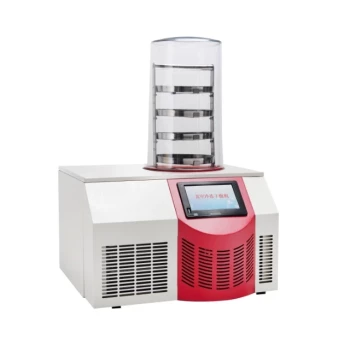
The laboratory electric drying oven functions as the critical solidification environment for the initial layer in dual-layer coating systems. By maintaining a constant temperature of 70°C, it drives the dehydration and preliminary solidification of amorphous peroxotitanate sol, transforming the liquid precursor into a stable, dense thin film on substrates such as stainless steel mesh.
Core Takeaway The oven's precise thermal control is not merely about removing moisture; it is essential for engineering the coating's microstructure. By facilitating the formation of a slip-plane-free amorphous layer, the oven ensures the initial coating acts as a mechanically robust primer that bonds securely to the substrate.
The Mechanism of Film Formation
Controlled Dehydration and Solidification
The primary function of the electric drying oven is to execute a controlled phase change. By holding the environment at a steady 70°C, the oven gently evaporates solvents from the peroxotitanate sol.
This consistent thermal energy promotes preliminary solidification. It transitions the material from a liquid sol into a solid state without the aggression of high-temperature firing, which is reserved for later stages.
Creating an Amorphous Structure
The specific thermal profile provided by the oven results in a unique structural characteristic: the film remains amorphous.
Because the material does not crystallize during this drying phase, the resulting thin film lacks slip planes. This absence of crystalline slip planes is vital, as it results in a denser, more cohesive coating that is resistant to mechanical failure.
The Functional Role of the Initial Layer
Establishing Substrate Adhesion
The drying process converts the peroxotitanate into a robust primer.
Because the film forms a dense, amorphous interface, it adheres firmly to the metal surface of the stainless steel mesh. This creates a high-integrity bond that prevents the coating from peeling or delaminating during use.
Preparing for the Second Layer
Beyond adhesion, the oven-cured layer serves as an optimal foundation for the rest of the process.
This solidified base is specifically engineered to support the subsequent loading of titanium dioxide particles. It provides a stable, receptive surface that ensures the second layer integrates correctly with the first.
Understanding Process Sensitivities
The Importance of Thermal Stability
The success of this process hinges on the oven's ability to maintain a constant temperature.
Fluctuations significantly above or below 70°C can alter the rate of dehydration. Rapid drying may cause cracking, while insufficient heat may leave the sol too wet for the next processing step.
Structural Trade-offs
The goal of this specific drying step is to achieve an amorphous state, not a crystalline one.
If the drying temperature were too high, the material might begin to crystallize prematurely. This would introduce slip planes into the structure, potentially weakening the primer’s mechanical strength and reducing its effectiveness as a bonding agent.
Making the Right Choice for Your Goal
To maximize the effectiveness of your dual-layer coating process, consider the following operational priorities:
- If your primary focus is mechanical durability: Ensure your oven is calibrated to maintain exactly 70°C to guarantee the formation of a dense, slip-plane-free amorphous structure.
- If your primary focus is multi-layer integration: Verify that the "preliminary solidification" is fully complete before introducing titanium dioxide particles to prevent interface defects.
The electric drying oven is not just a heating element; it is a tool for structural engineering that dictates the ultimate adhesion and longevity of your coating.
Summary Table:
| Process Phase | Temperature | Structural Outcome | Primary Function |
|---|---|---|---|
| Dehydration | 70°C | Liquid Sol to Solid Transition | Evaporates solvents without high-temp stress |
| Solidification | 70°C | Amorphous (Slip-plane-free) | Creates a dense, cohesive, and robust primer |
| Adhesion | 70°C | Dense Interface | Ensures high-integrity bonding to stainless steel |
| Preparation | 70°C | Receptive Base | Optimizes surface for titanium dioxide loading |
Elevate Your Material Research with KINTEK Precision
Precision is the heartbeat of every successful dual-layer coating. KINTEK specializes in advanced laboratory equipment designed to meet the rigorous thermal stability demands of your research. Whether you are engineering amorphous thin films or high-performance coatings, our high-temperature furnaces, electric drying ovens, and crushing and milling systems provide the exact control needed for repeatable results.
From high-pressure reactors to PTFE consumables and cooling solutions, KINTEK delivers a comprehensive range of tools for battery research, chemical synthesis, and material science.
Ready to optimize your lab’s efficiency and coating integrity? Contact KINTEK today to discover how our high-precision equipment can transform your results.
References
- Masanobu Mori, Hideyuki Itabashi. Evaluation of Photocatalytic Abilities by Variation of Conductivity and Dimethyl Sulfoxide: Photocatalytically Active TiO2-coated Wire Mesh Prepared via a Double-layer Coating Method. DOI: 10.2116/analsci.18n012
This article is also based on technical information from Kintek Solution Knowledge Base .
Related Products
- Laboratory Scientific Electric Heating Blast Drying Oven
- 56L Vertical Laboratory Vacuum Drying Oven
- 23L Laboratory Vacuum Drying Oven
- High Temperature Muffle Oven Furnace for Laboratory Debinding and Pre Sintering
- Benchtop Laboratory Vacuum Freeze Dryer
People Also Ask
- What role does a precision laboratory drying oven play in the synthesis of GO-PANI nanocomposites? Protect Material Integrity
- What role does a laboratory drying oven play in the preparation of zinc oxide nanoparticle precursors?
- What is the necessity of using a laboratory drying oven when processing MoO3/GO composite nanopowders? Find out here.
- What is the role of a laboratory drying oven in cellulose citrate production? Ensure Material Stability & Purity
- Why is a laboratory drying oven essential for biomass liquefaction? Ensure Accurate Conversion Rate Calculations