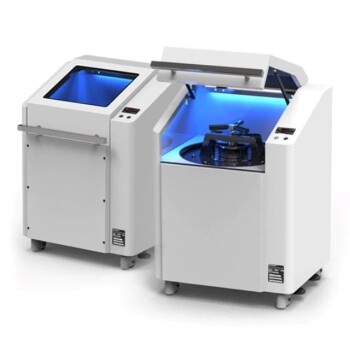
Laboratory grinding and milling systems are fundamental to optimizing the electrochemical performance of supercapacitors. These systems utilize high-energy impact and shearing forces to reduce bulk carbonized materials into micron- or nanometer-scale powders. By increasing the geometric surface area and ensuring the molecular-level distribution of components, these systems directly enable faster ion transport and lower internal resistance.
Grinding and milling systems transform raw precursors into optimized active materials by maximizing surface area and ensuring a homogenous mix of conductive agents and binders. This mechanical refinement is the primary driver for creating the low-impedance conduction pathways and accessible porous structures required for high-rate energy storage.
Enhancing Electrochemical Kinetics Through Size Reduction
Increasing Geometric Surface Area
High-energy milling refines carbonized bulk materials into micron-scale or nanometer-scale powders. This drastic reduction in particle size exponentially increases the geometric surface area available for charge storage.
Accelerating Electrolyte Wetting
Smaller, uniform particles ensure that the electrolyte can fully penetrate and wet the active sites of the material. This accessibility is a prerequisite for achieving high rate performance, allowing the supercapacitor to charge and discharge rapidly.
Achieving Homogeneity in Electrode Composites
Molecular-Level Uniformity
Milling systems perform high-intensity mixing of active substances, conductive agents (such as Ketjen black), and binders (such as PVDF). This ensures that all components are dispersed uniformly, preventing the aggregation of inactive clusters.
Establishing Electron Conduction Pathways
A well-mixed composite builds continuous electron conduction pathways and stable mechanical structures. This uniformity is vital for reducing interfacial contact resistance and ensuring the electrode maintains its integrity during cycling.
Optimizing Precursor Reactivity and Pore Development
Forced Mixing of Precursors
Mechanical ball milling allows for the forced mixing of solid precursors, such as pitch and salt templates. This intimate physical contact significantly increases the reaction activity of the precursors during subsequent heat treatment processes.
Influence on Porous Structures
Uniformly mixed precursors facilitate the formation of a uniformly distributed porous structure in the final product. These pores act as "highways" for ion transmission, which directly enhances the electrochemical kinetic performance of the electrode.
Understanding the Trade-offs
Structural Over-processing
Excessive milling energy or duration can lead to structural degradation, such as the unwanted amorphization of crystalline phases. This can reduce the theoretical capacity or lead to poor long-term cycling stability.
Risk of Impurity Contamination
Extended milling times increase the likelihood of media wear, where material from the grinding jars or balls contaminates the sample. These impurities can trigger parasitic side reactions or increase the ion transport impedance.
How to Apply This to Your Project
When utilizing a laboratory grinding and milling system, your processing parameters should align with your specific performance targets:
- If your primary focus is High Rate Performance: Prioritize high-energy milling to achieve nanometer-scale particle sizes, which maximizes the electrolyte-accessible surface area and shortens ion diffusion paths.
- If your primary focus is Long-Term Cycling Stability: Focus on achieving a molecular-level dispersion of binders to ensure the mechanical adhesion between the active material and the current collector remains intact over thousands of cycles.
- If your primary focus is Maximizing Energy Density: Use controlled milling to optimize the packing density of the active material, ensuring the highest possible mass loading without sacrificing pore connectivity.
Precise mechanical processing is the foundation upon which high-capacity and durable energy storage devices are built.
Summary Table:
| Impact Factor | Benefit to Supercapacitor | Mechanical Mechanism |
|---|---|---|
| Size Reduction | Faster Charge/Discharge | Increases geometric surface area and shortens ion diffusion paths. |
| Homogenization | Lower Internal Resistance | Ensures molecular-level distribution of conductive agents and binders. |
| Precursor Mixing | Optimized Pore Structure | Enhances reaction activity and facilitates uniform ion-transmission highways. |
| Energy Control | Structural Integrity | Balances particle refinement with the preservation of crystalline phases. |
Elevate Your Energy Storage Research with KINTEK
Precise material processing is the foundation of high-performance supercapacitors. KINTEK specializes in advanced laboratory equipment designed to give you total control over your material characteristics. Whether you need high-energy grinding and milling systems for nanometer-scale refinement, high-temperature furnaces for carbonization, or hydraulic presses for electrode preparation, we provide the reliable tools your research demands.
Why choose KINTEK?
- Comprehensive Range: From planetary ball mills to CVD furnaces and battery research consumables.
- Precision & Reliability: Ensure consistent particle size and molecular-level homogeneity every time.
- Expert Support: Our team helps you select the right equipment to maximize electrochemical kinetics and cycling stability.
Contact KINTEK Today to discover how our specialized laboratory solutions can accelerate your energy storage breakthroughs!
References
- Meenkyoung Jung, Ji Chul Jung. Activated carbons derived from polyethylene terephthalate for coin-cell supercapacitor electrodes. DOI: 10.1007/s11814-023-1466-3
This article is also based on technical information from Kintek Solution Knowledge Base .
Related Products
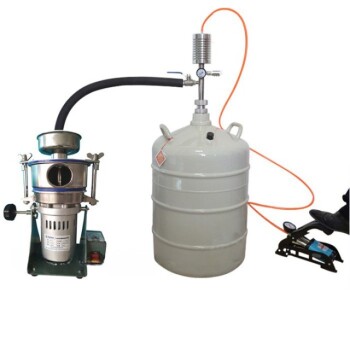
- Small Cryogenic Grinder Cryomill Cryogrinder with Liquid Nitrogen for Laboratory Use
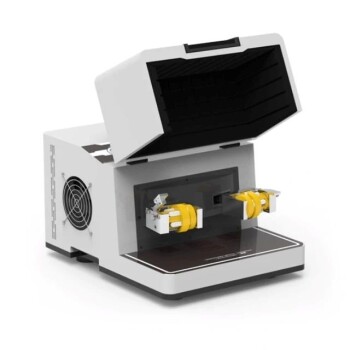
- Laboratory Hybrid Tissue Grinding Mill
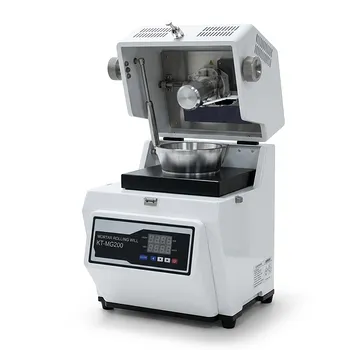
- Laboratory Grinding Mill Mortar Grinder for Sample Preparation
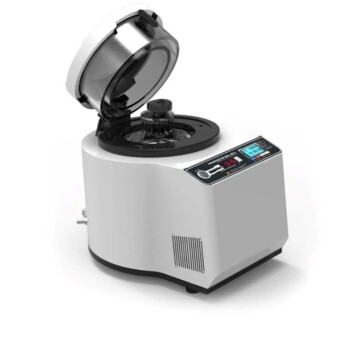
- Laboratory Jar Mill with Agate Grinding Jar and Balls
- Laboratory Jar Ball Mill with Alumina Zirconia Grinding Jar and Balls
People Also Ask
- What are the advantages of using a cryogenic grinder? Achieve Nanoscale Precision for All-Solid-State Battery Cathodes
- Why is a cryogenic grinder required for cured alkyd resin HRMAS NMR? Ensure Structural Integrity & Sample Precision
- What is the role of a cryogenic grinder in PET recycling? Transform Waste into High-Reactive Micron Powders
- What is cryogenic grinding of crumb rubber? Achieve Fine, High-Quality Rubber Powder
- What food is cryogenic grinding? The Ultimate Guide to Preserving Flavor & Aroma