Knowledge How does an electrochemical reaction system optimize titanium surfaces? Engineering Bioactive Dental Implants
Author avatar

Tech Team · Kintek Solution

Updated 2 days ago

How does an electrochemical reaction system optimize titanium surfaces? Engineering Bioactive Dental Implants


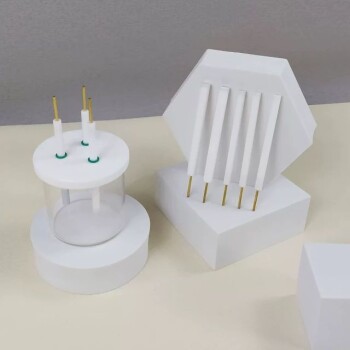
An electrochemical reaction system optimizes titanium surfaces by utilizing the implant as an anode within a strong acid electrolyte to fundamentally alter the metal's topography. By precisely controlling variables such as current density and electrolyte composition, the system thickens the natural oxide layer and induces the formation of specific, engineered nanostructures like nanotubes or pores.

The core value of this process is the transition from a passive metal surface to a bioactive interface. By engineering specific nanotube structures and increasing oxide thickness, the system mimics natural biological environments to accelerate bone cell attachment while simultaneously enabling visual identification.

Mechanisms of Surface Engineering

The Anode-Electrolyte Interaction

The optimization process begins by establishing the dental implant as the anode in an electrical circuit.

This anode is immersed in a strong acid electrolyte. When current is applied, it forces an oxidation reaction that is significantly more aggressive and controlled than the natural oxidation that occurs in air.

Manipulating the Microstructure

The specific texture of the surface is determined by the inputs to the system.

By adjusting the current density and the specific chemical makeup of the electrolyte, engineers can induce the formation of distinct topographies. These adjustments determine whether the surface develops a porous network or highly organized nanotube structures.

Physical and Biological Modifications

Increasing Oxide Thickness

In its natural state, titanium possesses a passive oxide layer that is only nanometers thick.

The electrochemical reaction system significantly amplifies this layer. It increases the oxide thickness from the nanometer scale to the micrometer scale, creating a more substantial surface modification.

Bionic Structural Design

The primary goal of creating nanometer-scale topography is to achieve a bionic structural design.

These engineered structures are designed to mimic the extracellular matrix of natural bone. This biomimicry directly enhances the response of early bone cells, promoting faster and more reliable integration between the implant and the body.

Visual Enhancement for Clinicians

The physical changes to the oxide layer also serve a practical clinical purpose.

The alteration of the surface topography changes the visual appearance of the implant. This distinct appearance makes the implants easier to identify clinically, reducing the risk of error during selection or placement.

Understanding the Process Sensitivities

Precision of Control Parameters

While this system allows for optimization, it relies heavily on the precise balance of electrochemical inputs.

The formation of specific nanotubes or pores is strictly dependent on the current density and electrolyte composition. Deviation in these parameters can result in a surface that fails to achieve the targeted bionic geometry or desired oxide thickness.

Making the Right Choice for Your Goal

To maximize the benefits of anodized titanium implants, consider the specific outcomes driven by surface modification:

  • If your primary focus is rapid osseointegration: Prioritize systems that utilize controlled current density to create specific nanotube structures, as this bionic design optimizes early bone cell response.
  • If your primary focus is surgical workflow efficiency: Leverage the altered appearance resulting from the thickened oxide layer, which simplifies the visual identification of different implant types during procedures.

Optimization through electrochemical reaction transforms a standard titanium screw into a sophisticated, biologically active medical device.

Summary Table:

Optimization Parameter Physical Modification Biological/Clinical Benefit
Current Density Determines nanotube vs. porous structure Mimics natural bone matrix for cell attachment
Electrolyte Type Accelerates oxide layer growth rate Improves durability and bioactive interface
Oxide Thickness Nanometer to micrometer scale increase Enhances visual identification for clinicians
Surface Topography Bionic structural design creation Accelerates osseointegration and healing

Elevate Your Biomedical Research with KINTEK

Maximize the potential of your surface engineering projects with KINTEK’s precision-engineered electrochemical cells and electrodes. Whether you are optimizing dental implants or developing next-generation energy storage, our comprehensive range of laboratory equipment, including electrolytic cells, high-temperature furnaces, and ultrasonic homogenizers, provides the control you need for superior results.

Our Value to You:

  • Precision Control: Advanced systems to manage current density and thermal parameters accurately.
  • Diverse Portfolio: From high-pressure reactors to PTFE consumables, we equip your entire workflow.
  • Expert Support: Specialized solutions tailored for titanium surface modification and battery research.

Contact KINTEK today to optimize your laboratory efficiency!

References

  1. Michela Bruschi, Michael Rasse. Composition and Modifications of Dental Implant Surfaces. DOI: 10.1155/2015/527426

This article is also based on technical information from Kintek Solution Knowledge Base .

Related Products

People Also Ask

Related Products

Dental Porcelain Zirconia Sintering Ceramic Vacuum Press Furnace

Dental Porcelain Zirconia Sintering Ceramic Vacuum Press Furnace

Get precise dental results with Dental Vacuum Press Furnace. Automatic temperature calibration, low noise tray, and touch screen operation. Order now!

VHP Sterilization Equipment Hydrogen Peroxide H2O2 Space Sterilizer

VHP Sterilization Equipment Hydrogen Peroxide H2O2 Space Sterilizer

A hydrogen peroxide space sterilizer is a device that uses vaporized hydrogen peroxide to decontaminate enclosed spaces. It kills microorganisms by damaging their cellular components and genetic material.

Benchtop Laboratory Freeze Dryer for Lab Use

Benchtop Laboratory Freeze Dryer for Lab Use

Premium benchtop laboratory freeze dryer for lyophilization, preserving samples with ≤ -60°C cooling. Ideal for pharmaceuticals & research.

Stainless Steel Quick Release Vacuum Chain Three-Section Clamp

Stainless Steel Quick Release Vacuum Chain Three-Section Clamp

Discover our stainless steel quick release clamp vacuum clamp, Ideal for high vacuum applications, Strong connections, reliable sealing, Easy installation, and durable design.

Vacuum Hot Press Furnace Machine for Lamination and Heating

Vacuum Hot Press Furnace Machine for Lamination and Heating

Experience clean and precise lamination with Vacuum Lamination Press. Perfect for wafer bonding, thin-film transformations, and LCP lamination. Order now!

Laboratory Rapid Thermal Processing (RTP) Quartz Tube Furnace

Laboratory Rapid Thermal Processing (RTP) Quartz Tube Furnace

Get lightning-fast heating with our RTP Rapid Heating Tube Furnace. Designed for precise, high-speed heating and cooling with convenient sliding rail and TFT touch screen controller. Order now for ideal thermal processing!

High-Energy Omnidirectional Planetary Ball Mill Milling Machine for Laboratory

High-Energy Omnidirectional Planetary Ball Mill Milling Machine for Laboratory

The KT-P4000E is a new product derived from the vertical high-energy planetary ball mill with a 360° swivel function. Experience faster, uniform, and smaller sample output results with 4 ≤1000ml ball mill jars.

Laboratory Single Horizontal Jar Mill

Laboratory Single Horizontal Jar Mill

KT-JM3000 is a mixing and grinding instrument for placing a ball milling tank with a volume of 3000ml or less. It adopts frequency conversion control to realize timing, constant speed, direction change, overload protection and other functions.

Laboratory Jar Mill with Agate Grinding Jar and Balls

Laboratory Jar Mill with Agate Grinding Jar and Balls

Grind your materials with ease using Agate Grinding Jars with Balls. Sizes from 50ml to 3000ml, perfect for planetary and vibration mills.

Mini Planetary Ball Mill Machine for Laboratory Milling

Mini Planetary Ball Mill Machine for Laboratory Milling

Discover the KT-P400 desktop planetary ball mill, ideal for grinding and mixing small samples in the lab. Enjoy stable performance, long service life, and practicality. Functions include timing and overload protection.

Graphite Vacuum Furnace Bottom Discharge Graphitization Furnace for Carbon Materials

Graphite Vacuum Furnace Bottom Discharge Graphitization Furnace for Carbon Materials

Bottom-out graphitization furnace for carbon materials, ultra-high temperature furnace up to 3100°C, suitable for graphitization and sintering of carbon rods and carbon blocks. Vertical design, bottom discharging, convenient feeding and discharging, high temperature uniformity, low energy consumption, good stability, hydraulic lifting system, convenient loading and unloading.

Vertical High Temperature Graphite Vacuum Graphitization Furnace

Vertical High Temperature Graphite Vacuum Graphitization Furnace

Vertical high temperature graphitization furnace for carbonization and graphitization of carbon materials up to 3100℃.Suitable for shaped graphitization of carbon fiber filaments and other materials sintered in a carbon environment.Applications in metallurgy, electronics, and aerospace for producing high-quality graphite products like electrodes and crucibles.

Horizontal High Temperature Graphite Vacuum Graphitization Furnace

Horizontal High Temperature Graphite Vacuum Graphitization Furnace

Horizontal Graphitization Furnace: This type of furnace is designed with the heating elements placed horizontally, allowing for uniform heating of the sample. It's well-suited for graphitizing large or bulky samples that require precise temperature control and uniformity.

High Energy Vibratory Ball Mill for Lab Use

High Energy Vibratory Ball Mill for Lab Use

The high-energy vibrating ball mill is a high-energy oscillating and impacting multifunctional laboratory ball mill. The table-top type is easy to operate, small in size, comfortable and safe.

Electric button battery sealing machine

Electric button battery sealing machine

The electric button battery sealing machine is a high-performance packaging equipment designed for mass production of button batteries (such as CR series, LR series, SR series, etc.), suitable for electronic manufacturing, new energy research and development, and industrial automation production lines.

High Energy Vibratory Laboratory Ball Mill Grinding Mill Single Tank Type

High Energy Vibratory Laboratory Ball Mill Grinding Mill Single Tank Type

High-energy vibration ball mill is a small desktop laboratory grinding instrument.It can be ball-milled or mixed with different particle sizes and materials by dry and wet methods.

Graphite Vacuum Furnace IGBT Experimental Graphitization Furnace

Graphite Vacuum Furnace IGBT Experimental Graphitization Furnace

IGBT experimental graphitization furnace, a tailored solution for universities and research institutions, with high heating efficiency, user-friendliness, and precise temperature control.

Stainless Steel Laboratory Ball Mill for Dry Powder and Liquid with Ceramic Polyurethane Lining

Stainless Steel Laboratory Ball Mill for Dry Powder and Liquid with Ceramic Polyurethane Lining

Discover the versatile stainless steel dry powder/liquid horizontal ball mill with ceramic/polyurethane lining. Ideal for ceramic, chemical, metallurgical, and building materials industries. High grinding efficiency and uniform particle size.

CVD Diamond Cutting Tool Blanks for Precision Machining

CVD Diamond Cutting Tool Blanks for Precision Machining

CVD Diamond Cutting Tools: Superior Wear Resistance, Low Friction, High Thermal Conductivity for Non-Ferrous Materials, Ceramics, Composites Machining

Laboratory Hybrid Tissue Grinding Mill

Laboratory Hybrid Tissue Grinding Mill

KT-MT20 is a versatile laboratory device used for rapid grinding or mixing of small samples, whether dry, wet, or frozen. It comes with two 50ml ball mill jars and various cell wall breaking adapters for biological applications such as DNA/RNA and protein extraction.


Leave Your Message