Ultrasonic homogenization relies on acoustic cavitation to physically rupture cellular barriers. By transmitting high-frequency ultrasound waves (ranging from 20 kHz to 100 MHz) into a liquid, the system creates vacuum-induced microbubbles. These bubbles violently collapse, generating intense shear forces and high-speed micro-jets that shatter plant cell walls and release intracellular compounds.
The Core Mechanism: The effectiveness of this method stems from cavitation, not thermal energy or chemical reaction. The rapid collapse of microbubbles creates localized shockwaves that mechanically dismantle cell structures, drastically increasing the contact area between the solvent and target bioactive molecules.
The Physics of Acoustic Cavitation
Generating the Catalyst
The process begins with the introduction of high-energy acoustic waves into a liquid medium.
These waves must be within a specific frequency range, typically 20 kHz to 100 MHz, to effectively induce the physical phenomenon known as cavitation.
Bubble Formation and Collapse
As the acoustic waves propagate, they create alternating cycles of high and low pressure.
During the low-pressure cycle, microscopic vacuum bubbles form within the liquid. During the high-pressure cycle, these bubbles are compressed until they can no longer sustain their size.
The Phenomenon of Micro-jets
When these microbubbles reach their limit, they undergo a violent collapse.
This implosion is not a gentle pop; it generates intense, localized shear forces and produces high-speed micro-jets of liquid. This is the primary mechanical force responsible for extraction.
Breaking Barriers for Extraction
Rupturing the Cell Wall
Plant cells are protected by rigid cell walls that resist traditional solvent penetration.
The micro-jets generated by cavitation act like microscopic hammers. They impact the plant tissue with sufficient force to physically break down the cell walls and disrupt microscopic structures.
Increasing Surface Area
Once the cell wall is breached, the solvent gains direct access to the interior of the cell.
This disruption significantly increases the contact area between the solvent and the internal plant material.
Accelerating Dissolution
The ultimate goal is the recovery of bioactive molecules, such as flavonoids and polyphenols.
Because the barriers are removed and contact area is maximized, these compounds dissolve into the solvent at a significantly faster rate, shortening the overall processing time.
Understanding the Trade-offs
Physical Intensity vs. Selectivity
Ultrasonic homogenization is a blunt, high-energy instrument.
The "violent" nature of cavitation is excellent for total disruption, but it lacks the selectivity of gentler methods. It destroys structure indiscriminately to release content.
Comparison to Other Mechanical Methods
It is important to distinguish ultrasonic methods from other physical extraction techniques.
For example, high-pressure homogenizers use pumps to force fluid through narrow valves to rupture membranes. While both rely on physical shear forces rather than harsh chemicals, ultrasonic systems achieve this specifically through acoustic interaction rather than hydraulic pressure.
Making the Right Choice for Your Goal
If you are evaluating extraction technologies, consider how the mechanism aligns with your targets.
- If your primary focus is Speed and Efficiency: Ultrasonic homogenization is ideal because the intense shear forces rapidly facilitate the dissolution of compounds like polyphenols in a short period.
- If your primary focus is Solvent Reduction: This method allows you to rely on physical disruption to access the cell, potentially reducing the need for aggressive or halogenated organic solvents.
- If your primary focus is Hard-to-Extract Tissues: The generation of high-speed micro-jets offers a mechanical advantage capable of breaking down tough plant cell walls that passive soaking cannot penetrate.
Ultrasonic homogenization transforms extraction by replacing time-consuming chemical permeation with rapid, acoustically driven mechanical rupture.
Summary Table:
| Feature | Mechanism/Impact in Ultrasonic Homogenization |
|---|---|
| Core Process | Acoustic Cavitation (20 kHz to 100 MHz) |
| Physical Force | High-speed micro-jets and intense shear forces |
| Cellular Impact | Mechanical rupture of rigid cell walls |
| Target Compounds | Bioactive molecules (e.g., flavonoids, polyphenols) |
| Key Benefits | Reduced solvent use, faster processing, and high efficiency |
Maximize Your Extraction Yields with KINTEK Precision
Are you looking to optimize your laboratory's extraction efficiency? KINTEK specializes in advanced laboratory equipment designed to meet the rigorous demands of modern research. Whether you require high-performance ultrasonic homogenizers to rupture tough plant tissues or crushing and milling systems for sample preparation, our comprehensive portfolio has you covered.
From high-temperature furnaces and hydraulic presses to high-pressure reactors and cooling solutions like ULT freezers, KINTEK provides the reliable tools necessary for superior material science and battery research.
Ready to upgrade your lab? Contact us today to discover how our high-quality equipment and consumables can streamline your workflow and deliver more consistent, high-purity results.
References
- Thu Lam Nguyen, Kristian Melin. Innovative extraction technologies of bioactive compounds from plant by-products for textile colorants and antimicrobial agents. DOI: 10.1007/s13399-023-04726-4
This article is also based on technical information from Kintek Solution Knowledge Base .
Related Products
- High Performance Lab Homogenizer for Pharma Cosmetics and Food R&D
- High Shear Homogenizer for Pharmaceutical and Cosmetic Applications
- Lab Sterile Slapping Type Homogenizer for Tissue Mashing and Dispersing
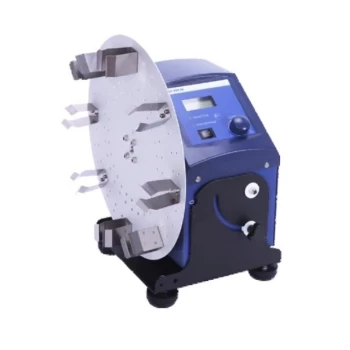
- Laboratory Disc Rotary Mixer for Efficient Sample Mixing and Homogenization
- Laboratory High Throughput Tissue Grinding Mill Grinder
People Also Ask
- Why is a high-performance homogenizer essential for Fe3O4@C9 anode slurries? Boost Battery Performance & Stability.
- What is the primary function of high-performance homogenizers for SAPO-34 MMMs? Ensure Superior Gas Separation Efficiency
- How do lab stirrers & homogenizers ensure uniform distribution? Optimize Your Complex Multiphase Chemical Mixing
- What role does a laboratory homogenizer play in radioactive cesium detection? Ensure Accuracy in Wildlife Sampling
- How does a laboratory automatic masticator or homogenizer facilitate the processing of biofilm samples? Optimize Accuracy