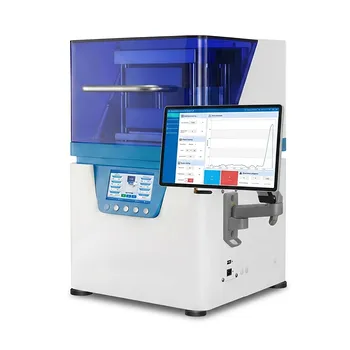
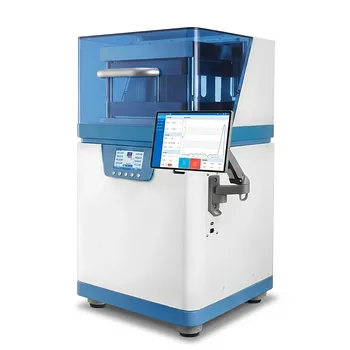
The application of pressure via a laboratory hydraulic press is a fundamental step in the assembly of an asymmetric supercapacitor (ASC). It ensures tight physical contact between the positive electrode, negative electrode, separator, and electrolyte, which directly reduces interfacial contact resistance and prevents the detachment of active materials. By applying controlled forces—typically ranging from 6 MPa to 10 MPa—researchers can optimize ion transport paths and significantly enhance the device's long-term cycling stability and rate performance.
Controlled hydraulic pressure transforms a loose collection of components into a high-performance electrochemical system by minimizing internal resistance and maximizing mechanical adhesion. This process is essential for ensuring that the ASC can maintain high charge storage efficiency under demanding operating voltages.
Optimizing the Internal Interface
Reducing Interfacial Contact Resistance
The primary function of the hydraulic press is to eliminate micro-gaps between the various layers of the ASC. By forcing the electrodes and separator into tight physical contact, the press ensures a seamless path for electron flow.
This reduction in contact resistance is critical for achieving high power output. Without sufficient pressure, the interface between the active material and the current collector remains high-resistance, leading to energy loss through heat.
Optimizing Ion Transport Paths
Uniform pressure helps to compress the electrolyte-soaked separator against the electrode surfaces. This creates a more direct and efficient ion transmission path throughout the cell.
An optimized path allows ions to move rapidly between the asymmetric electrodes during charge and discharge. This is particularly important for ASCs, which often utilize different materials with varying ion diffusion rates.
Strengthening Mechanical and Electrical Integrity
Enhancing Adhesion to Current Collectors
In ASC assembly, active materials are often coated onto substrates like nickel foam or nickel mesh. The hydraulic press compacts the mixture of active substances, conductive agents, and binders (such as PTFE) into these collectors.
This pressing process strengthens the mechanical connection between the material and the substrate. Stronger adhesion prevents the active material from shedding or delaminating when the device is subjected to repeated cycling.
Controlling Electrode Density and Thickness
The laboratory hydraulic press allows for precise control over the final thickness of the electrodes (e.g., 30 μm). Consistent thickness is vital for maintaining uniform current distribution across the electrode surface.
By compressing the material into a fixed shape and density, the press ensures structural integrity. This ensures the electrode can withstand the physical stresses of electrolyte flushing and the volumetric expansion that occurs during high-voltage operation.
Understanding the Trade-offs
The Risks of Over-Compression
Applying excessive pressure can be counterproductive by crushing the microporous structure of the active materials. If the pores are closed, the electrolyte cannot effectively penetrate the electrode, which drastically reduces the available surface area for charge storage.
Furthermore, extreme force can damage the separator membrane. A compromised separator can lead to internal micro-shorts, which permanently degrade the supercapacitor's performance or cause device failure.
The Consequences of Insufficient Pressure
Low pressure leads to poor ohmic contact, which manifests as high internal resistance (ESR). This results in poor rate performance, meaning the device cannot deliver or accept charge quickly.
Inadequately pressed electrodes are also prone to mechanical instability. Without sufficient compaction, the active material may detach from the current collector during operation, leading to a rapid loss of capacitance over time.
Making the Right Choice for Your Goal
How to Apply This to Your Project
- If your primary focus is high rate performance: Use precise, higher pressures (closer to 10 MPa) to ensure the lowest possible contact resistance between active particles and current collectors.
- If your primary focus is maximum energy density: Use the hydraulic press to maximize the packing density of the active material while carefully monitoring to ensure electrolyte accessibility.
- If your primary focus is long-term cycling stability: Prioritize uniform pressure distribution across the entire electrode surface to prevent localized delamination and ensure mechanical structural integrity.
Precise pressure control is not merely a mechanical necessity but a vital electrochemical lever for tuning the efficiency and durability of asymmetric supercapacitors.
Summary Table:
| Pressure Level | Impact on ASC Structure | Key Performance Outcome |
|---|---|---|
| Optimized (6-10 MPa) | Tight interfacial contact & high adhesion | Low ESR, high rate performance & stability |
| Insufficient (< 6 MPa) | Micro-gaps between layers & high resistance | Poor charge efficiency & mechanical instability |
| Excessive (> 10 MPa) | Crushed micropores & damaged separator | Reduced energy density & risk of short circuits |
| Uniform Application | Consistent electrode density & thickness | Even current distribution & structural integrity |
Elevate Your Energy Storage Research with KINTEK
Precision pressure control is the backbone of high-performance electrochemical systems. KINTEK specializes in advanced laboratory equipment designed to give researchers total control over their material assembly. Our comprehensive range of hydraulic presses (pellet, hot, and isostatic) ensures uniform compaction for supercapacitors, batteries, and advanced ceramics.
Beyond pressing, KINTEK supports your entire workflow with:
- High-Temperature Furnaces: Muffle, tube, and vacuum systems for material synthesis.
- Processing Tools: Crushing, milling, and sieving systems for precise particle sizing.
- Electrochemical Essentials: Electrolytic cells, electrodes, and high-pressure reactors.
Don’t let inconsistent pressure compromise your data. Contact KINTEK today to discover how our high-precision tools can enhance your lab's efficiency and ensure long-term cycling stability for your next breakthrough!
References
- Rutuja A. Chavan, Anil V. Ghule. Facile synthesis of ternary MXene nanocomposites as an electrode for supercapacitive applications. DOI: 10.1039/d3ma00133d
This article is also based on technical information from Kintek Solution Knowledge Base .
Related Products
- Laboratory Hydraulic Press Lab Pellet Press Machine for Glove Box
- Laboratory Hydraulic Press Split Electric Lab Pellet Press
- Fully Automatic Heated Hydraulic Lab Press for Materials Sintering and Sample Preparation
- Automatic Laboratory Hydraulic Press for XRF & KBR Pellet Press
- Laboratory Hydraulic Press Lab Pellet Press for Button Battery
People Also Ask
- What is the function of a laboratory hydraulic press in W-Cu composites? Control Porosity and Material Ratio
- What is the role of a laboratory hydraulic press in the initial stages of Li6PS5Cl preparation? Key to Green Pellets
- What role does a laboratory hydraulic press play in triboelectric testing? Achieve Precision Alloy Sample Prep
- How can a laboratory hydraulic press be applied to chitosan for wastewater treatment? Optimize Pores & Strength
- How do a precision laboratory hydraulic press and specialized molds contribute to the fabrication of spherical ceramic samples? Achieving High-Density Material Precision