Modern technology has effectively leveled the playing field. While historical limitations once resulted in distinct visual differences between High Pressure High Temperature (HPHT) and Chemical Vapor Deposition (CVD) diamonds, today both methods are fully capable of producing colorless, flawless gems. For the end consumer, there is no significant difference in visual quality between high-grade diamonds produced by either technique.
Core Insight: The debate between HPHT and CVD is no longer about which method produces a "better" diamond, as both now yield stones chemically and visually identical to natural diamonds. The only relevant distinctions lie in microscopic growth patterns and the specific types of flaws found in lower-grade options.
The Evolution of Diamond Quality
Historical Assumptions vs. Modern Reality
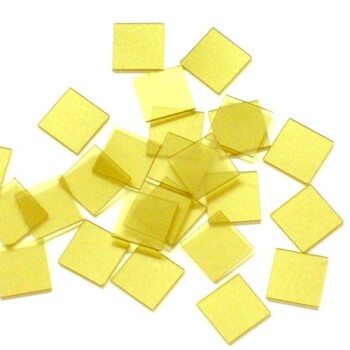
In the early days of lab-grown diamonds, HPHT technology was frequently associated with stones that had a yellowish hue. Conversely, CVD was initially recognized for its ability to produce colorless gems.
However, as manufacturing technology has matured, these generalizations have become obsolete. Modern HPHT presses can now produce exceptional D-color (colorless) diamonds, and CVD reactors can grow high-clarity crystals.
Visual Indistinguishability
To the naked eye, there is absolutely no difference between a high-quality HPHT diamond and a high-quality CVD diamond. Both exhibit the same brilliance, fire, and scintillation.
Because they are both chemically and physically identical to natural diamonds, they are graded using the standard 4 Cs (Color, Cut, Clarity, and Carat). If two stones have the same grade, they are virtually identical regardless of their origin.
Understanding the Growth Environment
The HPHT Environment
The HPHT process mimics the crushing force of the earth. A diamond seed is placed in carbon and subjected to extreme heat and pressure, often submerged in molten metal.
This results in a diamond rough that forms a cuboctahedron shape. Because the environment is so intense, the diamond grows in many directions simultaneously.
The CVD Environment
CVD is a more controlled, moderate process. A seed plate is placed in a vacuum chamber filled with hydrocarbon gas. Microwaves break down the gas molecules, causing pure carbon to precipitate and settle onto the seed layer by layer.
This results in a diamond rough that forms a cubic shape. The growth is vertical and linear, similar to how snow accumulates.
Understanding the Trade-offs
While top-tier examples of both are perfect, lower-quality examples from each method exhibit different types of flaws. Understanding these "reject" traits helps explain why some experts favor one over the other for specific applications.
Potential Flaws in CVD
Because CVD diamonds grow in layers, they can sometimes suffer from internal graining or "striae," which look like faint lines within the stone.
Furthermore, rapid growth in CVD chambers can lead to brownish undertones. To correct this, many CVD diamonds undergo a "post-growth treatment" (essentially putting them through an HPHT press) to whiten them. While effective, this can occasionally leave the stone looking slightly milky or hazy.
Potential Flaws in HPHT
Since HPHT diamonds are grown in molten metal, their primary flaw risk is metallic flux inclusions. These are tiny bits of metal trapped inside the crystal.
If these inclusions are significant, the diamond can actually react to magnets. However, in high-clarity grades (VS2 and above), these inclusions are typically microscopic and invisible to the eye.
Making the Right Choice for Your Goal
Ultimately, the grading report is more important than the growth method. However, depending on your priorities, you may lean slightly toward one direction.
- If your primary focus is "As-Grown" Purity: Look for HPHT diamonds or CVD diamonds specifically certified as "As-Grown," as these have not undergone post-growth color treatment.
- If your primary focus is Avoiding Blue Nuance: CVD diamonds rarely exhibit the "blue nuance" (a faint blue tint from boron) that is sometimes seen in HPHT stones.
- If your primary focus is Visual Beauty: Ignore the growth method entirely and focus strictly on the Cut grade and optical precision, as this determines the sparkle.
Trust the specific grading report of the individual stone rather than the reputation of the manufacturing method.
Summary Table:
| Feature | HPHT Diamonds | CVD Diamonds |
|---|---|---|
| Growth Shape | Cuboctahedron (Multi-directional) | Cubic (Vertical/Linear) |
| Environment | Extreme Pressure & Molten Metal | Vacuum Chamber & Hydrocarbon Gas |
| Potential Flaws | Metallic flux inclusions | Internal graining & brown undertones |
| Post-Growth | Usually unnecessary for color | Often requires HPHT treatment to whiten |
| Visual Quality | Indistinguishable from Natural | Indistinguishable from Natural |
Elevate Your Lab-Grown Diamond Production with KINTEK
Precision matters in the synthesis of high-quality gems. Whether you are scaling CVD diamond growth or utilizing high-pressure high-temperature (HPHT) systems, KINTEK provides the advanced laboratory equipment and consumables necessary for flawless results.
Our specialized portfolio includes:
- High-Pressure Reactors & Autoclaves for robust material synthesis.
- CVD & PECVD Systems for precise layer-by-layer carbon deposition.
- Muffle & Vacuum Furnaces for essential post-growth treatments and annealing.
- Ceramics, Crucibles & Milling Systems for specimen preparation.
Don't settle for less than perfection in your research or production. Contact KINTEK today to discover how our high-performance solutions can optimize your diamond growth process and material science workflows.
Related Products
- CVD Diamond for Thermal Management Applications
- HFCVD Machine System Equipment for Drawing Die Nano-Diamond Coating
- CVD Diamond Optical Windows for Lab Applications
- CVD Diamond Domes for Industrial and Scientific Applications
- CVD Diamond Dressing Tools for Precision Applications
People Also Ask
- How long does it take to make a CVD diamond? A Detailed Look at the Growth Timeline
- What are the optical properties of CVD diamond? Unlock Unmatched Performance for Demanding Applications
- What is the hardness of CVD diamond? The Ultimate Guide to Engineered Super-Materials
- What is the chemical vapour deposition method for diamonds? Grow a Diamond from a Gas
- How long does it take to grow a CVD diamond? A 2-4 Week Journey to a Flawless Gem