The Saturated Silver/Silver Chloride (SSE) reference electrode ensures data comparability by acting as a highly stable, standardized anchor point for potential measurements. In the volatile environment of Zircaloy-2 pitting tests, specifically those involving artificial seawater and radiation, the SSE eliminates measurement drift. This isolation ensures that observed data reflects actual material behavior rather than experimental artifacts.
By neutralizing the impact of environmental disturbances, the SSE provides the rigorous stability required to accurately compare irradiated groups against control groups.
The Role of Stability in Corrosion Testing
Establishing a Standardized Baseline
To measure pitting corrosion accurately, researchers need a fixed point of reference that does not fluctuate. The SSE provides this standardized reference potential point.
Without this immutable baseline, it becomes impossible to determine if a change in potential is due to the Zircaloy-2 corroding or the reference point moving. The SSE acts as the "ground truth" for the voltage measurements.
Counteracting Environmental Disturbances
The testing environment for Zircaloy-2 is inherently complex, involving artificial seawater and radiation.
These factors introduce significant noise and potential for electrochemical deviation. The SSE is utilized specifically because it maintains its stability despite these aggressive conditions. It effectively eliminates deviations that would otherwise be caused by these environmental disturbances.
Facilitating Cross-Group Comparison
Isolating the Radiation Variable
A primary goal of these tests is often to compare Zircaloy-2 subject to radiation against non-irradiated control groups.
If the reference electrode reacts to the radiation, the resulting data becomes invalid. By resisting these disturbances, the SSE ensures that any difference in pitting potential is strictly due to the effect of radiation on the Zircaloy-2, not the measurement tool.
Ensuring Data Accuracy
Comparability requires that the measurement scale remains identical across different test runs.
The standardized nature of the SSE ensures that data from a control group can be directly overlaid with data from an experimental group. This guarantees that the Zircaloy-2 pitting potential data is accurately comparable regardless of the specific experimental grouping.
Understanding the Risks of Reference Instability
The Danger of Measurement Drift
While the SSE is stable, the primary risk in these experiments is the failure to maintain a standard reference. If a less stable electrode were used, environmental factors like radiation could shift the reference potential.
This shift would appear as data "noise" or false positives in the corrosion rate.
Dependency on Environmental Resistance
The reliability of the data is entirely dependent on the electrode's ability to withstand the specific "complex environment."
If the reference electrode is not suited for artificial seawater, the chemical interaction could alter the reference potential, rendering the comparison between groups impossible.
Ensuring Validity in Corrosion Experiments
To guarantee the integrity of your Zircaloy-2 data, you must prioritize the stability of your reference point.
- If your primary focus is Isolation of Variables: Rely on the SSE to eliminate environmental noise so that radiation effects are the only variable influencing potential shifts.
- If your primary focus is Data Integrity: Use the standardized potential of the SSE to validate the accuracy of comparisons between experimental and control groups.
The SSE is the critical control mechanism that transforms raw electrochemical signals into reliable, comparable scientific evidence.
Summary Table:
| Feature | Benefit for Zircaloy-2 Testing |
|---|---|
| Standardized Potential | Acts as an immutable "ground truth" for all electrochemical measurements. |
| Environmental Stability | Resists noise and drift caused by artificial seawater and radiation. |
| Variable Isolation | Ensures observed shifts are due to radiation effects, not measurement artifacts. |
| Data Integrity | Enables accurate cross-group comparison between irradiated and control samples. |
Precision Solutions for Advanced Electrochemistry
To achieve valid and comparable data in challenging environments like Zircaloy-2 corrosion studies, the integrity of your laboratory equipment is paramount. KINTEK specializes in high-performance laboratory equipment and consumables designed for rigorous research standards.
Whether you are conducting battery research, material synthesis, or corrosion testing, we offer a comprehensive range of tools to support your success:
- Specialized Electrochemistry: High-quality electrolytic cells, electrodes (including reference electrodes), and battery research consumables.
- Extreme Environments: High-temperature furnaces (vacuum, CVD, dental, and more) and high-pressure reactors or autoclaves.
- Sample Preparation: Precision crushing, milling, sieving equipment, and hydraulic presses.
- Lab Essentials: ULT freezers, freeze dryers, and essential PTFE or ceramic consumables.
Ensure your scientific evidence is built on a foundation of reliability and precision. Contact KINTEK today to discuss your project requirements!
References
- Takafumi Motooka, Masahiro Yamamoto. Effect of gamma radiolysis on pit initiation of zircaloy-2 in water containing sea salt. DOI: 10.1080/00223131.2014.907550
This article is also based on technical information from Kintek Solution Knowledge Base .
Related Products
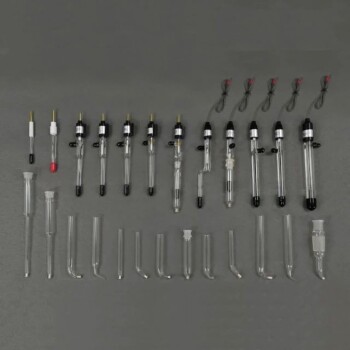
- Reference Electrode Calomel Silver Chloride Mercury Sulfate for Laboratory Use
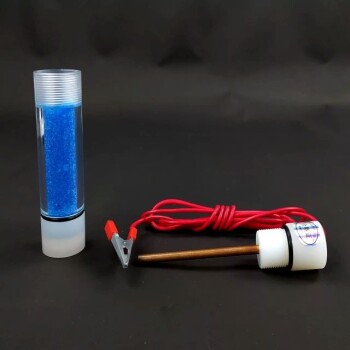
- Copper Sulfate Reference Electrode for Laboratory Use
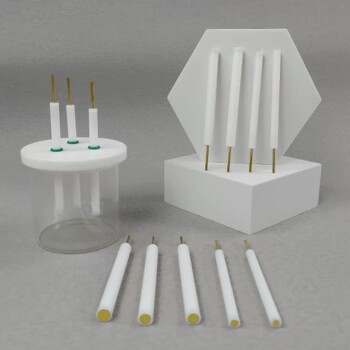
- Gold Disc Electrode
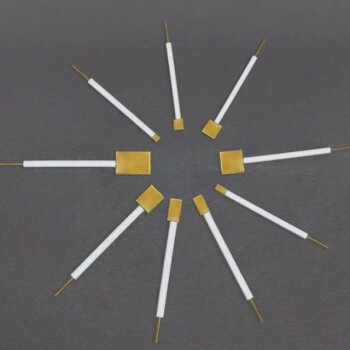
- Gold Electrochemical Sheet Electrode Gold Electrode
- Metal Disc Electrode Electrochemical Electrode
People Also Ask
- What is the function of a reference electrode? Master Precision in Three-Electrode Reactor Reconstruction
- What is the recommended maintenance for the filling solution of a reference electrode? A Guide to Stable & Accurate Readings
- Which electrode is used as a ground reference? Master the Key to Accurate Electrochemical Measurements
- What is the reference electrode in potentiometry? The Key to Stable & Accurate Measurements
- Which electrode is used as a reference? A Guide to Accurate Electrochemical Measurements