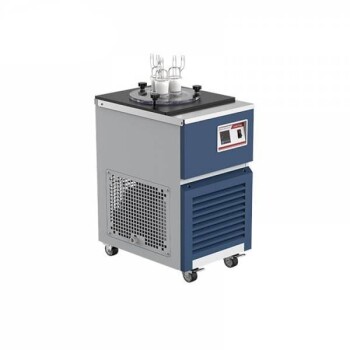
The vacuum pump system acts as the primary governor of magnesium morphology by strictly regulating the residual pressure within the distillation equipment. By maintaining a high vacuum—specifically controlling pressure around 10.73 Pa—the system forces magnesium vapor to transition directly from gas to solid (desublimation), bypassing the liquid phase entirely to form high-purity crystalline structures.
Core Takeaway Pressure control is the defining variable that dictates the thermodynamic path of magnesium recovery. By sustaining a precise vacuum, the system prevents the formation of a liquid intermediate phase, ensuring the final product is collected as a solid, high-quality crystal rather than a solidified melt.
The Mechanics of Morphology Control
Regulating Residual Pressure
The fundamental role of the vacuum pump in this context is maintaining a critical pressure threshold.
According to technical specifications, this residual pressure is often held near 10.73 Pa. This is not an arbitrary figure; it is the specific condition required to manipulate the phase diagram of magnesium during recovery.
Enforcing Desublimation
The vacuum creates the environment necessary for desublimation.
Instead of condensing into a liquid and then freezing, the magnesium vapor transforms directly into a solid. This direct gas-to-solid transition is the key mechanism that creates the distinct crystalline morphology of the final product.
Preventing Liquid Phase Formation
If the pressure were higher, the magnesium might liquefy before solidifying.
By locking the system into a high-vacuum state, the pump ensures the metal never enters the liquid phase. This is essential for preventing impurities that often segregate into the liquid phase or structural defects associated with casting-like solidification.
Interaction with Thermal Zones
Vapor Migration
The vacuum pump facilitates the movement of magnesium vapor.
It draws the vapor from the high-temperature evaporation zone toward the low-temperature condensation zone. This migration is critical for bringing the vapor into contact with the cooling surfaces where crystallization occurs.
Rapid Nucleation on Surfaces
Once in the low-temperature zone, the conditions set by the vacuum allow for immediate physical change.
The specific degree of subcooling provided by the condensation devices, combined with the low pressure, triggers rapid nucleation. Magnesium atoms strike the cooled surfaces and crystallize instantly, building up the solid metal product layer by layer.
Understanding the Trade-offs
Sensitivity to Pressure Fluctuations
The reliance on desublimation makes the process highly sensitive.
If the vacuum pump system fluctuates and pressure rises significantly above 10.73 Pa, the system may unintentionally enter the liquid phase region. This results in a morphology shift that can complicate collection and reduce the purity of the final magnesium.
Hardware Demands
Maintaining such a specific high vacuum requires robust equipment.
The vacuum system must be capable of handling the load without dropping pressure, even as solid magnesium builds up on the condensers. Any inability to sustain the 10.73 Pa target compromises the efficiency of the direct recovery process.
Making the Right Choice for Your Goal
To optimize your magnesium recovery process, consider how your operational goals align with vacuum performance:
- If your primary focus is High Product Purity: Prioritize a vacuum system capable of strictly maintaining pressures at or below 10.73 Pa to guarantee pure desublimation.
- If your primary focus is Collection Efficiency: Ensure your condensation devices are calibrated to provide the exact subcooling required to support rapid nucleation at the target pressure.
Mastering the precise balance between vacuum pressure and temperature is the key to consistently harvesting high-grade crystalline magnesium.
Summary Table:
| Factor | Vacuum Pressure Impact | Morphological Outcome |
|---|---|---|
| Phase Transition | Maintained at ~10.73 Pa | Direct gas-to-solid desublimation |
| Purity Control | Prevents liquid phase formation | High-purity crystalline structure |
| Vapor Migration | Draws vapor to cooling zones | Uniform nucleation on surfaces |
| Pressure Stability | Minimizes fluctuations | Consistent solid metal layer build-up |
Elevate Your Magnesium Processing with KINTEK Precision
Achieving the perfect crystalline morphology requires a vacuum system that delivers unwavering stability and precision. At KINTEK, we specialize in high-performance laboratory equipment designed for the most demanding thermal processes.
Whether you are refining high-purity magnesium or developing advanced materials, our comprehensive range of vacuum systems, high-temperature furnaces (vacuum, tube, and rotary), and high-pressure reactors provides the control you need to ensure direct desublimation and peak product quality.
Ready to optimize your magnesium recovery? Contact us today to discuss your equipment needs and see how our cooling solutions and vacuum technology can transform your lab's efficiency.
Related Products
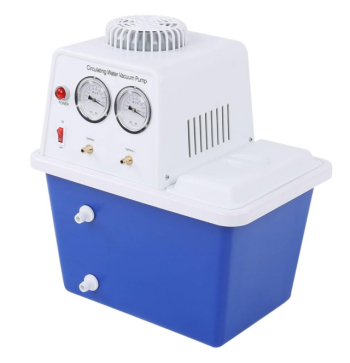
- Circulating Water Vacuum Pump for Laboratory and Industrial Use
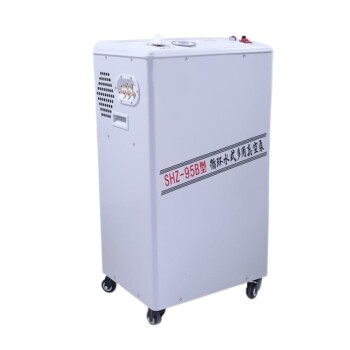
- Laboratory Vertical Water Circulating Vacuum Pump for Lab Use
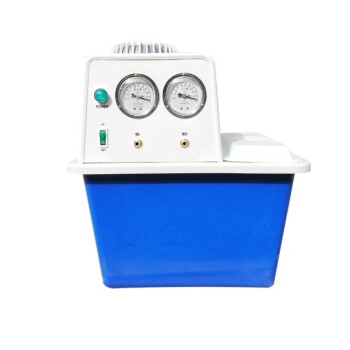
- Laboratory Benchtop Water Circulating Vacuum Pump for Lab Use
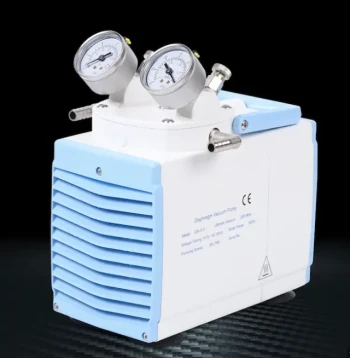
- Oil Free Diaphragm Vacuum Pump for Laboratory and Industrial Use
- Laboratory Rotary Vane Vacuum Pump for Lab Use
People Also Ask
- How is a circulating water vacuum pump utilized for hydrogen production residues? Optimize Your Solid-Liquid Separation
- How does the impeller rotation affect the gas flow in a water circulating vacuum pump? A Guide to the Liquid Ring Principle
- What determines the vacuum degree achievable by a water circulating vacuum pump? Unlock the Physics of Its Limits
- What are the advantages of a water circulating vacuum pump? Superior Durability for Demanding Lab Environments
- How does a water circulating vacuum pump operate? Discover the Efficient Liquid Piston Principle