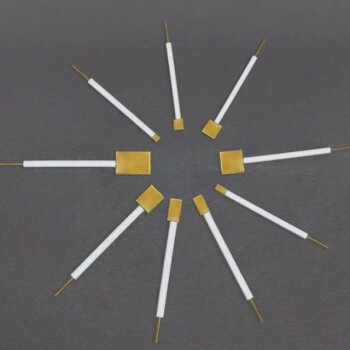
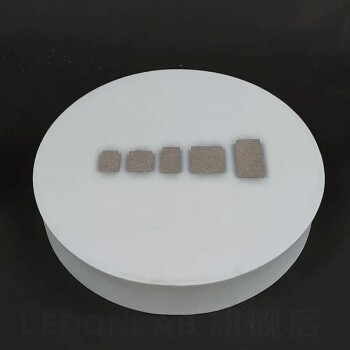
Using a Stainless Steel Mesh (SSM) significantly improves Linear Sweep Voltammetry (LSV) results by providing a vastly larger specific surface area compared to standard wire electrodes. This increased geometric surface area creates a higher density of active reaction sites, which directly reduces polarization resistance. Consequently, this prevents the counter electrode from becoming a bottleneck, ensuring that the current measured is limited only by your sample, not by your hardware.
The counter electrode in an electrochemical cell acts as a gatekeeper for current flow. Stainless Steel Mesh provides the massive surface area required to keep this gate wide open, ensuring your LSV data accurately reflects the catalytic performance of your working electrode.
The Mechanism of Improvement
The Surface Area Advantage
The primary limitation of wire-based electrodes is their relatively low geometric surface area. A wire offers a single, continuous surface with limited exposure to the electrolyte.
In contrast, Stainless Steel Mesh (SSM) consists of interwoven strands. This structure dramatically increases the specific surface area available for electrochemical reactions without increasing the overall footprint of the electrode.
Increasing Active Reaction Sites
Electrochemical reactions occur at specific interface points between the electrode and the electrolyte. Because SSM has a larger surface area, it offers a significantly higher number of active reaction sites.
With more sites available, the electron transfer process becomes more efficient. This allows the system to sustain higher reaction rates effortlessly.
Overcoming Resistance and Limitations
Reducing Polarization Resistance
Polarization resistance occurs when the electrode struggles to facilitate the reaction at the required rate, causing a voltage drop.
By providing abundant active sites, SSM drastically reduces polarization resistance at the counter electrode. The reaction can proceed with minimal energy loss, maintaining the stability of the cell.
Removing the Current Bottleneck
In LSV, you ramp the voltage to observe the resulting current. If your counter electrode has high resistance (like a thin wire), it limits the total current that can flow through the cell.
SSM ensures that the current is not limited by the reaction rate of the counter electrode. This guarantees that the counter electrode remains "invisible" to the measurement, acting purely as a sink or source for electrons.
Capturing True Catalytic Performance
The ultimate goal of LSV is to characterize the working electrode. If the counter electrode is the limiting factor, your data will falsely suggest that your working electrode is less active than it actually is.
Using SSM ensures the data reflects the true catalytic performance of the working electrode. You are measuring the chemistry of your sample, not the physics of a restrictive wire.
Understanding the Trade-offs
Material Compatibility
While Stainless Steel Mesh offers superior surface area, it is not as chemically inert as Platinum. You must ensure that the stainless steel alloy is compatible with your specific electrolyte.
In highly acidic or aggressive environments, stainless steel may corrode or leach ions. This could contaminate your solution and introduce artifacts into your LSV data.
Cleaning and Maintenance
The complex geometry of a mesh structure makes it more difficult to clean than a simple wire.
Contaminants or gas bubbles can easily become trapped within the weave of the mesh. Careful maintenance is required to ensure the mesh retains its active surface area over time.
Making the Right Choice for Your Goal
To maximize the reliability of your electrochemical data, consider the following recommendations:
- If your primary focus is measuring high-performance catalysts: Use Stainless Steel Mesh to ensure the counter electrode surface area is significantly larger than the working electrode, preventing current saturation.
- If your primary focus is chemically aggressive environments: Verify the corrosion resistance of the specific stainless steel grade against your electrolyte, or consider a platinum mesh if chemical inertness is paramount.
By optimizing the geometry of your counter electrode, you remove hardware limitations and unlock the true data potential of your experiments.
Summary Table:
| Feature | Wire-Based Counter Electrode | Stainless Steel Mesh (SSM) |
|---|---|---|
| Surface Area | Low (Single continuous surface) | High (Interwoven mesh strands) |
| Reaction Sites | Limited active sites | Abundant active sites |
| Current Bottleneck | High risk of limiting current flow | Low risk; allows true current measurement |
| Polarization Resistance | High resistance levels | Minimal polarization resistance |
| Data Accuracy | May reflect hardware limitations | Reflects true catalytic performance |
| Maintenance | Easy to clean | Requires careful cleaning of weave |
Maximize Your Electrochemical Research Accuracy with KINTEK
Don't let hardware limitations compromise your data. KINTEK specializes in high-performance laboratory equipment and consumables designed for precision and reliability. Whether you are conducting Linear Sweep Voltammetry (LSV) or advancing energy storage, we provide the essential tools to ensure your results reflect the true performance of your samples.
Our comprehensive range includes:
- Electrochemical Solutions: High-quality electrolytic cells, electrodes, and SSM components.
- Thermal Processing: Muffle, tube, and vacuum furnaces for advanced material synthesis.
- Pressure & Processing: High-pressure reactors, autoclaves, and hydraulic presses for pellet and isostatic pressing.
- Sample Prep: Crushing, milling, and sieving systems for uniform material characterization.
- Lab Essentials: PTFE products, ceramics, crucibles, and cooling solutions like ULT freezers.
Ready to elevate your laboratory's efficiency? Contact KINTEK today to consult with our experts and find the perfect match for your research needs.
References
- Hyungwon Chai, Sokhee P. Jung. Validity and Reproducibility of Counter Electrodes for Linear Sweep Voltammetry Test in Microbial Electrolysis Cells. DOI: 10.3390/en17112674
This article is also based on technical information from Kintek Solution Knowledge Base .
Related Products
- Platinum Auxiliary Electrode for Laboratory Use
- Reference Electrode Calomel Silver Chloride Mercury Sulfate for Laboratory Use
- Metal Disc Electrode Electrochemical Electrode
- Copper Sulfate Reference Electrode for Laboratory Use
- Platinum Sheet Electrode for Laboratory and Industrial Applications
People Also Ask
- What is the function of a platinum electrode as an auxiliary electrode? Ensure Precise Nickel Coating Corrosion Testing
- Why is platinum typically selected as the auxiliary electrode for electrochemical testing of oxazoline inhibitors?
- What does the auxiliary electrode do? Ensuring Accurate Electrochemical Measurements
- What are the roles of Pt counter and reference electrodes in nitrided steel testing? Optimize Your Electrochemical Data
- What are the advantages of using a platinum counter electrode? Ensure Purity in Photocatalytic Coating Deposition