Supercritical fluid technology fundamentally transforms catalyst synthesis by offering unparalleled precision over material properties. When utilized within a continuous solvent thermal flow synthesis (SFS) system, this technology enables the production of Iridium-based active components with particle sizes strictly controlled between 1–10 nm, maintaining a remarkably low deviation of just $\pm$ 0.5 nm.
By leveraging the high diffusivity and adjustable solvation capacity of near-supercritical fluids, this approach ensures a highly stable physical and chemical environment. This leads to uniform metal loading and superior dispersion, which directly results in significantly enhanced catalytic mass activity.
Unmatched Precision in Particle Engineering
Achieving Exact Particle Sizing
The primary advantage of this system is the rigorous control over the dimensions of the active components.
Standard synthesis methods often struggle with polydispersity (varying particle sizes). However, supercritical fluid synthesis (SFS) constrains Iridium-based particles to a specific 1–10 nm range.
Minimizing Deviation
Beyond general sizing, the system offers exceptional consistency. The deviation is capped at $\pm$ 0.5 nm.
This high degree of uniformity ensures that the catalyst behaves predictably in application, as the active sites are physically homogeneous.
The Role of Fluid Dynamics
Leveraging High Diffusivity
The effectiveness of this technology stems from the unique properties of fluids in a near-supercritical state.
These fluids exhibit high diffusivity, allowing them to penetrate porous supports more effectively than standard liquids. This ensures that reactants are distributed quickly and evenly, preventing localized concentration gradients.
Adjustable Solvation Capacity
The solvation capacity—the ability of the fluid to dissolve the Iridium precursor—is adjustable in this state.
By fine-tuning the fluid conditions, operators can manipulate the reaction environment with extreme precision. This control is the mechanism that allows for the tight particle size distributions mentioned above.
Impact on Catalytic Performance
Uniform Loading and High Dispersion
The controlled physical and chemical environment prevents the active metal from clumping together (agglomeration).
Instead, the Iridium achieves high dispersion across the support material. The loading of the metal is uniform throughout the structure, maximizing the efficiency of the material used.
Enhanced Mass Activity
The ultimate operational advantage is a significant increase in catalytic mass activity.
Because the metal is dispersed as fine, uniform nanoparticles, the surface area available for reaction is maximized relative to the mass of the Iridium used.
Critical Operational Considerations
Dependence on Environmental Control
While the advantages are significant, they are entirely dependent on maintaining the specific near-supercritical conditions.
The benefits of adjustable solvation and high diffusivity exist only within a specific thermodynamic window. Deviation from these pressure and temperature setpoints would result in a loss of the precise particle control ($\pm$ 0.5 nm) that defines this method.
Complexity of Parameter Tuning
The system's flexibility is also its main operational challenge.
Because the solvation capacity is adjustable, it requires precise calibration. Achieving the optimal 1-10 nm particle size requires exact management of the fluid's state to ensure the physical environment remains stable throughout the continuous flow process.
Making the Right Choice for Your Goal
When integrating supercritical SFS into your catalyst production strategy, consider your primary objectives:
- If your primary focus is Catalytic Efficiency: Prioritize the high dispersion capabilities of the system to maximize the surface area and mass activity of the Iridium.
- If your primary focus is Product Consistency: Leverage the strict $\pm$ 0.5 nm deviation control to ensure batch-to-batch reproducibility and predictable reaction kinetics.
Supercritical fluid technology offers a definitive solution for high-performance catalyst synthesis by replacing random precipitation with engineered precision.
Summary Table:
| Feature | Supercritical SFS Advantage | Impact on Catalyst |
|---|---|---|
| Particle Size Control | Precise 1–10 nm range | Optimized surface area-to-volume ratio |
| Size Deviation | Ultra-low ±0.5 nm | High product consistency & predictability |
| Fluid Diffusivity | Superior penetration of porous supports | Uniform metal loading & high dispersion |
| Solvation Capacity | Adjustable & fine-tunable | Precision control over reaction kinetics |
| Mass Activity | Maximized active site availability | Significantly higher catalytic efficiency |
Elevate Your Catalyst Research with KINTEK Precision
Unlock the full potential of your materials with KINTEK’s advanced laboratory solutions. Whether you are developing next-generation Iridium catalysts or exploring complex material synthesis, our comprehensive range of high-temperature high-pressure reactors and autoclaves provides the stable environment necessary for supercritical fluid technology.
From crushing and milling systems to high-temperature furnaces (CVD, PECVD, vacuum) and isostatic hydraulic presses, KINTEK specializes in empowering researchers with tools that ensure ±0.5 nm precision and uniform dispersion.
Ready to optimize your catalytic mass activity? Contact our experts today to find the perfect equipment for your laboratory's needs.
References
- Julia Melke, Christian Kallesøe. Recycalyse – New Sustainable and Recyclable Catalytic Materials for Proton Exchange Membrane Electrolysers. DOI: 10.1002/cite.202300143
This article is also based on technical information from Kintek Solution Knowledge Base .
Related Products
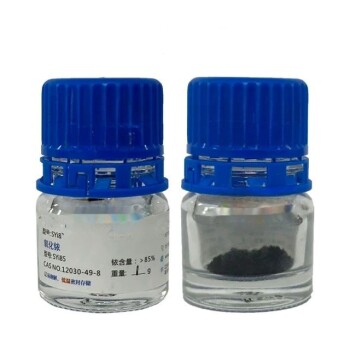
- Iridium Dioxide IrO2 for Water Electrolysis
- Laboratory CVD Boron Doped Diamond Materials
- Spark Plasma Sintering Furnace SPS Furnace
- Chemical Vapor Deposition CVD Equipment System Chamber Slide PECVD Tube Furnace with Liquid Gasifier PECVD Machine
- RF PECVD System Radio Frequency Plasma-Enhanced Chemical Vapor Deposition RF PECVD
People Also Ask
- What are the different types of catalysts used in pyrolysis? A Guide to Optimizing Biomass Conversion
- How does catalyst work in pyrolysis? A Guide to Efficient and Selective Fuel Production
- Which catalyst is used in pyrolysis process? Choosing the Right Catalyst for Your Feedstock
- What is the best catalyst for pyrolysis? A Strategic Guide to Maximizing Bio-Oil Quality and Yield
- What is the primary function of the Ti/Ta2O5–IrO2 electrode? Boost Acrylic Acid Degradation with DSA Technology