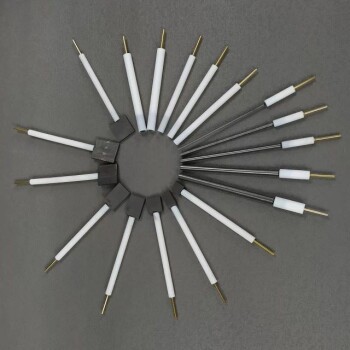
A platinum mesh is the superior choice for a counter electrode because it combines extreme chemical inertness with a geometry that maximizes surface area. By using a mesh, you ensure that the counter electrode remains stable in aggressive electrolytes like sodium chloride, preventing it from reacting or dissolving and thereby altering the composition of your test environment.
The platinum mesh effectively isolates the measurement process from the chemical reaction, ensuring that the corrosion data you collect is strictly a property of the graphene sample and not an artifact of the testing apparatus.
Ensuring Chemical Integrity
Unwavering Chemical Inertness
To accurately test corrosion, your electrolyte (often a saline solution like sodium chloride) must remain free of contaminants. Platinum is chemically inert, meaning it does not undergo anodic dissolution even under current load.
Preventing Redox Interference
Because platinum is stable, it acts solely as a conductor for charge exchange. It does not participate in the redox reactions itself. This ensures that the electrochemical signals detected are generated exclusively by the interface reaction of the graphene-coated sample, not by the counter electrode breaking down.
High Electrical Conductivity
Platinum offers exceptional conductivity. This allows it to efficiently complete the current loop in a three-electrode system. It transmits current without introducing significant resistance, which is vital for maintaining the stability of the potential applied to the working electrode.
The Strategic Value of Mesh Geometry
Maximizing Effective Surface Area
The physical structure of a mesh provides a significantly larger effective surface area compared to a simple wire or sheet. In electrochemical testing, the counter electrode should ideally have a larger surface area than the working electrode (the graphene sample).
Minimizing Polarization Errors
A small counter electrode can become "polarized," creating a bottleneck for the current. The large surface area of the platinum mesh prevents this interference. It ensures the counter electrode does not limit the reaction rate, allowing for the accurate evaluation of the graphene's corrosion kinetics.
Uniform Current Distribution
The mesh geometry facilitates a more uniform distribution of polarization current through the electrolyte. This prevents the formation of current "hot spots" on the working electrode, ensuring the entire graphene surface is tested evenly and improving the reliability of your data.
Understanding the Trade-offs
Cost vs. Performance
Platinum is a precious metal, making these electrodes significantly more expensive than graphite or stainless steel alternatives. However, for high-precision corrosion testing where impurity levels must be zero, the cost is usually justified by the data reliability.
The Surface Area Ratio Rule
Using a platinum mesh does not automatically guarantee success; the surface area ratio matters. If the mesh is smaller than your graphene sample, it will limit the current and skew the results. You must ensure the mesh surface area exceeds that of the sample.
Making the Right Choice for Your Goal
- If your primary focus is Data Accuracy: Prioritize the platinum mesh to eliminate anodic dissolution and ensure the signal comes solely from the graphene interface.
- If your primary focus is Experimental Stability: Use the platinum mesh to maintain uniform current distribution, preventing polarization bottlenecks during long-term corrosion scans.
Ultimately, the platinum mesh serves as an invisible anchor, maintaining system stability so the true properties of your graphene coating can be revealed.
Summary Table:
| Feature | Advantage for Electrochemical Testing | Impact on Graphene Corrosion Data |
|---|---|---|
| Chemical Inertness | Prevents anodic dissolution and electrolyte contamination. | Ensures signals represent the graphene interface only. |
| Mesh Geometry | Provides significantly larger effective surface area. | Minimizes polarization errors and current bottlenecks. |
| High Conductivity | Facilitates efficient, low-resistance charge exchange. | Maintains potential stability at the working electrode. |
| Current Distribution | Ensures uniform polarization across the electrolyte. | Prevents 'hot spots' for consistent surface evaluation. |
Elevate Your Electrochemical Research with KINTEK
Achieve uncompromising data accuracy in your corrosion studies. KINTEK specializes in high-precision laboratory equipment, providing the specialized tools needed for advanced material science. Whether you require premium electrolytic cells and electrodes (including high-purity platinum mesh), high-temperature furnaces, or advanced battery research tools, our solutions are designed to eliminate experimental artifacts and deliver reliable results.
Ready to optimize your lab's performance? Contact KINTEK today to discuss your specific testing requirements and explore our comprehensive range of high-performance consumables and equipment.
References
- Abhishek Tiwari, R.K. Singh Raman. Durable Corrosion Resistance of Copper Due to Multi-Layer Graphene. DOI: 10.3390/ma10101112
This article is also based on technical information from Kintek Solution Knowledge Base .
Related Products
- Rotating Platinum Disk Electrode for Electrochemical Applications
- Platinum Auxiliary Electrode for Laboratory Use
- Platinum Sheet Electrode for Laboratory and Industrial Applications
- Platinum Sheet Electrode for Battery Lab Applications
- Electrode Polishing Material for Electrochemical Experiments
People Also Ask
- What is the working principle of a platinum disk electrode? A Guide to Precise Electrochemical Analysis
- What are the temperature limitations for a platinum disk electrode? The Critical Factor is the Insulating Body
- What can cause poisoning of a platinum disk electrode and how can it be prevented? Ensure Reliable Electrochemical Data
- How should a platinum disk electrode be polished? Master the Technique for Reliable Electrochemical Data
- How should a platinum disk electrode be used during an experiment? A Guide to Accurate Electrochemical Measurements