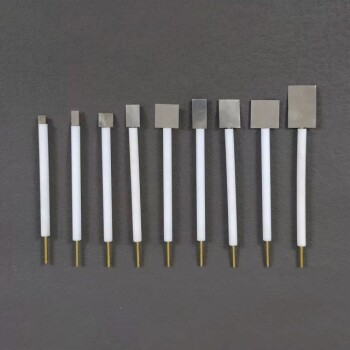
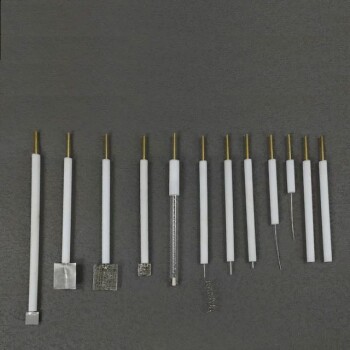
The use of platinum mesh offers a critical combination of chemical stability and geometric efficiency, making it the superior cathode choice for synthesizing TiO2/CuxOy nanotubes. Its primary advantages are its resistance to dissolution—which preserves the purity of the electrolyte—and its ability to facilitate the hydrogen evolution reaction through high electrical conductivity. Furthermore, the physical mesh structure ensures a uniform electric field, which is essential for consistent nanotube growth.
Core Takeaway The defining value of platinum mesh is its ability to maintain a contaminant-free environment while delivering the uniform electric field necessary for precise nanotube architecture.
Ensuring Compositional Purity
Unwavering Chemical Stability
In an electrochemical setup, the cathode is subjected to harsh conditions that can degrade lesser materials. Platinum exhibits high chemical stability, meaning it remains inert during the anodization process.
Eliminating Electrolyte Contamination
Because platinum does not corrode or dissolve under these conditions, it prevents the release of cathodic impurities.
This is vital for synthesizing TiO2/CuxOy nanotubes. It ensures the final composition is dictated solely by the anode and electrolyte, maintaining high compositional purity.
Optimizing Electrochemical Conditions
Superior Electrical Conductivity
Platinum is known for its excellent electrical conductivity. In a two-electrode system, this minimizes resistance and ensures efficient electron transfer.
This efficiency makes it an ideal counter electrode for the hydrogen evolution reaction, which occurs at the cathode during this synthesis.
The Geometric Advantage of Mesh
Using a mesh rather than a solid plate significantly increases the effective surface area of the electrode.
This increased surface area lowers the local current density at the cathode surface, facilitating a smoother reaction rate.
Achieving Field Uniformity
The mesh structure plays a crucial role in distributing the electric field.
It ensures a uniform electric field distribution across the electrolyte. A uniform field is the underlying requirement for growing nanotubes that are consistent in length and diameter across the entire sample.
Understanding the Trade-offs
Cost vs. Performance
While the technical performance of platinum mesh is unmatched for this application, the primary trade-off is material cost. Platinum is significantly more expensive than alternative cathodes like carbon or stainless steel.
However, for applications requiring high purity and precise nanostructures, the cost is justified by the elimination of contamination risks and the consistency of the results.
Making the Right Choice for Your Goal
To maximize the success of your TiO2/CuxOy nanotube synthesis, assess your priorities:
- If your primary focus is Nanotube Purity: Rely on platinum mesh to prevent the dissolution of heavy metal impurities into your CuxOy structure.
- If your primary focus is Structural Consistency: Ensure you utilize a mesh geometry rather than a plate to guarantee the uniform electric field required for even growth.
Platinum mesh transforms the cathode from a simple conductor into a precision tool for controlling both chemical purity and physical structure.
Summary Table:
| Feature | Advantage for TiO2/CuxOy Synthesis | Impact on Final Result |
|---|---|---|
| Chemical Stability | Resistant to corrosion and dissolution | Prevents electrolyte contamination and ensures purity |
| High Conductivity | Facilitates efficient electron transfer | Optimizes the hydrogen evolution reaction |
| Mesh Geometry | Increased surface area and lower current density | Promotes a stable and controlled reaction rate |
| Field Distribution | Uniform electric field across the electrolyte | Ensures consistent nanotube length and diameter |
Elevate Your Nanomaterial Synthesis with KINTEK Precision
At KINTEK, we understand that high-performance research requires uncompromising equipment quality. Whether you are synthesizing TiO2/CuxOy nanotubes or advancing battery technologies, our premium electrolytic cells, electrodes (including platinum mesh), and high-temperature furnaces are engineered to deliver the chemical stability and structural precision your lab demands.
From high-pressure reactors and autoclaves to specialized crushing systems and hydraulic presses, KINTEK provides a comprehensive range of laboratory consumables and equipment tailored for advanced material science. Don't let impurities or inconsistent fields compromise your results.
Contact KINTEK Today to discover how our high-purity tools can streamline your research and enhance your laboratory’s efficiency.
References
- Magda Kozak, Adriana Zaleska‐Medynska. Electrochemically Obtained TiO2/CuxOy Nanotube Arrays Presenting a Photocatalytic Response in Processes of Pollutants Degradation and Bacteria Inactivation in Aqueous Phase. DOI: 10.3390/catal8060237
This article is also based on technical information from Kintek Solution Knowledge Base .
Related Products
- Platinum Sheet Electrode for Laboratory and Industrial Applications
- Platinum Sheet Electrode for Battery Lab Applications
- Platinum Auxiliary Electrode for Laboratory Use
- Mesh belt controlled atmosphere furnace
- Custom PTFE Teflon Parts Manufacturer for PTFE Mesh F4 Sieve
People Also Ask
- What is a common use for a platinum sheet electrode? As a Reliable Counter Electrode in Electrochemical Cells
- What is the most critical guideline for immersing a platinum sheet electrode in an electrolyte? Ensure Accurate Electrochemical Measurements
- What is the purity of the platinum sheet in a platinum sheet electrode? The Key to Reliable Electrochemical Data
- What is the expected lifespan of a platinum sheet electrode? Maximize Your Electrode's Service Life
- What are the available specifications for platinum sheet electrodes? Find the Perfect Fit for Your Electrochemical Needs