Consistent thermal management is the cornerstone of reliable XOS preparation. Aluminum heating blocks provide superior thermal conductivity to eliminate temperature gradients in micro-reactors, while electric heating mantles offer the geometric flexibility required to maintain stable heat transfer across various vessel shapes during biomass pretreatment.
In small-scale laboratory settings, the choice between blocks and mantles dictates the consistency of your reaction kinetics. Aluminum blocks are best for minimizing thermal gradients in fixed vessels, whereas mantles provide necessary adaptability for changing experimental setups.
Precision Through Aluminum Heating Blocks
For researchers focused on the precise kinetics of XOS production, aluminum heating blocks offer distinct mechanical advantages.
Maximizing Thermal Conductivity
Aluminum is utilized primarily for its high thermal conductivity.
This material property ensures that heat is transferred rapidly and efficiently from the source to the reactor wall.
Uniformity in Micro-Reactors
In small-scale setups, such as 0.125 L micro-reactors, maintaining a consistent temperature is difficult but essential.
Aluminum blocks surround the vessel, ensuring uniform temperature distribution across the entire surface area of the reactor walls.
Stabilizing Reaction Kinetics
The primary goal of using an aluminum block is to reduce thermal gradients.
In XOS preparation, uneven heating can lead to inconsistent reaction rates; eliminating these gradients ensures that the kinetic data you collect is accurate and reproducible.
Flexibility with Electric Heating Mantles
When the experimental parameters require versatile equipment, electric heating mantles provide a robust solution.
Adapting to Vessel Geometries
The standout feature of electric heating mantles is their flexibility.
Unlike rigid blocks, mantles can adapt to fit various vessel geometries, making them ideal for laboratories that frequently change reactor types or sizes.
Efficient High-Temperature Transfer
Biomass pretreatment often requires sustained high temperatures to break down complex structures.
Heating mantles ensure stable and efficient heat transfer during these intensive phases, preventing heat loss that could stall the pretreatment process.
Understanding the Operational Trade-offs
While both methods are effective, they serve slightly different operational needs.
Rigidity vs. Adaptability
Aluminum blocks offer the highest precision but possess rigid geometry. They must be machined to match the specific diameter of your 0.125 L reactor perfectly; if you change vessels, the block may no longer be usable.
Surface Contact
Heating mantles accommodate different shapes but rely on the fabric or mesh making good contact with the glass.
If the fit is loose, you may introduce the very thermal gradients that aluminum blocks are designed to eliminate.
Making the Right Choice for Your Goal
To ensure your XOS preparation yields high-quality results, align your heating method with your specific experimental constraints.
- If your primary focus is Kinetic Accuracy: Choose aluminum heating blocks to minimize thermal gradients and ensure uniform heat distribution for precise data collection.
- If your primary focus is Experimental Versatility: Choose electric heating mantles to maintain stable heat transfer while retaining the ability to switch between different reactor shapes and sizes.
By matching the heating mechanism to your reactor geometry, you ensure the thermal stability necessary for successful biomass conversion.
Summary Table:
| Feature | Aluminum Heating Blocks | Electric Heating Mantles |
|---|---|---|
| Primary Benefit | High thermal conductivity & uniformity | Geometric flexibility & adaptability |
| Best For | Precise kinetic studies (0.125 L reactors) | Diverse vessel shapes & sizes |
| Temperature Control | Minimizes thermal gradients | Stable heat transfer for pretreatment |
| Constraint | Rigid geometry (requires specific fit) | Potential for contact-based heat loss |
Elevate Your Biomass Research with KINTEK Precision
Consistency in thermal management is the key to reproducible xylo-oligosaccharide (XOS) yields. Whether your laboratory requires the unmatched thermal uniformity of aluminum heating blocks for micro-reactors or the versatile heat distribution of electric heating mantles, KINTEK provides the high-performance tools you need.
Our extensive portfolio supports every stage of your research, including:
- High-temperature high-pressure reactors and autoclaves for biomass conversion.
- Precision crushing and milling systems for sample preparation.
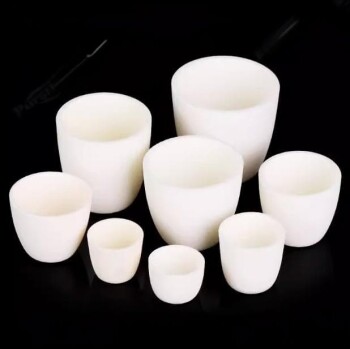
- Advanced cooling solutions and essential ceramics/crucibles for post-reaction processing.
Ready to optimize your reaction kinetics? Contact KINTEK today to discuss how our laboratory equipment and consumables can enhance your research efficiency and accuracy.
References
- Ramachandran Chelliah, Deog‐Hwan Oh. Revolutionizing Renewable Resources: Cutting-Edge Trends and Future Prospects in the Valorization of Oligosaccharides. DOI: 10.3390/fermentation10040195
This article is also based on technical information from Kintek Solution Knowledge Base .
Related Products
- Engineering Advanced Fine Ceramics Aluminum Oxide Al2O3 Heat Sink for Insulation
- High Temperature Wear-Resistant Alumina Al2O3 Plate for Engineering Advanced Fine Ceramics
- Arc-Shaped Alumina Ceramic Crucible High Temperature Resistant for Engineering Advanced Fine Ceramics
- High Temperature Alumina (Al2O3) Furnace Tube for Engineering Advanced Fine Ceramics
- Engineering Advanced Fine Ceramics Alumina Crucibles (Al2O3) for Thermal Analysis TGA DTA
People Also Ask
- What are the useful applications of ceramics? Unlock High-Performance Solutions for Your Industry
- Can ceramic withstand high temperatures? Discover the Superior Materials for Extreme Heat
- How is alumina ceramic made? A Guide to Manufacturing Methods and Material Properties
- What ceramics are used for insulation? Choose the Right Material for Thermal or Electrical Needs
- Why are porous ceramic filters utilized in methane pyrolysis? Protect Your Assets with High-Precision Filtration