Bi-directional pressing graphite molds provide superior density uniformity and dimensional precision. By applying pressure from two opposing directions rather than a single side, these molds eliminate the internal density gradients often found in silver and diamond composites. This mechanical advantage, combined with graphite’s high thermal conductivity and strength, ensures a defect-free structure even under processing conditions of 850°C and 50 MPa.
Core Insight: While standard graphite molds offer excellent thermal stability, the specific addition of a bi-directional design is what solves the problem of uneven densification. It ensures the silver matrix flows uniformly around diamond particles throughout the entire volume of the sample, preventing the "pressure decay" effect common in single-direction pressing.
The Mechanics of Bi-Directional Pressing
Achieving Uniform Pressure Transmission
In a standard uni-directional press, friction between the powder and the mold walls causes pressure to drop as it travels deeper into the sample. Bi-directional pressing applies force from both the top and bottom simultaneously. This effectively halves the distance pressure must travel, ensuring the center of the silver-diamond mixture receives the same compaction force as the outer surfaces.
Eliminating Density Gradients
The primary risk in sintering metal matrix composites is creating a product with a dense "shell" and a porous core. Bi-directional action reduces these internal density gradients. This results in a composite where the silver matrix creates a solid, void-free bond with the diamond particles throughout the entire part.
Precision and Dimensional Accuracy
Because the pressure is balanced, the mechanical stress on the mold itself is more symmetrical. This leads to highly dimensionally accurate samples. The resulting sintered product requires less post-process machining to correct shape distortions caused by uneven shrinkage.
The Role of Graphite Material Properties
Withstanding Extreme Environments
The sintering of silver and diamond requires high energy to achieve solid-liquid phase consolidation. Graphite molds possess exceptional high-temperature strength, maintaining structural integrity at 850°C and 50 MPa. Unlike metal molds which might soften or deform, graphite remains rigid, ensuring the applied hydraulic pressure is transferred effectively to the powder.
Thermal Conductivity and Uniform Heating
Graphite acts as an efficient heat exchanger. Its high thermal conductivity ensures that the heating element's energy acts uniformly on the composite. This prevents "hot spots" that could cause local melting of the silver or "cold spots" that result in incomplete sintering.
Protection and Demolding
Graphite naturally creates a reducing atmosphere in a vacuum environment. This helps protect the silver powder from oxidation by residual oxygen, ensuring cleaner metallic bonding. Additionally, graphite’s inherent lubricity prevents the silver matrix from bonding to the mold walls, facilitating smooth demolding without damaging the composite surface.
Understanding the Trade-offs
Complexity of Setup
Implementing bi-directional pressing requires more complex hydraulic machinery than uni-directional systems. You must ensure precise synchronization of the opposing rams to maintain the sample's position within the "hot zone" of the furnace.
Mold Durability
While graphite is strong, it is also brittle and subject to wear. The dual-action movement increases the friction surfaces involved. Operators must monitor the mold tolerances closely over repeated cycles, as abraded graphite surfaces can eventually compromise the dimensional precision of the composite.
Making the Right Choice for Your Goal
The decision to utilize bi-directional graphite molds should be based on the specific quality requirements of your silver-diamond composite.
- If your primary focus is Structural Homogeneity: Use bi-directional molds to ensure the core of the material is just as dense and strong as the surface, which is critical for wear-parts or heat sinks.
- If your primary focus is Dimensional Tolerance: Choose this method to minimize warping and reduce the need for expensive post-sintering grinding or machining.
Summary: Bi-directional graphite molds are the definitive solution for overcoming density variations in thick or complex silver-diamond parts, ensuring the material performs consistently from the surface to the core.
Summary Table:
| Feature | Bi-Directional Pressing | Uni-Directional Pressing |
|---|---|---|
| Density Uniformity | High (Even core-to-surface density) | Low (Pressure decay causes porous core) |
| Dimensional Accuracy | Superior (Balanced mechanical stress) | Moderate (Prone to warping/shrinkage) |
| Internal Gradients | Minimal (Eliminates density variations) | High (Potential for 'shell' effects) |
| Post-Processing | Reduced (Minimal machining needed) | Higher (Correction for distortions needed) |
| Thermal Stability | Excellent (Up to 850°C @ 50 MPa) | Excellent |
| Setup Complexity | High (Requires synchronized rams) | Low (Single ram system) |
Maximize Material Performance with KINTEK Precision Solutions
Uniformity is the key to high-performance composites. KINTEK specializes in advanced laboratory equipment and consumables designed to meet the rigorous demands of material science. Whether you are working on silver-diamond composites or advanced ceramics, our vacuum hot pressing systems, graphite molds, and high-pressure reactors provide the precision and reliability your research requires.
From hydraulic pellet presses for perfect compaction to high-temperature furnaces (muffle, tube, and vacuum) for flawless sintering, KINTEK offers a comprehensive portfolio including:
- Sieving and Milling: High-efficiency crushing and grinding systems.
- Thermal Solutions: ULT freezers, cold traps, and freeze dryers.
- Consumables: High-purity ceramics, crucibles, and PTFE products.
Ready to eliminate defects and enhance your lab's efficiency? Contact KINTEK today to consult with our experts on the ideal equipment for your specific application!
Related Products
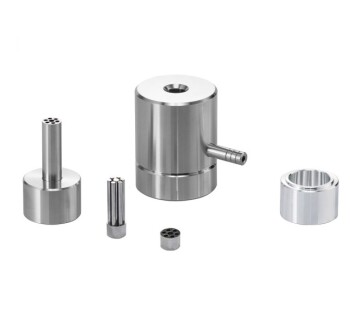
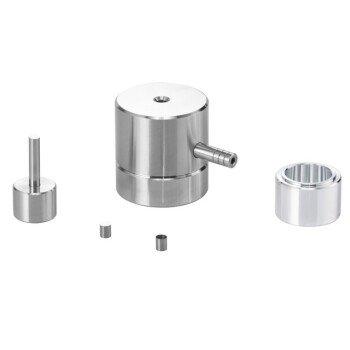
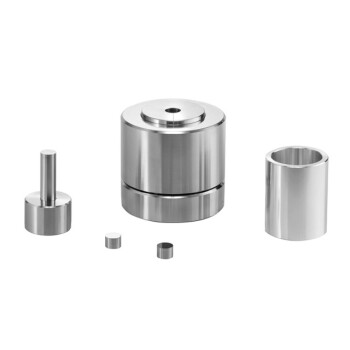
- Round Bidirectional Press Mold for Lab
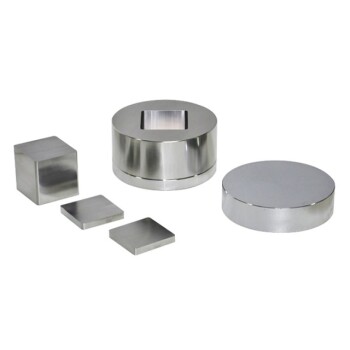
- Square Bidirectional Pressure Mold for Lab Use
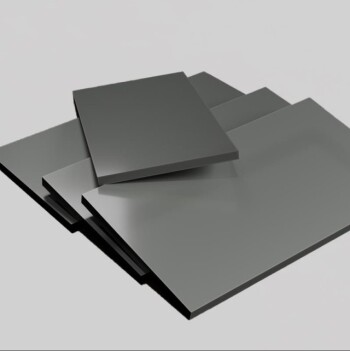
- Carbon Graphite Plate Manufactured by Isostatic Pressing Method
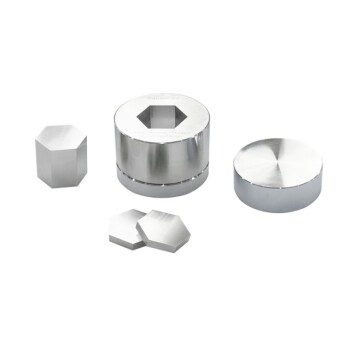
- Polygon Press Mold for Lab
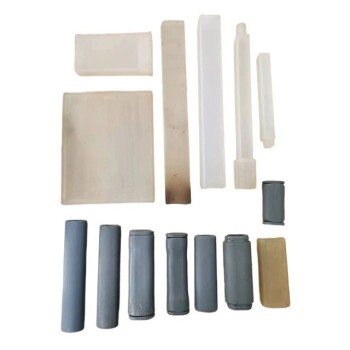
- Isostatic Molding Pressing Molds for Lab
People Also Ask
- How to use a press mold? Master the Art of Creating Consistent Ceramic Forms
- What is the press mould method? A Guide to Consistent, Detailed Ceramic Forms
- What is the function of press molds during the preparation of SiCf/Ti-43Al-9V composites? Achieve Structural Precision
- What is a press mold used for? Achieve Repeatable Precision and Efficiency
- What is the purpose of specialized pressure devices in sulfide solid-state batteries? Ensure Chemo-Mechanical Stability