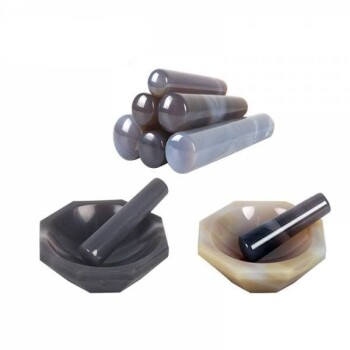
The primary advantage of using high-purity Silicon Carbide (SiC) grinding media in the preparation of Cf/SiC composite coatings is the simultaneous achievement of mechanical refinement and chemical preservation. By utilizing SiC balls during the milling process, you ensure the raw material powders are pulverized and mixed effectively due to the media's extreme hardness. Furthermore, this specific material choice prevents the introduction of foreign contaminants, which is critical for maintaining the slurry's purity and ensuring the structural integrity of the final coating.
By matching the grinding media material to the coating material, you eliminate cross-contamination risks while leveraging the high hardness of Silicon Carbide to achieve a uniformly refined slurry.
Mechanics of Refinement
To create high-quality Cf/SiC composite coatings, the physical state of the aqueous slurry is paramount. The use of SiC media directly addresses the mechanical requirements of powder preparation.
Leveraging High Hardness
Silicon Carbide is inherently robust. Its high hardness allows the grinding media to exert significant force on the raw materials during the milling process.
This physical property ensures that the powder particles are thoroughly broken down and refined.
Achieving Uniform Mixing
A consistent coating requires a consistent slurry. The milling action provided by SiC media facilitates uniform mixing of the raw material powders.
Over a typical 24-hour milling cycle, this ensures that the solid components are evenly distributed throughout the aqueous solution, preventing agglomeration.
Preservation of Chemical Integrity
Beyond the physical breakdown of particles, the chemical composition of the slurry dictates the success of the coating. This is where the specific choice of high-purity SiC becomes essential.
Preventing Foreign Impurities
In any ball milling process, the grinding media inevitably experiences wear and abrasion. If the media were made of a different material (such as steel or zirconia), abraded particles would contaminate the slurry.
By using SiC media for SiC-based coatings, any material worn off the grinding balls is chemically identical to the slurry itself. This effectively prevents the introduction of foreign impurities.
Ensuring Coating Quality
The presence of contaminants can degrade the performance of the final product.
Maintaing chemical purity in the slurry is cited as an essential factor for forming high-quality Si/SiC coatings. It ensures that the final composite structure is not compromised by unexpected elements.
Critical Process Factors
While the material benefits are clear, achieving these results requires adherence to specific process parameters.
The Time Investment
The reference specifies a 24-hour milling duration.
This implies that the benefits of high hardness and uniform mixing are cumulative. Shortcutting this process may result in insufficient refinement, regardless of the media quality.
Material Compatibility
The advantage regarding purity is specific to the compatibility between the media and the slurry.
This benefit relies on the principle of "like grinding like." Using SiC media is a targeted strategy specifically for SiC-based applications to maintain elemental consistency.
Making the Right Choice for Your Goal
When designing your coating preparation process, consider your primary objectives:
- If your primary focus is Chemical Purity: Choose high-purity SiC media to ensure that any media wear does not introduce foreign contaminants into your slurry.
- If your primary focus is Slurry Homogeneity: Rely on the high hardness of SiC media combined with a 24-hour cycle to achieve thorough particle refinement and uniform dispersion.
By aligning your grinding media with your slurry composition, you secure the foundation for a high-performance composite coating.
Summary Table:
| Feature | Advantage | Benefit to Coating |
|---|---|---|
| Material Compatibility | Matches SiC slurry composition | Eliminates foreign impurity contamination |
| Extreme Hardness | Superior mechanical force | Achieves effective particle refinement |
| Process Durability | Resistance to excessive wear | Maintains slurry consistency over 24h cycles |
| Uniform Mixing | High-density impact | Prevents agglomeration for a smooth finish |
Elevate Your Composite Research with KINTEK Precision
Achieving the perfect Cf/SiC coating requires more than just high-quality raw materials; it demands the right processing tools. KINTEK specializes in advanced laboratory equipment and high-purity consumables designed for the most rigorous material science applications.
Our extensive portfolio includes high-performance crushing and milling systems and high-purity SiC grinding media tailored to prevent cross-contamination and ensure the chemical integrity of your samples. Beyond milling, we support your entire workflow with high-temperature furnaces, isostatic hydraulic presses, and specialized ceramics.
Ready to optimize your slurry refinement and ensure zero-contamination results? Contact KINTEK today to consult with our experts on the best milling solutions for your laboratory's needs.
References
- SONG Sheng-Xing, HUANG Zheng-Ren. Optical Coating on C$lt;inf$gt;f$lt;/inf$gt;/SiC Composites via Aqueous Slurry Painting and Reaction Bonding. DOI: 10.15541/jim20160275
This article is also based on technical information from Kintek Solution Knowledge Base .
Related Products
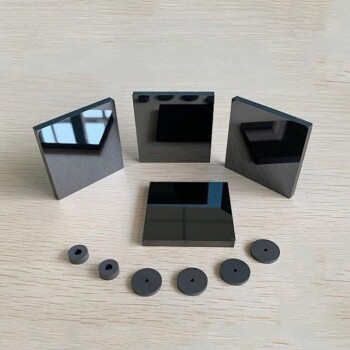
- Silicon Carbide (SIC) Ceramic Sheet Wear-Resistant Engineering Advanced Fine Ceramics
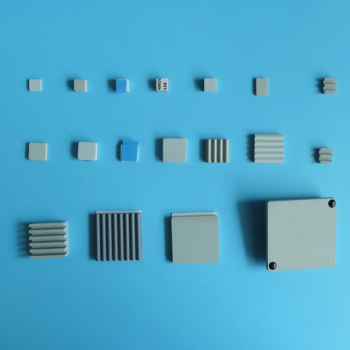
- Silicon Carbide (SIC) Ceramic Sheet Flat Corrugated Heat Sink for Engineering Advanced Fine Ceramics
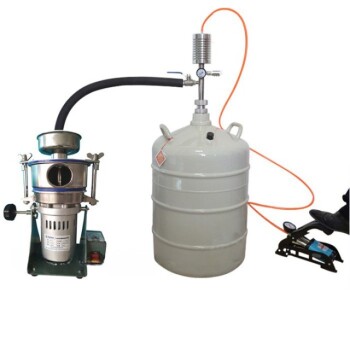
- Small Cryogenic Grinder Cryomill Cryogrinder with Liquid Nitrogen for Laboratory Use
- Three-dimensional electromagnetic sieving instrument
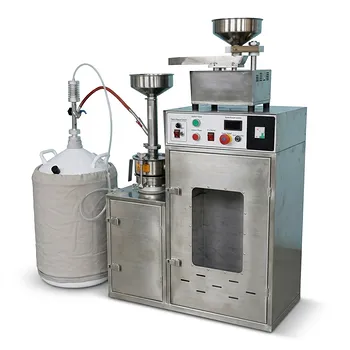
- Liquid Nitrogen Cryogenic Grinder Mill Cryomill with Screw Feeder
People Also Ask
- What is the strongest ceramics? Silicon Carbide Leads in Hardness & Thermal Strength
- What are the properties and applications of silicon carbide ceramics? Solve Extreme Engineering Challenges
- What are the uses of silicon carbide ceramics in different industries? Master Extreme Performance in Aerospace, Semiconductors & More
- What are the properties of SiC? Unlock High-Temperature, High-Frequency Performance
- What are the applications of silicon carbide? From Abrasives to High-Tech Semiconductors