The primary advantage of Hot Isostatic Pressing (HIP) over standard hot pressing lies in its ability to apply high-pressure gas equally from all directions. This omnidirectional force allows for the uniform densification of tungsten-steel joints, ensuring that complex geometries and graded powder layers are consolidated without the directional inconsistencies often found in standard uniaxial hot pressing.
Core Takeaway: By subjecting Functionally Graded Materials (FGM) to isostatic pressure, HIP enables multiple material layers to simultaneously achieve relative densities exceeding 97%. This effectively eliminates internal microporosity, resulting in joints with superior interfacial tensile strength and thermal shock stability.
The Mechanics of Densification
Omnidirectional Pressure Application
Standard hot pressing typically applies force from a single axis, which can lead to density gradients in complex parts.
Hot Isostatic Pressing utilizes high-pressure gas to exert force from every direction simultaneously. This ensures that every surface of the tungsten-steel joint, regardless of its shape complexity, receives equal compaction force.
Simultaneous Layer Consolidation
Tungsten and steel have vastly different material properties, making the transition layers in an FGM critical.
The HIP process allows multiple graded powder layers to densify at the same time. This simultaneous action prevents the segregation of materials and ensures a cohesive bond throughout the transition zone.
Achieving High Relative Density
For high-performance applications, material density is directly correlated with strength.
HIP equipment consistently achieves high relative densities, often above 97 percent. This level of densification is difficult to achieve uniformly with standard pressing methods, particularly in multi-layered or graded materials.
Structural Integrity of the Joint
Elimination of Internal Microporosity
Porosity is a common failure point in metal-to-metal joints, acting as stress concentrators.
The high-pressure environment of the HIP system effectively collapses internal voids. By eliminating these micropores, the process removes potential crack initiation sites within the tungsten-steel interface.
Enhanced Interfacial Tensile Strength
The bond between the tungsten and steel layers determines the ultimate utility of the component.
Because the material achieves near-total density and a homogeneous microstructure, the tensile strength at the interface is significantly improved. The lack of segregation ensures the load is distributed evenly across the joint.
Improved Thermal Shock Stability
Tungsten and steel expand at different rates when heated, creating internal stress.
The uniform densification provided by HIP creates a more stable graded structure. This stability significantly improves the material's resistance to thermal shock, preventing delamination during rapid temperature changes.
Understanding the Trade-offs
While HIP offers superior physical properties, it is important to contextualize its use against standard processing methods.
Process Complexity and Cost
HIP is generally considered a high-performance process. While it has become more cost-effective over time, it is typically more complex than standard hot pressing.
If a project involves simple, flat geometries where ultra-high density is not a critical failure parameter, standard hot pressing may offer a faster, lower-cost alternative. HIP is best reserved for applications where internal integrity and complex shaping are non-negotiable.
Making the Right Choice for Your Goal
When deciding between standard hot pressing and HIP for tungsten-steel FGMs, consider your performance requirements.
- If your primary focus is Maximum Durability: Choose HIP to ensure relative densities >97% and to eliminate microporosity that could lead to fatigue failure.
- If your primary focus is Complex Geometry: Choose HIP to guarantee uniform pressure and densification across irregular shapes that standard pressing cannot accommodate.
- If your primary focus is Thermal Resilience: Choose HIP to maximize thermal shock stability, ensuring the joint survives rapid temperature cycling.
By utilizing Hot Isostatic Pressing, you are prioritizing the long-term structural integrity and reliability of the tungsten-steel bond.
Summary Table:
| Feature | Standard Hot Pressing | Hot Isostatic Pressing (HIP) |
|---|---|---|
| Pressure Direction | Uniaxial (Single-axis) | Omnidirectional (Isostatic) |
| Relative Density | Often < 95% | Exceeds 97% |
| Geometry Support | Simple/Flat shapes | Complex and irregular shapes |
| Internal Porosity | Potential for micropores | Effectively eliminated |
| Joint Strength | Variable depending on axis | High interfacial tensile strength |
| Thermal Stability | Moderate | Superior thermal shock resistance |
Elevate Your Material Integrity with KINTEK
Unlock the full potential of your research and manufacturing with KINTEK’s advanced laboratory solutions. Whether you are developing high-performance tungsten-steel joints or pioneering new Functionally Graded Materials (FGM), our cutting-edge equipment provides the precision you need.
From high-performance Hot Isostatic Presses (HIP) and vacuum furnaces to specialized hydraulic presses (isostatic, hot, and pellet), KINTEK offers the comprehensive tools required for superior densification and material bonding. Our portfolio also includes essential crushing systems, high-temperature high-pressure reactors, and specialized ceramics to support every stage of your workflow.
Ready to achieve 97%+ relative density and eliminate internal defects?
Contact KINTEK today to find the perfect solution for your lab!
References
- Ishtiaque Robin, S.J. Zinkle. Evaluation of Tungsten—Steel Solid-State Bonding: Options and the Role of CALPHAD to Screen Diffusion Bonding Interlayers. DOI: 10.3390/met13081438
This article is also based on technical information from Kintek Solution Knowledge Base .
Related Products
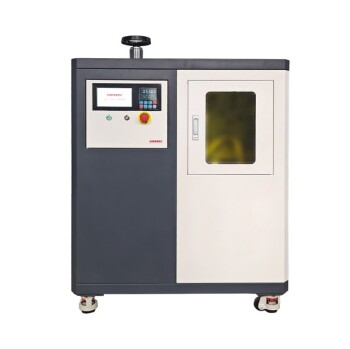
- Warm Isostatic Press for Solid State Battery Research
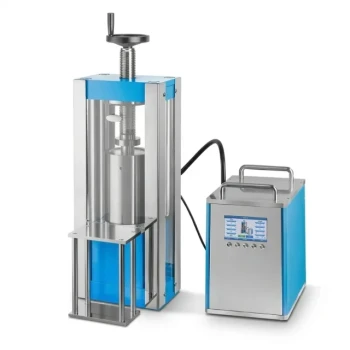
- Electric Split Lab Cold Isostatic Press CIP Machine for Cold Isostatic Pressing
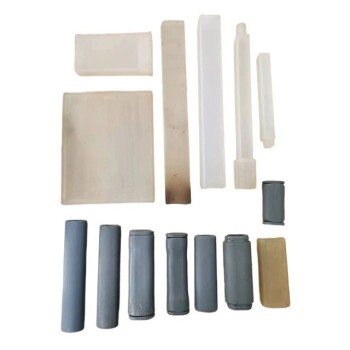
- Isostatic Molding Pressing Molds for Lab
- Automatic High Temperature Heated Hydraulic Press Machine with Heated Plates for Lab
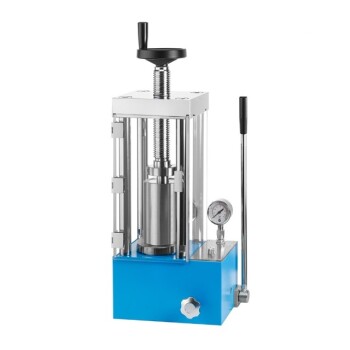
- Manual High Temperature Heated Hydraulic Press Machine with Heated Plates for Lab
People Also Ask
- What is the temperature of a warm isostatic press? Achieve Optimal Densification for Your Materials
- What is the function of a Warm Isostatic Press (WIP) in all-solid-state pouch cells? Optimize Battery Density
- Why are Warm Isostatic Presses (WIP) necessary for solid-state batteries? Achieve Atomic-Level Contact
- What advantages does a warm isostatic press offer over a traditional uniaxial press for Li6PS5Cl electrolyte sheets?
- How do warm isostatic presses improve dry electrode performance? Enhance ASSB Conductivity with Heat & Pressure