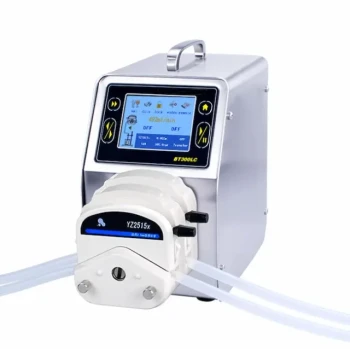
Rotary Vane Vacuum Pumps are widely recognized as the versatile workhorses of the vacuum industry, favored for their balance of performance and affordability. Their primary advantages lie in their ability to deliver strong airflow and high-quality vacuum ratings within a compact, robust, and cost-effective package.
Core Takeaway: Rotary Vane Vacuum Pumps offer the optimal intersection of price and performance for "rough" vacuum applications. They are best suited for professionals needing reliable, continuous suction for dry gases without the complexity or expense of specialized high-vacuum systems.
Performance and Efficiency
Compact Power
Despite their relatively small physical footprint, these pumps provide strong airflow. They generally offer volumetric flow rates ranging between 2 to 20 Cubic Feet per Minute (CFM), making them powerful enough for a wide variety of laboratory and industrial tasks.
Impressive Vacuum Ratings
For their class, Rotary Vane pumps achieve excellent ultimate vacuum ratings. They are capable of reaching vacuum levels of approximately 1 milliTorr, which allows them to function effectively in the medium to high vacuum spectrum.
The "Roughing" Advantage
Because of their efficiency in the rough vacuum range (from atmospheric pressure down to approx. 1 Torr), they are frequently used as "roughing pumps." This means they can efficiently evacuate the bulk of air and gas from a chamber before a more sensitive high-vacuum pump takes over.
Operational Versatility
Continuous Suction
These pumps are engineered for tasks that require continuous suction. They are particularly effective in processes involving the reduction of dry gases, ensuring steady operation over long periods.
Broad Application Utility
Their versatility makes them a staple in chemistry and biology laboratories. Whether used for evacuating vacuum chambers or managing specific chemical processes, they effectively handle the transition from atmospheric pressure to a stable vacuum state.
Economic and Structural Benefits
Cost-Effectiveness
One of the most significant advantages is the price-to-performance ratio. They are a practical, budget-friendly solution for standard vacuum needs compared to alternative pump technologies.
Robust Construction
Rotary Vane pumps are known for being robust and durable. Their design—utilizing a rotor with spinning vanes inside a chamber—is a time-tested mechanism that ensures longevity even under regular use.
Understanding the Trade-offs
Oil Dependency
These are oil-sealed devices, meaning the chamber is filled with specially formulated mineral oil to seal and lubricate the vanes. This requires regular maintenance to monitor oil levels and quality, as the oil can degrade or become contaminated over time.
Gas Limitations
While excellent for dry gases, these pumps can be sensitive to certain contaminants. When using them in the atmosphere or with "dirty" air, special air filters are often required to remove contaminants and protect the internal mechanism.
Making the Right Choice for Your Goal
To determine if a Rotary Vane Vacuum Pump is the right tool for your specific application, consider the following:
- If your primary focus is general laboratory work: These pumps are ideal due to their ability to handle medium to high vacuum requirements reliably.
- If your primary focus is budget and durability: The robust construction and cost-effective nature of this pump make it the most practical investment for standard "rough" vacuum tasks.
- If your primary focus is system integration: Their capability to reach ~1 milliTorr makes them the perfect "backing" or "roughing" pump to support more complex high-vacuum systems.
By balancing strong suction capabilities with a proven, economical design, the Rotary Vane Vacuum Pump remains the definitive choice for dependable vacuum generation.
Summary Table:
| Feature | Benefit | Specifications/Details |
|---|---|---|
| Vacuum Rating | High-quality medium to high vacuum | Reaches ~1 milliTorr |
| Flow Rate | Strong, continuous airflow | 2 to 20 Cubic Feet per Minute (CFM) |
| Cost-Efficiency | Excellent price-to-performance ratio | Budget-friendly for standard tasks |
| Durability | Long-lasting, robust construction | Time-tested oil-sealed mechanism |
| Versatility | Multi-functional application | Ideal for chemistry, biology, and system backing |
Optimize Your Vacuum Systems with KINTEK Precision
Looking for reliable suction and durable performance? KINTEK specializes in providing high-performance laboratory equipment, including robust Rotary Vane Vacuum Pumps and specialized cooling solutions like ULT freezers and freeze dryers.
Whether you are managing complex chemical processes in a high-temperature furnace or require steady evacuation for vacuum reactors and autoclaves, our team offers the technical expertise to ensure your lab runs at peak efficiency.
Ready to upgrade your lab's performance? Contact KINTEK today to discover our full range of vacuum solutions and laboratory consumables tailored to your research needs.
Related Products
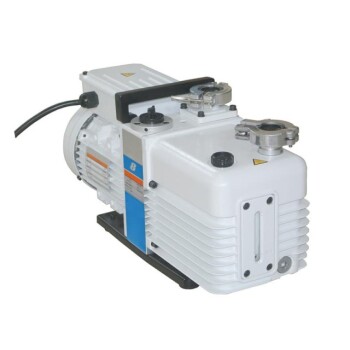
- Laboratory Rotary Vane Vacuum Pump for Lab Use
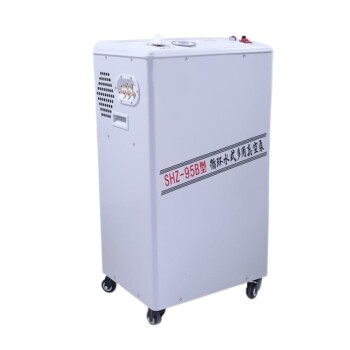
- Circulating Water Vacuum Pump for Laboratory and Industrial Use
- Laboratory Vertical Water Circulating Vacuum Pump for Lab Use
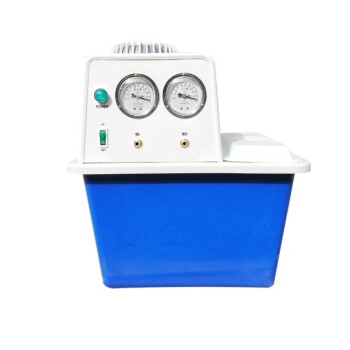
- Laboratory Benchtop Water Circulating Vacuum Pump for Lab Use
- Vacuum Sealed Continuous Working Rotary Tube Furnace Rotating Tube Furnace
People Also Ask
- What is the use of rotary vacuum pump? A Guide to Reliable Rough Vacuum for Labs & Industry
- What is the vacuum level of a rotary vacuum pump? Achieve Medium Vacuum for Your Lab or Industry
- What is the difference between a single-stage and a two-stage rotary vane pump? Choosing the Right Vacuum Depth
- How does the performance of single-stage and two-stage rotary vane pumps compare? Optimize Your Vacuum Efficiency
- How does a Rotary Vane Pump operate? Discover Efficient Vacuum Technology for Your Lab