The distinct advantage of the Cold Sintering Process (CSP) lies in its ability to densify oxide solid-state electrolytes at temperatures below 300°C, drastically lower than the 1000°C+ environments required by traditional furnaces. By replacing pure thermal energy with a combination of pressure and chemical driving forces, CSP circumvents the volatility issues inherent to lithium-based ceramics.
Core Takeaway While traditional sintering relies on extreme heat to achieve density, it often degrades the chemical composition of the electrolyte. CSP solves this fundamental conflict by achieving densification at low temperatures, preserving the critical lithium inventory and ensuring phase purity without the massive energy costs of high-temperature processing.
Solving the Thermal Instability Problem
Drastic Temperature Reduction
Traditional manufacturing methods, such as tube or muffle furnaces, rely on thermal environments often exceeding 1000°C.
CSP fundamentally changes this paradigm. It utilizes a transient solvent phase and applied pressure to facilitate mass transport, allowing densification to occur at temperatures below 300°C.
Preventing Lithium Volatilization
The most critical technical challenge in processing electrolytes like LATP or LAGP is lithium volatility.
At the high temperatures (>950°C) used in traditional furnaces, lithium tends to evaporate. This loss disrupts the stoichiometry of the material, which can severely degrade ionic conductivity. CSP operates well below the volatilization threshold, locking the lithium within the crystal structure.
Inhibiting Deleterious Reactions
High thermal energy does not just densify material; it also accelerates unwanted chemical kinetics.
Traditional high-temperature sintering can trigger side reactions or secondary phase formation at the grain boundaries. By processing at low temperatures, CSP inhibits these deleterious interface reactions, resulting in a chemically purer final component.
Operational and Economic Advantages
Reduced Energy Consumption
Traditional sintering requires maintaining high temperatures for extended periods to promote atomic diffusion.
Because CSP operates at a fraction of these temperatures (sub-300°C), the total energy budget for manufacturing is significantly reduced. This makes the process more sustainable and cost-effective for large-scale production.
Mechanism of Densification
CSP does not rely solely on heat. It employs pressure assistance combined with chemical driving forces (dissolution-precipitation).
This allows the material to achieve densification similar to thermal sintering but without the thermal trauma associated with conventional methods.
Understanding the Trade-offs
While CSP offers superior chemical control, it is important to understand why traditional methods are still prevalent.
Crystallinity and Grain Growth
High-temperature furnaces (950°C+) are highly effective at promoting grain growth and eliminating internal porosity through pure thermal diffusion.
Supplementary data suggests that this high-thermal environment is critical for maximizing mechanical strength and ensuring a fully continuous grain boundary network in some contexts.
Activation Energy Requirements
Certain materials require high-temperature annealing (e.g., 550°C for sulfides or higher for oxides) to transform from amorphous precursors into stable crystalline phases.
If your precursor material requires high thermal activation energy to crystallize, CSP alone may need to be paired with specific annealing steps or optimized precursor powders.
Making the Right Choice for Your Goal
To determine if CSP is the superior route for your specific electrolyte application, evaluate your primary constraints.
- If your primary focus is Stoichiometric Control: Choose CSP to prevent lithium volatilization and maintain the exact chemical composition of the electrolyte.
- If your primary focus is Energy Efficiency: Choose CSP to significantly lower the manufacturing energy footprint by operating below 300°C.
- If your primary focus is Maximizing Mechanical Strength: Consider that traditional high-temperature sintering may still offer advantages in creating highly robust, fully annealed ceramic bodies, provided lithium loss is managed.
By decoupling densification from extreme heat, Cold Sintering allows you to process chemically unstable lithium oxides without compromising their functional properties.
Summary Table:
| Feature | Cold Sintering Process (CSP) | Traditional Furnaces (Muffle/Tube) |
|---|---|---|
| Sintering Temp | < 300°C | > 1000°C |
| Lithium Loss | Minimal (High Retention) | High (Volatilization Risk) |
| Energy Demand | Low | Very High |
| Mechanism | Pressure + Transient Solvent | Pure Thermal Diffusion |
| Main Benefit | Phase Purity & Stoichiometry | High Mechanical Strength |
Elevate Your Battery Research with KINTEK Precision
Transitioning from traditional sintering to the Cold Sintering Process requires specialized equipment that balances pressure and chemical control. KINTEK provides the advanced hydraulic presses, high-performance crushing and milling systems, and vacuum furnaces necessary to optimize your electrolyte production.
Whether you are refining LAGP/LATP compositions or developing next-gen battery tools, our comprehensive portfolio of high-temperature high-pressure reactors, electrolytic cells, and lab consumables ensures your materials maintain peak ionic conductivity.
Ready to reduce your energy footprint and preserve lithium integrity? Contact KINTEK today to find the perfect technical solution for your laboratory.
Related Products
- Controlled Nitrogen Inert Hydrogen Atmosphere Furnace
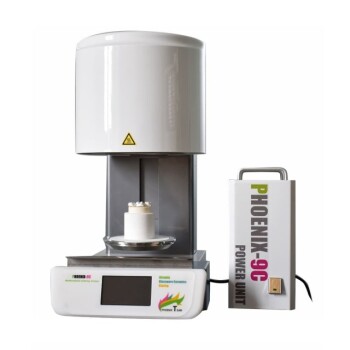
- Dental Porcelain Zirconia Sintering Ceramic Furnace Chairside with Transformer
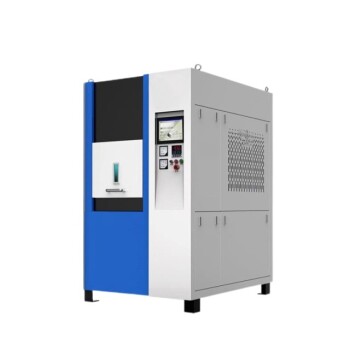
- Vacuum Heat Treat and Pressure Sintering Furnace for High Temperature Applications
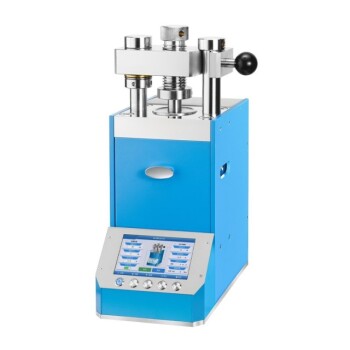
- Spark Plasma Sintering Furnace SPS Furnace
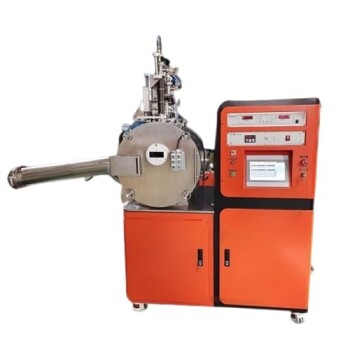
- Small Vacuum Heat Treat and Tungsten Wire Sintering Furnace
People Also Ask
- Why is hydrogen used in furnaces? Achieve Superior Purity and Bright Finishes
- What is the role of a hydrogen atmosphere furnace in diamond/copper composites? Enhance Your Material Purity
- What are the characteristics and risks of a hydrogen atmosphere in a furnace? Master the Balance of Power and Control
- What is the use of hydrogen in furnace? A Key to Oxygen-Free High-Temperature Processing
- Why is a hydrogen atmosphere furnace necessary for W-Cu composite? Unlock Superior Infiltration and Density