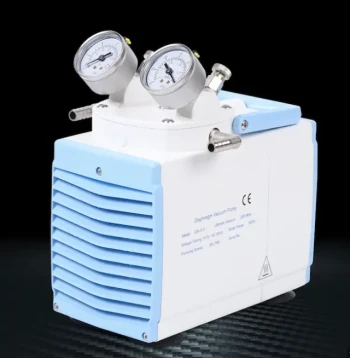
Rotary Vane Vacuum Pumps utilize two distinct drive types: Direct Drive and Belt Drive. Direct drive units connect the pump mechanism directly to the motor via a coupling, typically running at higher speeds around 1750 RPM, while belt drive units employ a pulley system to reduce RPM and lower operating temperatures.
While direct drive pumps operate at higher speeds and temperatures, belt drive systems utilize speed reduction to run significantly cooler. Your selection depends on the specific thermal and mechanical requirements of your vacuum application.
Operational Characteristics by Drive Type
Direct Drive Configuration
In a direct drive system, the vacuum pump connects to the electric motor using a crankshaft and coupling.
This direct link means the pump rotates at the same speed as the motor. Consequently, these pumps typically operate at approximately 1750 RPM.
Thermal Profile of Direct Drive
Due to the higher rotational speed, direct drive pumps generate significant heat.
They typically operate at a temperature of around 70 degrees Celsius. This higher operating temperature is a baseline characteristic that users must account for in their system design.
Belt Drive Configuration
Belt drive pumps utilize a pulley and belt system to transfer power from the motor to the pump.
Unlike direct drive models, this configuration often incorporates speed reduction. This allows the pump to spin at a lower RPM than the motor itself.
Thermal Advantages of Belt Drive
The reduced rotational speed of a belt drive system results in less friction and heat generation.
These pumps generally operate 10 to 20 degrees Celsius cooler than their direct drive counterparts. This thermal reduction can be advantageous in environments sensitive to heat output.
Factors Influencing Performance Stability
The Role of Oil and Lubrication
Regardless of the drive type, these pumps are oil-sealed, meaning the oil acts as both a lubricant and a sealant for the vanes.
Because temperature affects oil viscosity, the drive type directly impacts the oil's performance. The cooler operation of belt drives may extend the effective life of the oil compared to the hotter direct drive units.
Additional Variables
While drive type is a major factor, it is not the sole determinant of pump temperature.
Operating temperature is also influenced by oil quality and viscosity, the age of the pump, and the specific type of gas being evacuated.
Understanding the Trade-offs
RPM vs. Heat Generation
The primary trade-off is between rotational speed and operating temperature.
Direct drive pumps offer a straightforward, high-RPM operation but come with a thermal penalty of running at nearly 70 degrees Celsius. Belt drive pumps sacrifice that direct connection to achieve a lower RPM profile, resulting in a cooler running unit.
Mechanical Complexity
Direct drive systems use a simple coupling, whereas belt drives introduce belts and pulleys.
While belt drives run cooler, the belt mechanism introduces a different maintenance requirement compared to the enclosed coupling of a direct drive system.
Making the Right Choice for Your Goal
- If your primary focus is cooler operation: Choose a Belt Drive pump to leverage the lower RPM and reduced operating temperature (10-20°C cooler).
- If your primary focus is standard high-speed performance: Choose a Direct Drive pump, but ensure your setup can accommodate operating temperatures around 70°C.
Select the drive type that best aligns with your thermal constraints and operational environment.
Summary Table:
| Feature | Direct Drive Pump | Belt Drive Pump |
|---|---|---|
| Mechanism | Motor coupled via crankshaft | Pulley and belt system |
| Rotational Speed | High (~1750 RPM) | Low (Speed reduction enabled) |
| Operating Temp | High (Approx. 70°C) | Cooler (10-20°C lower than direct) |
| Maintenance | Simple coupling maintenance | Belt tension and replacement |
| Best For | Standard high-speed performance | Heat-sensitive environments |
Optimize Your Vacuum Performance with KINTEK Expertise
Are you deciding between the high-speed efficiency of a direct drive or the cool-running longevity of a belt drive system? KINTEK specializes in precision laboratory equipment designed to meet the rigorous demands of modern research.
Our extensive portfolio includes high-performance rotary vane vacuum pumps, along with a comprehensive range of high-temperature furnaces (muffle, vacuum, CVD), hydraulic presses, and cooling solutions like cold traps and freeze dryers. Whether you are conducting battery research or complex chemical synthesis, our technical experts are ready to help you select the ideal drive configuration and consumables to maximize your lab's uptime.
Ready to upgrade your laboratory setup? Contact KINTEK today for a personalized consultation and discover the value of precision-engineered vacuum solutions.
Related Products
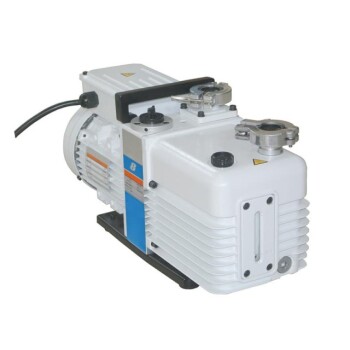
- Laboratory Rotary Vane Vacuum Pump for Lab Use
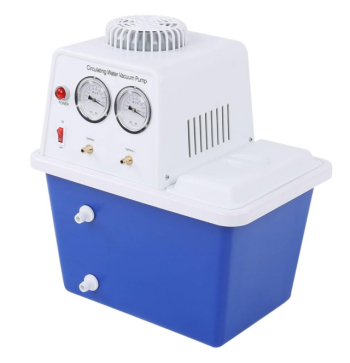
- Circulating Water Vacuum Pump for Laboratory and Industrial Use
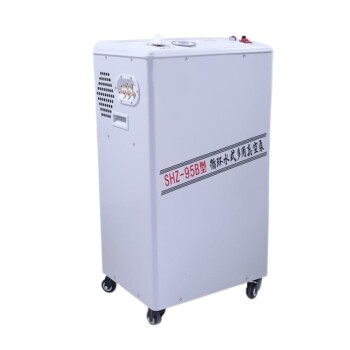
- Laboratory Vertical Water Circulating Vacuum Pump for Lab Use
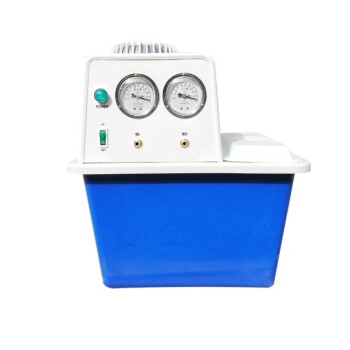
- Laboratory Benchtop Water Circulating Vacuum Pump for Lab Use
- Vacuum Sealed Continuous Working Rotary Tube Furnace Rotating Tube Furnace
People Also Ask
- What is the use of rotary vacuum pump? A Guide to Reliable Rough Vacuum for Labs & Industry
- What is the vacuum level of a rotary vacuum pump? Achieve Medium Vacuum for Your Lab or Industry
- What is the difference between a single-stage and a two-stage rotary vane pump? Choosing the Right Vacuum Depth
- How does the performance of single-stage and two-stage rotary vane pumps compare? Optimize Your Vacuum Efficiency
- How does a Rotary Vane Pump operate? Discover Efficient Vacuum Technology for Your Lab