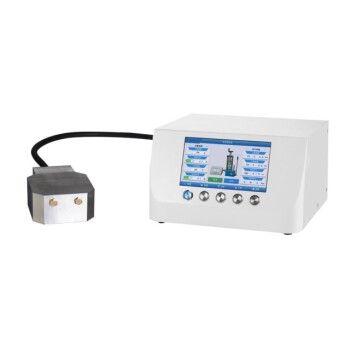
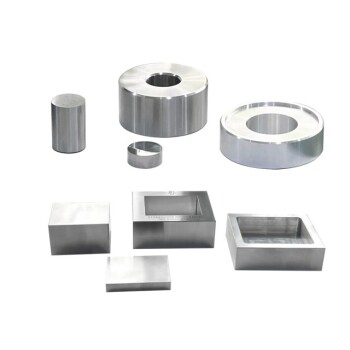
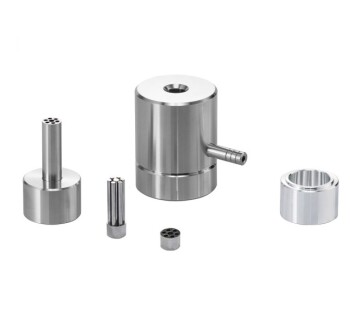
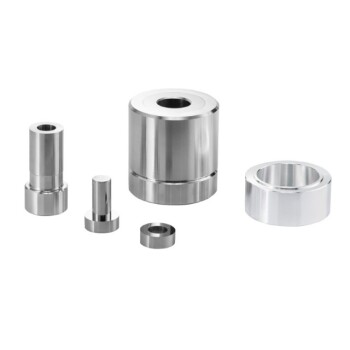
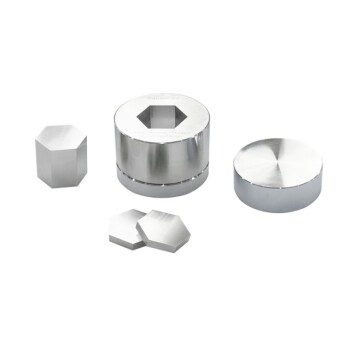
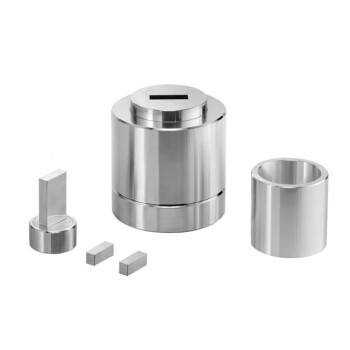
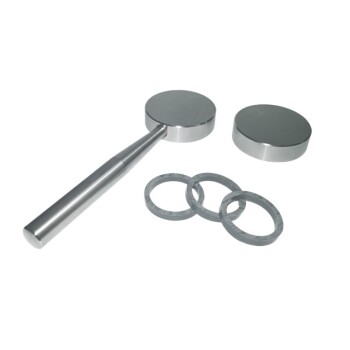
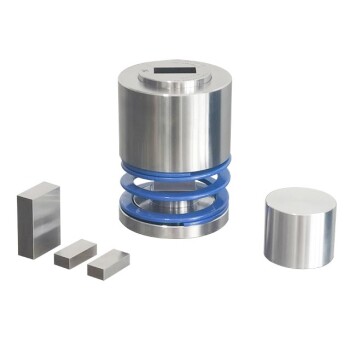
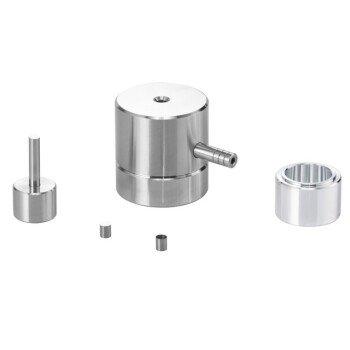
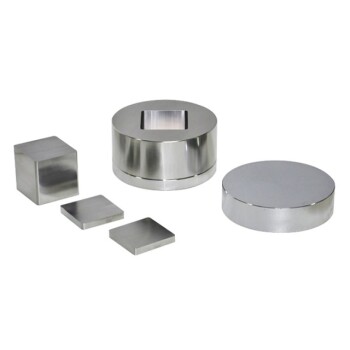
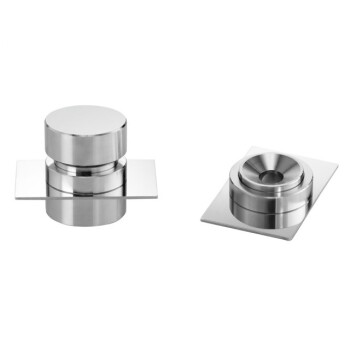
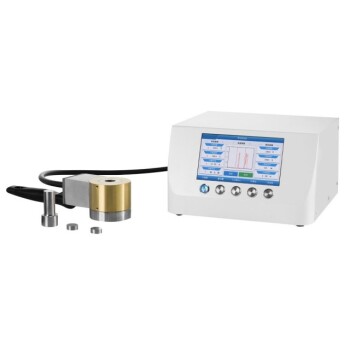
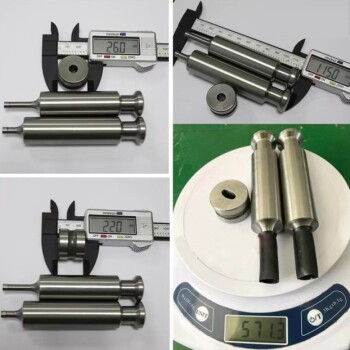
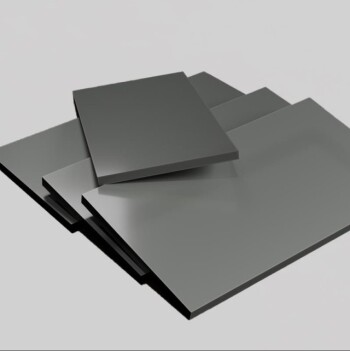
Stainless steel plates and pressure molds form the critical hardware interface necessary to characterize solid-state electrolytes accurately. The pressure mold transforms loose powder into a dense, conductive solid, while the stainless steel plates serve as blocking electrodes that isolate ionic motion from chemical reactions during Electrochemical Impedance Spectroscopy (EIS).
Core Takeaway Accurate ionic conductivity measurements require a sample that is physically dense and electrochemically isolated. The pressure mold minimizes physical resistance by eliminating voids between particles, while stainless steel plates eliminate electrochemical noise by blocking ion transfer at the boundaries, ensuring the data reflects only the material's intrinsic properties.
The Critical Role of the Pressure Mold
To measure the conductivity of a solid-state electrolyte, you must first transform it from a loose powder into a cohesive solid. The pressure mold is the primary tool for this physical transformation.
Densification and Pore Elimination
The primary function of the mold is to contain the powder while a hydraulic press applies massive force, often between 400 MPa and 640 MPa.
This extreme pressure forces particles together, effectively eliminating air voids and pores that would otherwise act as insulators and skew test results.
Minimizing Grain Boundary Resistance
High density is not just about structural integrity; it is essential for electrical performance.
By compacting the powder into a dense pellet, the mold ensures maximum contact area between individual grains. This reduces grain boundary resistance, ensuring the measured impedance reflects the material's capability, not the gaps between particles.
Defining Sample Geometry
Conductivity is a calculated value derived from resistance, thickness, and area.
The pressure mold ensures the sample is formed into a standardized disc with a uniform diameter and flat surfaces. This geometric precision is vital for converting raw impedance data into accurate conductivity values.
The Function of Stainless Steel Plates
Once the sample is pressed, stainless steel plates are introduced to interface the solid electrolyte with the testing instrument. Their role is electrochemical rather than mechanical.
Acting as Ion-Blocking Electrodes
In an EIS test, you want to measure how fast ions move through the material, not how they react with the electrodes.
Stainless steel is electronically conductive but ionically non-conductive. It allows electrons to pass through to the measurement device while physically blocking lithium ions (or other charge carriers) at the interface.
Isolating Intrinsic Properties
Because stainless steel is irreversible to ions, no chemical reaction (such as plating or stripping) occurs at the electrode surface.
This allows the EIS system to capture the bulk ionic conductivity and activation energy of the electrolyte without interference from electrode reaction kinetics.
Establishing a Symmetric Cell Structure
The plates are typically placed on both sides of the pellet to create a symmetric "blocking" cell (SS | Electrolyte | SS).
This symmetry simplifies the equivalent circuit model used to analyze the data, making it easier to mathematically separate the bulk resistance of the electrolyte from other factors.
Understanding the Trade-offs
While these tools are standard, improper use leads to significant measurement errors. It is critical to understand the limitations of the hardware.
Mechanical Deformation Limits
While stainless steel is robust, it has yield strengths that must be respected, especially during hot pressing.
References indicate that at elevated temperatures (e.g., 200°C), molds are typically rated for lower pressures (around 240 MPa) to prevent deformation. Exceeding this can warp the mold, leading to non-uniform pellets and inaccurate geometric calculations.
Interface Contact Issues
Ideally, the stainless steel plates make perfect contact with the electrolyte pellet.
However, if the pellet surface is rough or the pressure during the test is insufficient, "contact resistance" will occur. This appears in the data as an additional resistance that can be mistaken for the material's internal resistance.
Making the Right Choice for Your Goal
To ensure your data is valid, tailor your approach based on the specific phase of your research.
- If your primary focus is Material Synthesis (High Density): Prioritize high-pressure capability (up to 640 MPa) in your mold selection to minimize grain boundary resistance and eliminate porosity.
- If your primary focus is EIS Data Accuracy: Ensure your stainless steel plates are highly polished and apply sufficient clamping force to the cell to minimize contact resistance between the electrode and the electrolyte.
Success in solid-state testing relies on the separation of variables: use the mold to fix the microstructure and the plates to isolate the electrochemical signal.
Summary Table:
| Component | Primary Function | Key Benefit |
|---|---|---|
| Pressure Mold | Powder Densification | Eliminates air voids & minimizes grain boundary resistance |
| Hydraulic Press | Applying Force (400-640 MPa) | Ensures geometric precision and uniform sample thickness |
| Stainless Steel Plates | Blocking Electrodes | Isolates bulk ionic conductivity from electrochemical noise |
| **Symmetric Cell (SS | SE | SS)** |
Elevate Your Solid-State Battery Research with KINTEK
Precision in material characterization starts with the right hardware. KINTEK specializes in high-performance laboratory equipment, providing the tools you need for reliable ionic conductivity testing. From robust hydraulic presses (pellet, hot, and isostatic) and precision pressure molds to high-temperature muffle and vacuum furnaces, our solutions ensure your samples meet the highest density and purity standards.
Whether you are synthesizing new electrolytes or optimizing electrode interfaces, our comprehensive portfolio—including PTFE consumables, ceramic crucibles, and cooling solutions—is designed to support your most demanding R&D goals.
Ready to achieve superior data accuracy? Contact our experts today to find the perfect equipment for your laboratory!
Related Products
- Double Plate Heating Press Mold for Lab
- Special Heat Press Mold for Lab Use
- Special Shape Press Mold for Lab
- Anti-Cracking Press Mold for Lab Use
- Isostatic Molding Pressing Molds for Lab
People Also Ask
- How to use a press mold? Master the Art of Creating Consistent Ceramic Forms
- What is the process of mold press? A Step-by-Step Guide to Compression Molding
- What is the primary function of mold pressing for LAGP powders? Achieve High-Performance Solid Electrolytes
- Why are pressure molds with non-conductive resin inner walls required for battery testing? Ensure Data Accuracy
- What is the press mould method? A Guide to Consistent, Detailed Ceramic Forms