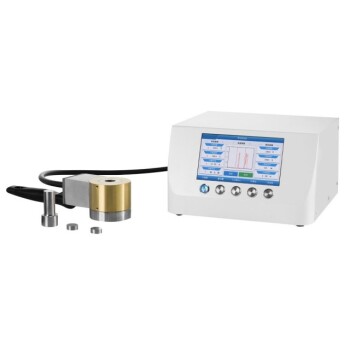
Cold Isostatic Pressing (CIP) is the most effective method for ensuring high-density uniformity in Strontium Titanate ceramic green bodies. By applying equal, omnidirectional pressure through a liquid medium, CIP eliminates the internal stress gradients and density variations that are typical of traditional uniaxial pressing. This process results in a green body that undergoes uniform shrinkage during sintering, effectively preventing cracks, warping, and microstructural defects.
Core Takeaway: Cold Isostatic Pressing uses isotropic pressure to create a homogeneous internal structure in Strontium Titanate green bodies. This uniformity is critical for achieving high sintered densities and consistent electrical performance while minimizing mechanical failures during the thermal process.
Achieving Structural Homogeneity
Elimination of Internal Pressure Gradients
Unlike uniaxial pressing, which applies force from one or two directions, CIP applies uniform liquid pressure to the Strontium Titanate powder from all directions. This isotropic compression prevents the formation of "low-density zones" that often lead to structural weak points in the finished ceramic.
High Green Body Density
Applying high pressures (often reaching 200 MPa or more) through a fluid medium ensures that the ceramic particles are packed as tightly as possible. This increased relative density reduces the amount of shrinkage that occurs during sintering, making the final dimensions of the component more predictable.
Enhanced Particle Bonding
The uniform application of force increases the bonding force between powder particles. This creates a stable green body shape that is less prone to crumbling or edge-breaking during handling before it enters the kiln.
Impact on the Sintering Process
Preventing Deformation and Warping
Because the density of the green body is consistent throughout its entire volume, the material shrinks uniformly during high-temperature sintering. This eliminates the differential shrinkage rates that cause parts to warp, twist, or lose their intended geometric tolerances.
Suppression of Micro-cracking
Internal stresses generated during the molding phase are a primary cause of failure in ceramics. CIP effectively eliminates stress gradients, significantly reducing the risk of micro-cracks forming as the Strontium Titanate undergoes thermal expansion and contraction.
Refined Grain Structure
Utilizing CIP contributes to a uniform and fine grain structure (often around 3 micrometers in titanate systems). A controlled microstructure is essential for maintaining the mechanical strength and the reliability of the material's electrical properties.
Understanding the Trade-offs
Process Complexity and Speed
CIP is generally a slower process than high-speed uniaxial dry pressing because it requires sealing the powder in flexible molds (such as rubber or latex) and managing a pressurized liquid cycle. This can lead to longer production lead times for high-volume manufacturing.
Equipment and Tooling Costs
The initial investment for isostatic pressing equipment is higher than for basic hydraulic presses. Additionally, flexible tooling must be carefully designed to account for isotropic compression, which can be more complex than designing a standard steel die.
Surface Finish Limitations
Because the powder is pressed against a flexible membrane rather than a polished steel die, the surface finish of a CIPed green body may be rougher. This often necessitates secondary machining or grinding if high-precision surface characteristics are required.
How to Apply This to Your Project
Making the Right Choice for Your Goal
- If your primary focus is mechanical reliability: Use CIP to eliminate internal density gradients that serve as initiation points for structural cracks.
- If your primary focus is consistent electrical performance: Utilize the uniform densification of CIP to ensure a homogeneous grain structure across the entire ceramic component.
- If your primary focus is complex geometries: Choose CIP because the fluid medium transmits pressure equally into all crevices of a mold, which is impossible with rigid dies.
- If your primary focus is high-volume cost reduction: Consider using uniaxial pressing for initial shaping, followed by CIP as a secondary "densification" step to balance speed and quality.
By leveraging the isotropic nature of Cold Isostatic Pressing, you can produce Strontium Titanate components that meet the highest standards of structural and functional integrity.
Summary Table:
| Feature | Advantage for Strontium Titanate | Key Impact on Final Ceramic |
|---|---|---|
| Isotropic Pressure | Eliminates internal stress gradients | Prevents warping, twisting, and cracks |
| High Green Density | Tight particle packing (up to 200+ MPa) | Predictable shrinkage and high final density |
| Structural Homogeneity | Uniform internal powder distribution | Consistent electrical and mechanical performance |
| Flexible Tooling | Pressure applied equally from all directions | Supports complex geometries impossible with rigid dies |
| Refined Grain Growth | Controlled microstructure (approx. 3μm) | Enhanced material reliability and strength |
Elevate Your Ceramic Precision with KINTEK
Achieving the perfect Strontium Titanate green body requires more than just pressure—it requires precision. KINTEK specializes in high-performance laboratory equipment, providing the advanced isostatic presses (cold and hot) and hydraulic pellet presses needed to eliminate structural defects and ensure uniform densification.
Our comprehensive portfolio supports your entire workflow, from crushing and milling systems for powder preparation to a diverse range of high-temperature furnaces (muffle, tube, vacuum, and atmosphere) for flawless sintering. Whether you are focused on mechanical reliability or consistent electrical performance, KINTEK delivers the tools to optimize your material properties.
Ready to enhance your lab's efficiency and product quality?
Contact our technical experts today to find the ideal pressing and thermal solution for your advanced material research!
References
- Jan‐Helmut Preusker, Wolfgang Rheinheimer. Impact of AC and DC Electric Fields on the Microstructure Evolution in Strontium Titanate. DOI: 10.1002/adem.202201848
This article is also based on technical information from Kintek Solution Knowledge Base .
Related Products
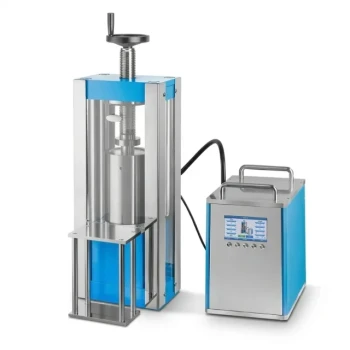
- Electric Split Lab Cold Isostatic Press CIP Machine for Cold Isostatic Pressing
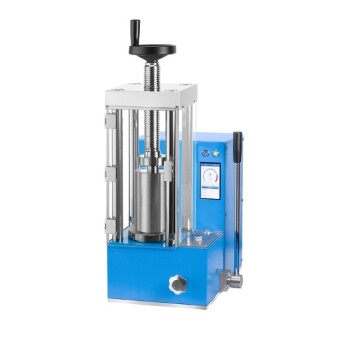
- Electric Lab Cold Isostatic Press CIP Machine for Cold Isostatic Pressing
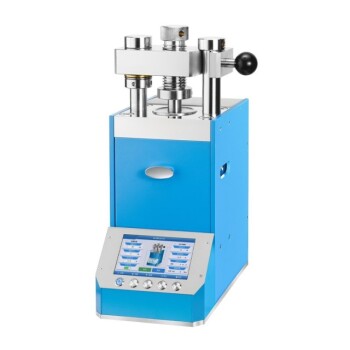
- Automatic Lab Cold Isostatic Press CIP Machine Cold Isostatic Pressing
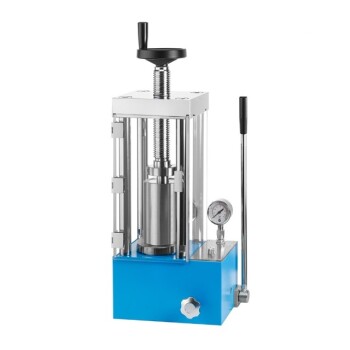
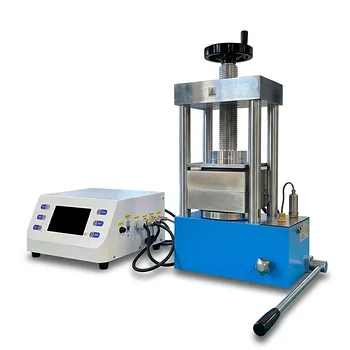
- Manual Cold Isostatic Pressing Machine CIP Pellet Press
- Warm Isostatic Press for Solid State Battery Research
People Also Ask
- How is isostatic pressing equipment utilized to integrate lithium metal anodes during solid-state battery assembly?
- How does isostatic pressing equipment enhance lithium metal anode contact? Optimize Your Solid-State Battery Assembly
- What is the meaning of isostatic pressing? Achieve Uniform Density in Complex Parts
- What is isostatic pressing method for ceramics? Achieve Uniform Density for Complex Parts
- What role does cold isostatic pressing play in the formation of feed rods for single crystal growth? Ensure Stability.