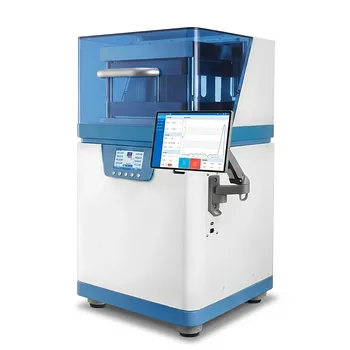
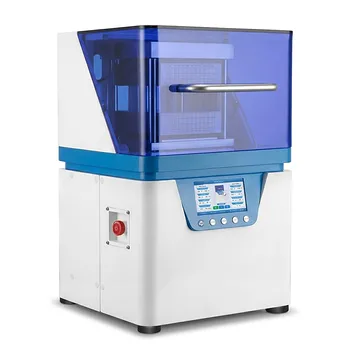
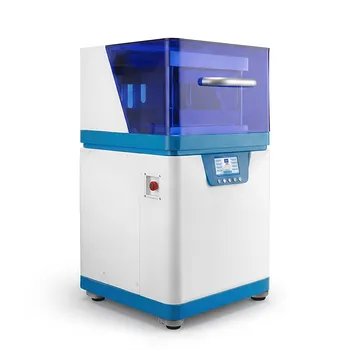
Knowledge Cold Isostatic Press What role does cold isostatic pressing play in the formation of feed rods for single crystal growth? Ensure Stability.
Author avatar

Tech Team · Kintek Solution

Updated 1 month ago

What role does cold isostatic pressing play in the formation of feed rods for single crystal growth? Ensure Stability.


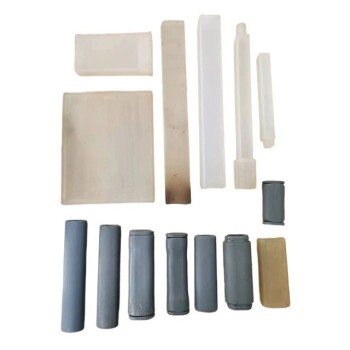
Cold isostatic pressing (CIP) is the critical bridge between raw powder and a viable single crystal. It transforms loose synthetic powders into highly dense, uniform "green" rods by applying equal fluid pressure from all directions. This process is essential to eliminate internal density gradients that would otherwise cause the rod to warp, crack, or destabilize the molten zone during the crystal growth process.

The primary role of CIP in feed rod formation is to ensure extreme density uniformity and geometric consistency. By eliminating internal voids and gradients, CIP prevents structural failure during sintering and maintains a stable melting zone during floating zone growth.

Achieving Omnidirectional Compaction

The Mechanics of Fluid Pressure

CIP involves placing powder materials into a flexible container, such as a rubber or elastic tube, and submerging it in a fluid medium. High pressure—typically ranging from 40 MPa to 200 MPa (2 kbar)—is applied to the fluid, which then exerts equal force on all surfaces of the mold.

Maximizing Green Density

This multi-directional application of pressure forces powder particles into the tightest possible packing configuration. This results in a "green body" that can reach up to 85% of the material's theoretical density, providing the initial structural integrity needed for handling.

Eliminating Internal Voids

By applying pressure isotropically, CIP effectively eliminates internal voids and air pockets. This level of compaction is nearly impossible to achieve with traditional uniaxial pressing, which often leaves "dead zones" where pressure was not fully transmitted.

The Necessity of Uniformity in Crystal Growth

Preventing Density Gradients

Standard mechanical pressing creates density gradients because the friction between the powder and the die walls prevents even distribution. CIP eliminates these gradients, ensuring that the rod has the same density from the core to the surface and from top to bottom.

Maintaining Floating Zone Stability

During Floating Zone (FZ) or Optical Floating Zone (OFZ) growth, a stable molten pool is required to form a high-quality crystal. Uniform rods prevent melt zone drift, which occurs when density variations cause the rod to melt at uneven rates, potentially leading to rod breakage or crystal defects.

Mitigating Thermal Stress

Feed rods must undergo high-temperature sintering to reach their final density before the growth process begins. CIP-formed rods possess the mechanical strength to withstand intense thermal expansion and contraction without localized cracking or deformation.

Understanding the Trade-offs and Limitations

Complexity of Mold Design

Flexible molds must be carefully engineered to account for significant volumetric shrinkage as the powder compacts. If the mold is not properly sealed, the hydraulic fluid can leak in and contaminate the precursor powder, ruining the entire batch.

Equipment and Throughput Constraints

CIP systems are generally more expensive and slower than simple uniaxial mechanical presses. The process requires a hydraulic system and a drying stage for the molds, which may increase the production time for the initial feed rods.

Geometric Precision

While CIP provides excellent density uniformity, it may produce less precise surface finishes compared to rigid die pressing. This often necessitates a light machining or sanding step after pressing to ensure the rod fits perfectly into the crystal growth furnace's rotation mechanism.

Applying CIP to Your Growth Process

Choosing the Right Pressure for Your Goal

The required pressure and mold material depend heavily on the specific oxide or compound being synthesized.

  • If your primary focus is Floating Zone (FZ) stability: Prioritize the highest possible density uniformity to prevent melt zone fluctuations and rod snapping.
  • If your primary focus is preventing sintering cracks: Ensure that the CIP process is followed by a slow, controlled ramp-up in the sintering furnace to manage the high green density.
  • If your primary focus is high-purity single crystals: Use medical-grade latex or silicone molds and double-bag the powder to ensure zero contamination from the hydraulic fluid.

By mastering the application of uniform pressure, you ensure the structural and chemical integrity required for high-performance single crystal production.

Summary Table:

Feature Impact on Feed Rod Formation Benefit for Crystal Growth
Isotropic Pressure Eliminates internal density gradients and voids Prevents rod warping and cracking during sintering
High Compaction Achieves up to 85% theoretical green density Enhances structural integrity for easier handling
Uniform Density Ensures consistent melting rates across the rod Maintains a stable molten zone in FZ/OFZ growth
Void Removal Increases mechanical strength and durability Mitigates thermal stress during high-temp processing

Elevate Your Material Synthesis with KINTEK Precision

High-quality single crystal growth starts with the perfect feed rod. KINTEK specializes in advanced laboratory equipment, offering high-performance isostatic presses (cold and hot) and hydraulic pellet presses designed to achieve the extreme density uniformity your research demands.

Beyond compaction, our comprehensive portfolio includes high-temperature furnaces (muffle, tube, vacuum), CVD/PECVD systems, and crushing/milling equipment to support your entire workflow—from raw powder to final crystal.

Ready to eliminate density gradients and stabilize your melting zone? Contact our technical experts today to find the ideal solution for your laboratory and experience the KINTEK advantage in precision and reliability.

References

  1. Naoki Kikugawa, Hitoshi Yamaguchi. Single-Crystal Growth of a Cubic Laves-Phase Ferromagnet HoAl2 by a Laser Floating-Zone Method. DOI: 10.3390/cryst13050760

This article is also based on technical information from Kintek Solution Knowledge Base .

Related Products

People Also Ask

Related Products

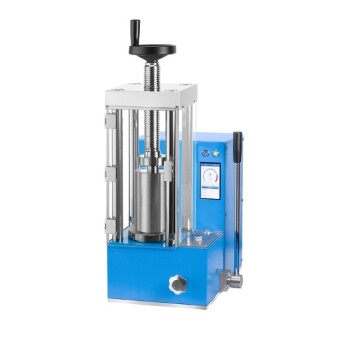
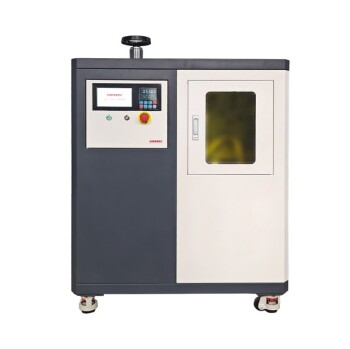
Electric Lab Cold Isostatic Press CIP Machine for Cold Isostatic Pressing

Electric Lab Cold Isostatic Press CIP Machine for Cold Isostatic Pressing

Produce dense, uniform parts with improved mechanical properties with our Electric Lab Cold Isostatic Press. Widely used in material research, pharmacy, and electronic industries. Efficient, compact, and vacuum-compatible.

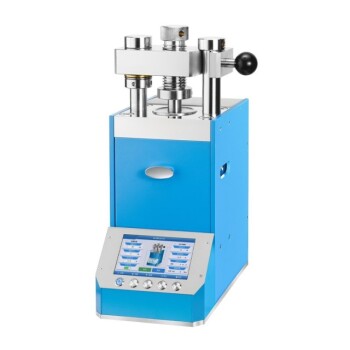
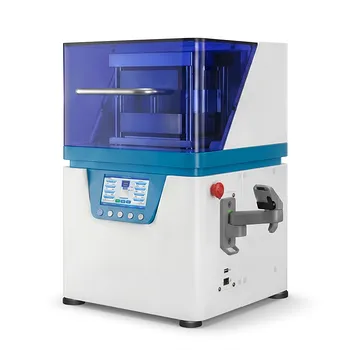
Automatic Lab Cold Isostatic Press CIP Machine Cold Isostatic Pressing

Automatic Lab Cold Isostatic Press CIP Machine Cold Isostatic Pressing

Efficiently prepare samples with our Automatic Lab Cold Isostatic Press. Widely used in material research, pharmacy, and electronic industries. Provides greater flexibility and control compared to electric CIPs.

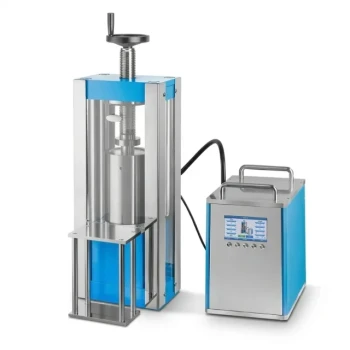
Electric Split Lab Cold Isostatic Press CIP Machine for Cold Isostatic Pressing

Electric Split Lab Cold Isostatic Press CIP Machine for Cold Isostatic Pressing

Split cold isostatic presses are capable of providing higher pressures, making them suitable for testing applications that require high pressure levels.

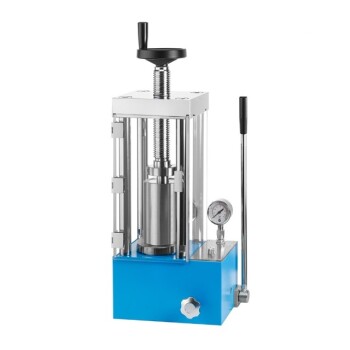
Manual Cold Isostatic Pressing Machine CIP Pellet Press

Manual Cold Isostatic Pressing Machine CIP Pellet Press

Lab Manual Isostatic Press is a high-efficient equipment for sample preparation widely used in material research, pharmacy, ceramics, and electronic industries. It allows for precision control of the pressing process and can work in a vacuum environment.

Isostatic Molding Pressing Molds for Lab

Isostatic Molding Pressing Molds for Lab

Explore high-performance isostatic pressing molds for advanced material processing. Ideal for achieving uniform density and strength in manufacturing.

Warm Isostatic Press for Solid State Battery Research

Warm Isostatic Press for Solid State Battery Research

Discover the advanced Warm Isostatic Press (WIP) for semiconductor lamination. Ideal for MLCC, hybrid chips, and medical electronics. Enhance strength and stability with precision.

Laboratory Hydraulic Press Lab Pellet Press Machine for Glove Box

Laboratory Hydraulic Press Lab Pellet Press Machine for Glove Box

Controlled environment lab press machine for glove box. Specialized equipment for material pressing and shaping with high precision digital pressure gauge.

Automatic Laboratory Hot Press Machine with Heated Platens 200x200mm Program Control Dual Heating Plates

Automatic Laboratory Hot Press Machine with Heated Platens 200x200mm Program Control Dual Heating Plates

Streamline your laboratory workflow with our high precision automatic hot press featuring dual heated plates customizable multi stage program control and safety protection ensuring consistent sample preparation and polymer film processing for advanced scientific research applications.

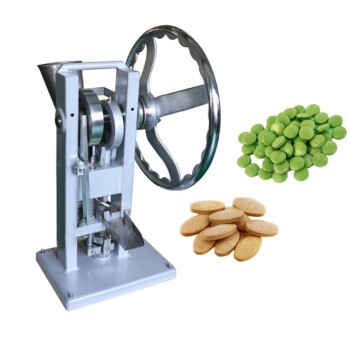
Single Punch Manual Tablet Press Machine TDP Tablet Punching Machine

Single Punch Manual Tablet Press Machine TDP Tablet Punching Machine

Single punch manual tablet punching machine can press various granular, crystal or powdery raw materials with good fluidity into disc-shaped, cylindrical, spherical, convex, concave and other various geometric shapes (such as square, triangle, ellipse, capsule shape, etc.), and can also press products with text and patterns.

30T 40T Split Automatic Heated Hydraulic Press Machine with Heated Plates for Laboratory Hot Press

30T 40T Split Automatic Heated Hydraulic Press Machine with Heated Plates for Laboratory Hot Press

Discover our split automatic heated lab press 30T/40T for precise sample preparation in material research, pharmacy, ceramics, and electronics industries. With a small footprint and heating up to 300°C, it's perfect for processing under vacuum environment.

Automatic Laboratory Heat Press Machine

Automatic Laboratory Heat Press Machine

Precision automatic heat press machines for labs—ideal for material testing, composites, and R&D. Customizable, safe, and efficient. Contact KINTEK today!

Automatic Laboratory Hot Press 400x400 mm with Programmable High Temperature and Hydraulic Force Control

Automatic Laboratory Hot Press 400x400 mm with Programmable High Temperature and Hydraulic Force Control

This advanced automatic laboratory hot press features 400x400mm heated platens, 50-ton hydraulic force, and 500C programmable heating, engineered for precise powder metallurgy, advanced materials research, and demanding industrial quality control testing applications, delivering unparalleled reliability and process repeatability.

Manual High Temperature Heated Hydraulic Press Machine with Heated Plates for Lab

Manual High Temperature Heated Hydraulic Press Machine with Heated Plates for Lab

The High Temperature Hot Press is a machine specifically designed for pressing, sintering and processing materials in a high temperature environment. It is capable of operating in the range of hundreds of degrees Celsius to thousands of degrees Celsius for a variety of high temperature process requirements.

Automatic High Temperature Heated Hydraulic Press Machine with Heated Plates for Lab

Automatic High Temperature Heated Hydraulic Press Machine with Heated Plates for Lab

The High Temperature Hot Press is a machine specifically designed for pressing, sintering and processing materials in a high temperature environment. It is capable of operating in the range of hundreds of degrees Celsius to thousands of degrees Celsius for a variety of high temperature process requirements.

Automatic Heated Hydraulic Press Machine with Heated Plates for Laboratory Hot Press

Automatic Heated Hydraulic Press Machine with Heated Plates for Laboratory Hot Press

The Automatic High Temperature Heat Press is a sophisticated hydraulic hot press designed for efficient temperature control and product quality processing.

Cylindrical Press Mold with Scale for Lab

Cylindrical Press Mold with Scale for Lab

Discover precision with our Cylindrical Press Mold. Ideal for high-pressure applications, it molds various shapes and sizes, ensuring stability and uniformity. Perfect for lab use.

Manual Heated Hydraulic Press Machine with Heated Plates for Laboratory Hot Press

Manual Heated Hydraulic Press Machine with Heated Plates for Laboratory Hot Press

The Manual Heat Press is a versatile piece of equipment suitable for a variety of applications, operated by a manual hydraulic system that applies controlled pressure and heat to the material placed on the piston.

Automatic Laboratory Hot Press Dual Plate Heating Sintering Compaction System 120x120mm

Automatic Laboratory Hot Press Dual Plate Heating Sintering Compaction System 120x120mm

This automatic laboratory hot press combines high-precision hydraulic compaction with independent dual-plate heating up to 300°C, offering programmable multi-stage control and rapid water cooling to maximize efficiency and sample consistency in demanding research and industrial laboratory environments.

Automatic Hydraulic Hot Press with 500x500mm Heating Plates and Multi Stage PLC Control for Material Sintering

Automatic Hydraulic Hot Press with 500x500mm Heating Plates and Multi Stage PLC Control for Material Sintering

Precision-engineered 60-ton automatic hydraulic hot press featuring 500x500mm plates, multi-stage temperature control up to 500°C, and advanced 7-inch touch screen interface. Ideal for industrial material sintering, battery research, and high-performance ceramic production with real-time monitoring.

Heated Hydraulic Press Machine with Heated Plates for Vacuum Box Laboratory Hot Press

Heated Hydraulic Press Machine with Heated Plates for Vacuum Box Laboratory Hot Press

Enhance your lab's precision with our lab press for vacuum box. Press pills and powders with ease and precision in a vacuum environment, reducing oxidation and improving consistency. Compact and easy to use with a digital pressure gauge.


Leave Your Message