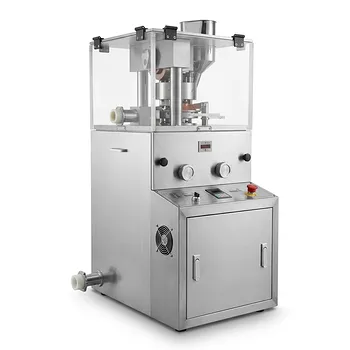
Isostatic pressing integrates lithium metal anodes by applying uniform, multi-directional pressure to mechanically bond lithium foil onto a solid electrolyte surface. This process leverages the natural ductility and creep properties of lithium metal to force it into the microscopic textures of ceramic electrolytes like LLZO. The result is a molecular-level interface that eliminates gaps, lowers impedance, and establishes stable channels for ion transport.
Isostatic pressing solves the "point contact" problem in solid-state batteries by ensuring the lithium anode conforms perfectly to the electrolyte. This uniform contact is the primary mechanism for reducing internal resistance and preventing the premature failure caused by lithium dendrites.
Achieving Molecular-Level Interface Contact
Leveraging Lithium’s Natural Ductility
Lithium is a soft, highly ductile metal that deforms easily under specific loads. Isostatic equipment uses this property to "flow" the lithium foil into the polished but microscopically uneven surface of the solid electrolyte.
This mechanical pressing replaces the need for complex chemical bonding. By achieving molecular-level contact, the battery can maintain a steady flow of ions during charge and discharge cycles.
Inducing Material Creep for Total Conformity
High-pressure application induces "creep" in the lithium metal, allowing it to move over time to fill every void. This eliminates the microscopic air gaps that typically form at solid-solid interfaces.
Without this conformability, the interface would suffer from high resistance. Total conformity ensures that the entire surface area of the anode is active and contributing to the battery's capacity.
The Role of Pascal’s Principle in Assembly
Eliminating Point Contact Limitations
Traditional uniaxial (one-direction) pressing often results in uneven contact and "point contacts" where the materials touch only at high spots. This creates "hot spots" of current density that can damage the battery.
Isostatic pressing applies pressure via a liquid or gas medium, ensuring equal force from every direction simultaneously. This uniform application creates a homogenous interface across the entire surface of the electrode.
Multi-directional Densification
The equipment densifies the internal components of the battery cell, removing internal pores and voids. This leads to a more compact, monolithic structure that is physically robust.
By increasing the density of the assembly, manufacturers can achieve higher energy density (Wh/l). This is critical for making solid-state batteries competitive with traditional liquid-electrolyte cells.
Performance and Safety Enhancements
Lowering Interfacial Impedance
Interfacial impedance is the resistance to ion movement at the boundary where the anode meets the electrolyte. High impedance slows down charging and reduces efficiency.
Isostatic pressing significantly reduces this impedance by maximizing the contact area. This allows for faster charging times and better power delivery during operation.
Suppressing Dendrite Formation
Lithium dendrites—needle-like structures that can cause short circuits—often start at the gaps or irregularities in the anode-electrolyte interface. Uniform pressure ensures there are no "low-resistance paths" for these dendrites to exploit.
By maintaining a consistent and gap-free interface, isostatic pressing enhances the safety and cycle life of the battery. This stability is essential for the commercial viability of lithium-metal-based systems.
Understanding the Trade-offs
Equipment Complexity and Cost
Isostatic presses are significantly more complex and expensive than standard mechanical presses. The need for pressure vessels and specialized media (gas or liquid) increases the initial capital expenditure for a production line.
Furthermore, integrating these machines into a high-speed assembly line presents engineering challenges. The process is often slower than continuous roll-to-roll pressing used in traditional battery manufacturing.
Material Sensitivity and Processing Environments
Lithium metal is highly reactive and must be handled in strictly controlled, inert environments. Maintaining these conditions within a high-pressure isostatic system adds another layer of operational difficulty.
Additionally, while lithium is ductile, the ceramic electrolytes (like LLZO) are brittle. If the pressure is not ramped up and down with precision, the electrolyte can crack, rendering the entire cell useless.
How to Apply This to Your Battery Project
Making the Right Choice for Your Goal
- If your primary focus is maximizing energy density: Utilize isostatic pressing to eliminate all internal porosity and minimize the volume of the battery stack.
- If your primary focus is extending cycle life: Prioritize the uniformity of the pressure application to ensure a dendrite-resistant interface between the lithium and the ceramic.
- If your primary focus is rapid prototyping: Consider uniaxial pressing for speed, but recognize that isostatic pressing will likely be required to reach final performance specifications.
- If your primary focus is large-scale commercialization: Invest in isostatic equipment designed for "super factory" capacities to ensure consistent quality across thousands of cells.
By mastering the application of uniform pressure, manufacturers can bridge the gap between lab-scale solid-state experiments and high-performance, mass-produced energy storage.
Summary Table:
| Feature | Mechanism | Key Benefit |
|---|---|---|
| Interface Contact | Lithium creep & ductility | Achieves molecular-level bonding; eliminates air gaps. |
| Pressure Logic | Pascal’s Principle | Uniform multi-directional force prevents "point contact." |
| Safety Impact | Homogenous interface | Suppresses lithium dendrite growth and short circuits. |
| Performance | Internal densification | Lowers interfacial impedance and increases energy density. |
| Structural Integrity | Monolithic densification | Creates a physically robust, void-free battery cell structure. |
Revolutionize Your Solid-State Battery Assembly with KINTEK
Achieving the perfect lithium-electrolyte interface is critical for the next generation of energy storage. KINTEK specializes in high-precision laboratory equipment, offering advanced isostatic presses (pellet, hot, and isostatic) specifically designed to meet the rigorous demands of battery research.
By partnering with KINTEK, you benefit from:
- Superior Interface Engineering: Our equipment ensures uniform pressure to eliminate impedance and suppress dendrites.
- Comprehensive Research Portfolio: Beyond presses, we provide high-temperature furnaces (vacuum, CVD, atmosphere), battery consumables, and PTFE products to support your entire workflow.
- Unmatched Reliability: Precision-controlled systems designed to handle sensitive materials like lithium and brittle ceramic electrolytes.
Ready to eliminate internal porosity and maximize your battery's energy density? Contact KINTEK today to find the right solution for your lab!
References
- André Müller, Yaroslav E. Romanyuk. Benchmarking the performance of lithiated metal oxide interlayers at the LiCoO<sub>2</sub>|LLZO interface. DOI: 10.1039/d3ma00155e
This article is also based on technical information from Kintek Solution Knowledge Base .
Related Products
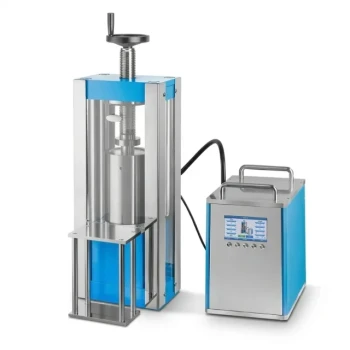
- Electric Split Lab Cold Isostatic Press CIP Machine for Cold Isostatic Pressing
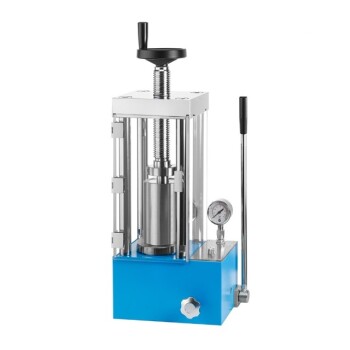
- Manual Cold Isostatic Pressing Machine CIP Pellet Press
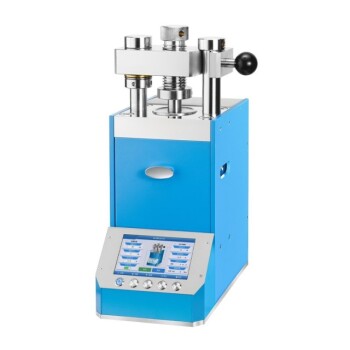
- Automatic Lab Cold Isostatic Press CIP Machine Cold Isostatic Pressing
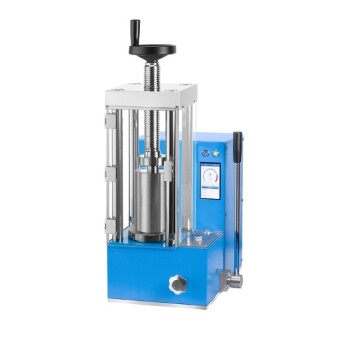
- Electric Lab Cold Isostatic Press CIP Machine for Cold Isostatic Pressing
- Isostatic Molding Pressing Molds for Lab
People Also Ask
- How does isostatic pressing equipment enhance lithium metal anode contact? Optimize Your Solid-State Battery Assembly
- What is the meaning of isostatic pressing? Achieve Uniform Density in Complex Parts
- What is isostatic pressing method for ceramics? Achieve Uniform Density for Complex Parts
- What role does cold isostatic pressing play in the formation of feed rods for single crystal growth? Ensure Stability.
- What is hot and cold isostatic pressing? A Guide to Forming and Densifying Materials