Knowledge What are the main disadvantages associated with Rotary Vane Pumps? Avoid Contamination & High Maintenance Costs
Author avatar

Tech Team · Kintek Solution

Updated 19 hours ago

What are the main disadvantages associated with Rotary Vane Pumps? Avoid Contamination & High Maintenance Costs


The significant disadvantages of Rotary Vane Pumps stem almost entirely from their reliance on oil for sealing and lubrication. The most immediate operational risks are the contamination of the vacuum oil by process vapors and the generation of oil mist in the pump's exhaust.

Core Takeaway While Rotary Vane Pumps are standard for achieving deep vacuum levels, they impose a heavy maintenance tax. Their fluid-sealed design introduces risks of product contamination, necessitates the management of toxic waste, and restricts the types of gases you can safely process.

The Liability of Oil-Sealed Systems

Process Contamination Risks

Because these pumps rely on oil, there is an inherent risk of back-streaming. Microscopic oil particles can migrate back into the vacuum chamber, potentially contaminating sensitive products.

This makes them risky for applications requiring high purity, such as food processing or medical device manufacturing.

Exhaust and Air Quality Issues

Rotary Vane Pumps tend to produce an oil mist at the exhaust port. This creates an environmental hazard in the laboratory or industrial workspace.

To mitigate this, operators often must install additional exhaust filtration systems, adding to the system's complexity and cost.

Susceptibility to Vapor Damage

The vacuum oil acts as a solvent for many process gases. Process vapors can condense inside the pump and mix with the oil.

This contamination degrades the oil's lubrication properties, potentially leading to internal corrosion or pump failure if the oil is not changed frequently.

Operational Limitations

Restricted Gas Compatibility

You cannot use standard rotary vane pumps for all gas types. They are generally unsuitable for explosive, flammable, or high-oxygen-content gases due to the risk of reaction with the oil.

Furthermore, corrosive gases can rapidly destroy the internal seals and degrade the oil, requiring specialized (and expensive) inert fluids or a different pump technology entirely.

High Maintenance Overhead

Unlike dry pump technologies, rotary vane pumps require constant vigilance. Operators must regularly monitor oil levels, color, and consistency.

Routine maintenance involves frequent oil changes and the management of wet seals, which can leak if not properly maintained.

Toxic Waste Disposal

The byproduct of these pumps is toxic oil waste, particularly if the pump has been exposed to hazardous process chemicals.

Disposing of this contaminated oil requires strict adherence to environmental regulations, creating a long-term logistical and financial burden.

Logistical Challenges

Operators may face difficulties in sourcing replacement spare parts for certain models. This can lead to extended downtime during critical failures compared to more ubiquitous technologies.

Understanding the Trade-offs

Initial Cost vs. Lifecycle Cost

Despite the disadvantages listed above, Rotary Vane Pumps remain popular because they are compact, lightweight, and relatively low-cost upfront.

They offer excellent performance-to-price ratios and low vibration levels. However, the "savings" on the purchase price are often offset over time by the labor hours and consumables required for maintenance.

Making the Right Choice for Your Goal

  • If your primary focus is High Purity: Avoid standard oil-sealed pumps or invest heavily in foreline traps to prevent oil back-streaming into your product.
  • If your primary focus is Corrosive or Reactive Gases: Do not use this pump type; look for dry vacuum technologies (such as scroll or diaphragm pumps) to avoid dangerous reactions.
  • If your primary focus is Budget: A rotary vane pump is likely the most affordable option, provided you have the resources to handle regular oil changes and waste disposal.

Select this technology only when you are prepared to manage the maintenance strictly to ensure consistent vacuum performance.

Summary Table:

Feature Disadvantage Detail Impact on Operations
Lubrication Oil-sealed design Risk of back-streaming and product contamination
Exhaust Oil mist generation Requires additional filtration; potential health hazard
Gas Handling Incompatible with corrosive/reactive gases Limited application range; risk of pump failure
Maintenance Frequent oil changes High labor costs and significant downtime
Waste Toxic oil byproduct Environmental compliance and disposal expenses

Optimize Your Lab Vacuum Systems with KINTEK

Don't let maintenance overhead and contamination risks stall your research. KINTEK specializes in providing high-performance laboratory equipment tailored to your specific purity and safety requirements. From robust vacuum solutions to our comprehensive range of high-temperature furnaces, hydraulic presses, and advanced cooling systems, we ensure your facility operates at peak efficiency.

Why choose KINTEK?

  • Precision Engineering: Reliable equipment for high-purity applications.
  • Diverse Portfolio: Including high-pressure reactors, crushing systems, and specialized consumables like PTFE and ceramics.
  • Expert Support: We help you navigate the trade-offs between initial cost and long-term lifecycle performance.

Ready to upgrade your laboratory setup? Contact our experts today to find the perfect vacuum or thermal solution for your needs.

Related Products

People Also Ask

Related Products

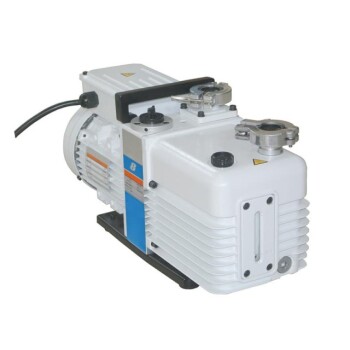
Laboratory Rotary Vane Vacuum Pump for Lab Use

Laboratory Rotary Vane Vacuum Pump for Lab Use

Experience high vacuum pumping speed and stability with our UL-certified Rotary Vane Vacuum Pump. Two-shift gas ballast valve and dual oil protection. Easy maintenance and repair.

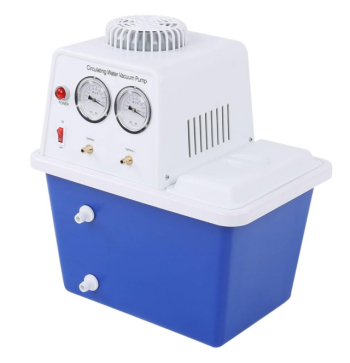
Circulating Water Vacuum Pump for Laboratory and Industrial Use

Circulating Water Vacuum Pump for Laboratory and Industrial Use

Efficient circulating water vacuum pump for labs - oil-free, corrosion-resistant, quiet operation. Multiple models available. Get yours now!

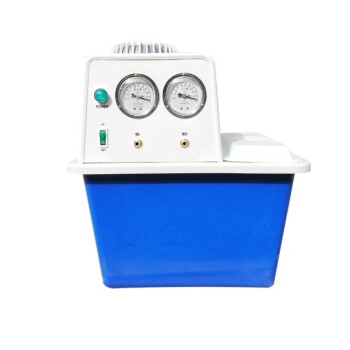
Laboratory Benchtop Water Circulating Vacuum Pump for Lab Use

Laboratory Benchtop Water Circulating Vacuum Pump for Lab Use

Need a water circulating vacuum pump for your lab or small-scale industry? Our Benchtop Water Circulating Vacuum Pump is perfect for evaporation, distillation, crystallization, and more.

Variable Speed Peristaltic Pump

Variable Speed Peristaltic Pump

KT-VSP Series Smart Variable Speed Peristaltic Pumps offer precise flow control for labs, medical, and industrial applications. Reliable, contamination-free liquid transfer.

Laboratory Vacuum Tilt Rotary Tube Furnace Rotating Tube Furnace

Laboratory Vacuum Tilt Rotary Tube Furnace Rotating Tube Furnace

Discover the versatility of Laboratory Rotary Furnace: Ideal for calcination, drying, sintering, and high-temperature reactions. Adjustable rotating and tilting functions for optimal heating. Suitable for vacuum and controlled atmosphere environments. Learn more now!

Oil Free Diaphragm Vacuum Pump for Laboratory and Industrial Use

Oil Free Diaphragm Vacuum Pump for Laboratory and Industrial Use

Oil-free diaphragm vacuum pump for labs: clean, reliable, chemical-resistant. Ideal for filtration, SPE, and rotary evaporation. Maintenance-free operation.

Vacuum Sealed Continuous Working Rotary Tube Furnace Rotating Tube Furnace

Vacuum Sealed Continuous Working Rotary Tube Furnace Rotating Tube Furnace

Experience efficient material processing with our vacuum-sealed rotary tube furnace. Perfect for experiments or industrial production, equipped with optional features for controlled feeding and optimized results. Order now.

Vacuum Hot Press Furnace Machine for Lamination and Heating

Vacuum Hot Press Furnace Machine for Lamination and Heating

Experience clean and precise lamination with Vacuum Lamination Press. Perfect for wafer bonding, thin-film transformations, and LCP lamination. Order now!

Vacuum Heat Treat Sintering Brazing Furnace

Vacuum Heat Treat Sintering Brazing Furnace

A vacuum brazing furnace is a type of industrial furnace used for brazing, a metalworking process that joins two pieces of metal using a filler metal that melts at a lower temperature than the base metals. Vacuum brazing furnaces are typically used for high-quality applications where a strong, clean joint is required.

Ultra-High Temperature Graphite Vacuum Graphitization Furnace

Ultra-High Temperature Graphite Vacuum Graphitization Furnace

The ultra-high temperature graphitization furnace utilizes medium frequency induction heating in a vacuum or inert gas environment. The induction coil generates an alternating magnetic field, inducing eddy currents in the graphite crucible, which heats up and radiates heat to the workpiece, bringing it to the desired temperature. This furnace is primarily used for graphitization and sintering of carbon materials, carbon fiber materials, and other composite materials.

Stainless Steel Quick Release Vacuum Chain Three-Section Clamp

Stainless Steel Quick Release Vacuum Chain Three-Section Clamp

Discover our stainless steel quick release clamp vacuum clamp, Ideal for high vacuum applications, Strong connections, reliable sealing, Easy installation, and durable design.

Graphite Vacuum Furnace Bottom Discharge Graphitization Furnace for Carbon Materials

Graphite Vacuum Furnace Bottom Discharge Graphitization Furnace for Carbon Materials

Bottom-out graphitization furnace for carbon materials, ultra-high temperature furnace up to 3100°C, suitable for graphitization and sintering of carbon rods and carbon blocks. Vertical design, bottom discharging, convenient feeding and discharging, high temperature uniformity, low energy consumption, good stability, hydraulic lifting system, convenient loading and unloading.

Graphite Vacuum Continuous Graphitization Furnace

Graphite Vacuum Continuous Graphitization Furnace

High-temperature graphitization furnace is a professional equipment for graphitization treatment of carbon materials. It is a key equipment for the production of high-quality graphite products. It has high temperature, high efficiency and uniform heating. It is suitable for various high-temperature treatments and graphitization treatments. It is widely used in metallurgy, electronics, aerospace, etc. industry.

Vacuum Heat Treat and Sintering Furnace with 9MPa Air Pressure

Vacuum Heat Treat and Sintering Furnace with 9MPa Air Pressure

The air pressure sintering furnace is a high-tech equipment commonly used for the sintering of advanced ceramic materials. It combines vacuum sintering and pressure sintering techniques to achieve high-density and high-strength ceramics.

Small Vacuum Heat Treat and Tungsten Wire Sintering Furnace

Small Vacuum Heat Treat and Tungsten Wire Sintering Furnace

The small vacuum tungsten wire sintering furnace is a compact experimental vacuum furnace specially designed for universities and scientific research institutes. The furnace features a CNC welded shell and vacuum piping to ensure leak-free operation. Quick-connect electrical connections facilitate relocation and debugging, and the standard electrical control cabinet is safe and convenient to operate.

KF ISO Stainless Steel Vacuum Flange Blind Plate for High Vacuum Systems

KF ISO Stainless Steel Vacuum Flange Blind Plate for High Vacuum Systems

Discover KF/ISO stainless steel vacuum flange blind plates, ideal for high vacuum systems in semiconductor, photovoltaic, and research labs. High-quality materials, efficient sealing, and easy installation.<|end▁of▁sentence|>

Multi Heating Zones CVD Tube Furnace Machine Chemical Vapor Deposition Chamber System Equipment

Multi Heating Zones CVD Tube Furnace Machine Chemical Vapor Deposition Chamber System Equipment

KT-CTF14 Multi Heating Zones CVD Furnace - Precise Temperature Control and Gas Flow for Advanced Applications. Max temp up to 1200℃, 4 channels MFC mass flow meter, and 7" TFT touch screen controller.

Vacuum Cold Trap Chiller Indirect Cold Trap Chiller

Vacuum Cold Trap Chiller Indirect Cold Trap Chiller

Boost vacuum system efficiency and prolong pump life with our Indirect Cold Trap. Built-in chilling system with no need for fluid or dry ice. Compact design and easy to use.

1200℃ Controlled Atmosphere Furnace Nitrogen Inert Atmosphere Furnace

1200℃ Controlled Atmosphere Furnace Nitrogen Inert Atmosphere Furnace

Discover our KT-12A Pro Controlled atmosphere furnace - high precision, heavy duty vacuum chamber, versatile smart touch screen controller, and excellent temperature uniformity up to 1200C. Ideal for both laboratory and industrial application.


Leave Your Message