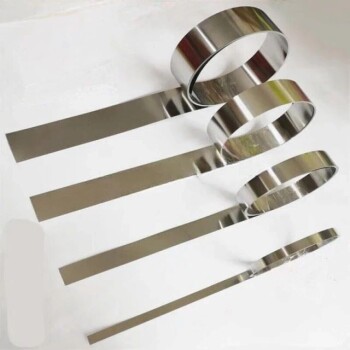
The selection of Stainless Steel 304 as an electrode material is primarily driven by its unique balance of inherent corrosion resistance and operational safety. Specifically, it is chosen for its ability to form a protective passivation layer and its function as a sacrificial anode, which eliminates the generation of hazardous chlorine gas during the electrolytic process.
Core Takeaway Stainless Steel 304 functions as a sacrificial anode that prioritizes environmental safety by substituting the release of toxic chlorine gas with a controlled anodic dissolution process, all while maintaining structural integrity through its chromium-rich passivation film.
The Mechanism of Corrosion Resistance
The Role of Chromium
The defining characteristic of Stainless Steel 304 is its chromium content. This element is critical for the material's longevity in harsh aqueous environments like circulating cooling water.
The Passivation Film
When exposed to oxygen, the chromium forms a dense, stable film of chromium oxide on the metal's surface.
This passivation film acts as a shield. It effectively prevents corrosion from penetrating the internal structure of the material, ensuring the electrode remains mechanically sound even while active.
Environmental Safety and Reaction Dynamics
Functioning as a Sacrificial Anode
Unlike some electrode materials designed to remain inert, Stainless Steel 304 is utilized as a sacrificial anode.
This means the material undergoes an anodic dissolution reaction. Instead of acting merely as a catalyst for reactions in the water, the metal surface itself participates in the process.
Eliminating Chlorine Gas Risks
The most significant advantage of this dissolution mechanism is the avoidance of harmful side reactions.
Traditional stable anodes, such as Dimensional Stable Anodes (DSA), often trigger the production of chlorine gas during electrolysis.
By using Stainless Steel 304, the system bypasses this reaction path. This significantly improves environmental safety by ensuring that toxic chlorine gas is not released into the atmosphere or the cooling loop.
Understanding the Trade-offs
Material Consumption
It is vital to recognize that because Stainless Steel 304 acts as a sacrificial anode, it is not permanent.
The term "anodic dissolution" implies that the material is gradually consumed during the treatment process. Unlike DSAs, which are designed for dimensional stability, SS304 electrodes will eventually lose mass.
Operational Lifespan
While the chromium oxide film prevents internal corrosion, the surface dissolution is a necessary feature of its safety mechanism.
Operators must plan for the eventual replacement of these electrodes as part of the system's standard maintenance cycle.
Making the Right Choice for Your Goal
To determine if Stainless Steel 304 is the correct electrode for your cooling water system, assess your priorities regarding safety versus component longevity.
- If your primary focus is Environmental Safety: Choose SS304 to completely eliminate the risk of chlorine gas generation within your facility.
- If your primary focus is Material Stability: Recognize that unlike DSA, SS304 is a consumable component that requires monitoring for physical dissolution over time.
Select Stainless Steel 304 when the safety of your personnel and environment outweighs the need for a permanent, non-consumable electrode.
Summary Table:
| Feature | Stainless Steel 304 Performance | Benefit for Cooling Water |
|---|---|---|
| Material Role | Sacrificial Anode | Prevents hazardous chlorine gas generation |
| Protection | Chromium Oxide Passivation Film | Prevents internal structural corrosion |
| Mechanism | Anodic Dissolution | Controlled surface reaction for safer electrolysis |
| Maintenance | Consumable Component | predictable replacement cycle vs. permanent anodes |
| Safety Profile | Non-toxic byproduct path | High environmental and personnel safety |
Upgrade Your Water Treatment with KINTEK Expertise
Are you looking to optimize your cooling water systems with the right balance of safety and efficiency? KINTEK specializes in advanced laboratory and industrial solutions, including high-quality electrolytic cells and electrodes designed for demanding environments.
Whether you need sacrificial anodes like Stainless Steel 304 to eliminate toxic gas risks or high-temperature high-pressure reactors for specialized research, our comprehensive portfolio of laboratory equipment and consumables ensures your facility operates at peak performance.
Ready to enhance your lab’s safety and results? Contact us today to discuss your specific requirements!
References
- Rapeepat Rungvavmanee, Chantaraporn Phalakornkule. Reduction of Langelier index of cooling water by electrolytic treatment with stainless steel electrode. DOI: 10.4314/wsa.v38i5.24
This article is also based on technical information from Kintek Solution Knowledge Base .
Related Products
People Also Ask
- How is a galvanostat used to evaluate F-rGO layers? Quantifying Protective Performance in Lithium Metal Batteries
- What is the sputtering cathode method? A Guide to Thin Film Deposition Technology
- What is sputtering target material? The Blueprint for High-Quality Thin Film Coatings
- What is organic thin film? A Guide to Engineered Molecular Layers for Advanced Tech
- What are the target materials for sputtering? From Metals to Ceramics for Precise Thin Films