The high-temperature laboratory box resistance furnace is the fundamental tool for biomass proximate analysis and thermal processing. Its primary functions include the precise determination of ash content and volatile matter, which are essential for evaluating a fuel's combustion stability and environmental impact. Beyond simple analysis, these furnaces are used to drive the carbonization of raw biomass into high-value biochar and charcoal.
A box resistance furnace provides the controlled thermal environment required to quantify a biomass sample's inorganic residue (ash) and volatile components. This data is the prerequisite for calculating the energy density, chemical structure, and potential gasification efficiency of any biomass feedstock.
Proximate Analysis and Fuel Evaluation
Determining Ash Content
The furnace is used to incinerate biomass samples at high temperatures, typically around 550°C to 500°C, for extended periods. This process removes all organic matter, leaving behind only the inorganic residue, or ash.
Determining ash content is critical because it serves as a deduction factor when calculating the concentrations of cellulose, hemicellulose, and lignin. It also helps researchers predict potential slagging or fouling issues in industrial boilers.
Volatile Matter Analysis
By subjecting biomass to specific temperature programs, such as 815°C, the furnace measures the weight lost as gases are driven off. This volatile matter analysis is a key indicator of how easily a fuel will ignite and how stable its combustion will be.
For materials like sunflower husks or torrefied biocoal, this data is vital for assessing combustion quality. It allows researchers to distinguish between the energy stored in volatile gases versus fixed carbon.
Thermal Conversion and Material Synthesis
Carbonization and Biochar Production
The box furnace provides the stable thermal environment (300°C to 600°C) necessary for the carbonization of biomass, such as coconut shells or rice straw. By effectively removing moisture and volatiles, the furnace converts raw material into charcoal with a high fixed carbon content.
This process triggers dehydrogenation and decarboxylation reactions, which are essential for creating biochar. The resulting product features improved thermal stability and a significantly higher heating value compared to the raw feedstock.
Gasification and Sintering Support
In laboratory-scale gasification, the furnace maintains the supercritical temperatures (e.g., 400°C) required for consistent reaction kinetics. This ensures that the gas composition and efficiency remain uniform throughout batch experiments.
Additionally, the furnace can be used for sintering and curing biomass-based coatings or pellets. This involves heating, holding, and cooling stages to achieve the necessary densification and phase changes for high-performance materials.
Understanding the Trade-offs
Atmosphere Control vs. Chamber Volume
Box furnaces offer a larger internal volume than tube furnaces, allowing for the processing of larger batches or multiple samples simultaneously. However, they are often more challenging to seal for high-purity inert atmosphere work (like nitrogen-blanketed carbonization) compared to tubular designs.
Temperature Uniformity and Reaction Kinetics
While box furnaces provide excellent temperature stability, the thermal gradient across a large chamber can affect reaction consistency. Researchers must ensure precise placement of samples to maintain the kinetic balance required for accurate gasification or decomposition studies.
Heating Rates and Cooling Times
Traditional box resistance furnaces may have slower heating and cooling cycles than specialized rapid-thermal-processing units. This can lead to longer residence times, which might influence the porosity and surface area of the produced biochar.
How to Apply This to Your Project
Recommendations for Biomass Research
Successful biomass characterization depends on selecting the right furnace settings based on your specific analytical or production goals.
- If your primary focus is fuel quality assessment: Prioritize a furnace with programmable logic controllers (PLCs) to accurately replicate the 550°C and 815°C heating curves required for standard ash and volatile matter testing.
- If your primary focus is biochar production: Ensure the furnace allows for a controlled nitrogen or inert gas inlet to prevent the sample from combusting while you drive off moisture and volatiles.
- If your primary focus is structural compositional analysis: Use the furnace as a pre-treatment step to remove organic interference, allowing for the precise measurement of inorganic ash before calculating lignin and cellulose fractions.
By mastering the thermal environment of the box resistance furnace, you can transform raw biomass into a precisely characterized and high-performing energy resource.
Summary Table:
| Application | Typical Temperature | Key Research Outcome |
|---|---|---|
| Ash Content Determination | 550°C - 600°C | Quantifies inorganic residue; predicts slagging and fouling. |
| Volatile Matter Analysis | ~815°C | Indicates ignition ease and combustion stability. |
| Carbonization & Biochar | 300°C - 600°C | Produces high-value biochar with increased energy density. |
| Gasification Support | 400°C+ | Maintains kinetics for consistent gas composition. |
| Sintering & Curing | Varies | Achieves densification for biomass pellets and coatings. |
Elevate Your Biomass Research with KINTEK
Precision is the backbone of biomass characterization. KINTEK specializes in high-performance laboratory equipment designed to meet the rigorous demands of bioenergy research. Our extensive range of high-temperature box, muffle, and tube furnaces provides the thermal stability needed for precise proximate analysis and high-quality biochar production.
Beyond thermal processing, we offer a complete ecosystem for your lab, including:
- Crushing and milling systems for sample preparation.
- Hydraulic presses for biomass pelletization.
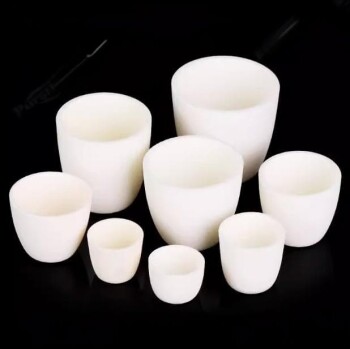
- Analytical consumables like high-purity ceramic crucibles.
Ready to enhance your lab's efficiency and data accuracy? Contact our technical experts today to find the ideal thermal solution tailored to your specific biomass applications.
References
- Artemy Nebyvaev, Mathieu Brulé. Preliminary Results of Innovative Two-Stage Torrefaction Technology Applied for Thermochemical Treatment of Sunflower Husk. DOI: 10.3390/pr11082486
This article is also based on technical information from Kintek Solution Knowledge Base .
Related Products
- 1700℃ Muffle Oven Furnace for Laboratory
- 1700℃ Laboratory High Temperature Tube Furnace with Alumina Tube
- 1400℃ Muffle Oven Furnace for Laboratory
- 1400℃ Laboratory High Temperature Tube Furnace with Alumina Tube
- 1200℃ Split Tube Furnace with Quartz Tube Laboratory Tubular Furnace
People Also Ask
- Why is a laboratory high-temperature muffle furnace required for the post-annealing treatment of copper oxide?
- How does a muffle furnace ensure reliability in calcification roasting? Achieve Precision in Pellets Conversion
- What role does a laboratory high-temperature muffle furnace play in iron-based composite phase structure development?
- How is a laboratory high-temperature muffle furnace utilized in sol-gel synthesis for perovskite catalysts?
- How does a muffle furnace influence 8YSZ ceramic densification? Master Precision Sintering at 1500°C