The primary functions of a laboratory forced air drying oven are thorough solvent evaporation and the precise thermal curing of coating layers. In a multi-step hydrophobic coating process, the oven serves two distinct roles: it eliminates residues at high temperatures to solidify the base layer and facilitates molecular self-assembly at lower temperatures to finalize the protective barrier.
Core Takeaway Success in hydrophobic coating deposition relies on using the oven not just as a dryer, but as a tool for structural organization. The process requires a precise thermal shift—from high heat for particle interaction to lower heat for molecular rearrangement—to ensure the coating is both stable and durable.
The Dual Role of Thermal Processing
High-Temperature Baking for the Base Layer
The first critical function of the oven occurs following the deposition of zinc oxide (ZnO) nanolayers.
This step requires a high-temperature environment, specifically around 140 °C.
The primary objective here is the complete elimination of solvent residues. Removing these volatiles is essential to prevent defects in the final coating.
Furthermore, this high-heat phase enhances inter-particle interactions. By driving off solvents, the oven forces the ZnO particles closer together, creating a denser and more cohesive structural foundation.
Low-Temperature Curing for the Top Layer
The second function shifts from aggressive evaporation to delicate molecular engineering during the stearic acid deposition phase.
For this step, the oven temperature is lowered significantly to 60 °C.
This gentler thermal environment is designed to facilitate molecular rearrangement.
At this temperature, stearic acid molecules can move freely enough to undergo self-assembly. This organization is what ultimately creates the stable, hydrophobic protective layer required for the coating's functionality.
Understanding the Operational Trade-offs
Evaporation vs. Assembly
The central challenge in this process is balancing the need for aggressive drying with the need for delicate structural formation.
You cannot use a single temperature setting for the entire process. High heat (140 °C) is necessary to remove solvents, but applying that same heat to the stearic acid layer would likely disrupt the self-assembly process.
Conversely, using low heat (60 °C) for the initial phase would fail to fully evaporate solvents or trigger the necessary zinc oxide particle interactions.
Therefore, the "trade-off" is a strict requirement for multi-stage thermal profiling. You must sacrifice processing speed (a "one-and-done" bake) for the precision of a two-step temperature protocol to achieve a durable result.
Making the Right Choice for Your Goal
To ensure your hydrophobic coatings perform as intended, apply the thermal principles below:
- If your primary focus is structural integrity: Prioritize the 140 °C bake to maximize inter-particle interactions and ensure the base layer is completely solvent-free.
- If your primary focus is surface functionality: Ensure strict adherence to the 60 °C limit during the final phase to allow proper self-assembly of the hydrophobic molecules without thermal degradation.
By respecting the distinct thermal requirements of each layer, you transform raw chemical components into a unified, high-performance surface.
Summary Table:
| Process Phase | Temperature | Primary Objective | Key Outcome |
|---|---|---|---|
| Base Layer (ZnO) | 140 °C | Solvent elimination | Denser, cohesive structural foundation |
| Top Layer (Stearic Acid) | 60 °C | Molecular rearrangement | Stable hydrophobic self-assembly |
| Overall Protocol | Dual-Stage | Thermal profiling | Enhanced durability and surface functionality |
Elevate Your Material Research with KINTEK Precision
At KINTEK, we understand that achieving the perfect hydrophobic coating requires more than just heat—it requires precision. Whether you are performing multi-stage thermal profiling in a forced air drying oven, developing advanced materials in our CVD and PECVD systems, or preparing samples with our high-pressure reactors and hydraulic presses, our laboratory equipment is engineered for accuracy.
From high-temperature muffle and vacuum furnaces to essential PTFE and ceramic consumables, KINTEK provides the comprehensive tools needed for cutting-edge surface engineering and battery research.
Ready to optimize your coating process? Contact us today to discover how our specialized laboratory solutions can enhance your research outcomes and ensure the structural integrity of your materials.
References
- Carmela Tania Prontera, Paola Manini. Sustainable, Fluorine-Free, Low Cost and Easily Processable Materials for Hydrophobic Coatings on Flexible Plastic Substrates. DOI: 10.3390/ma12142234
This article is also based on technical information from Kintek Solution Knowledge Base .
Related Products
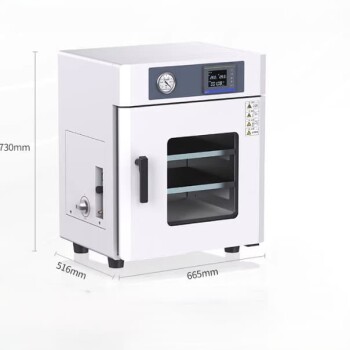
- 56L Vertical Laboratory Vacuum Drying Oven
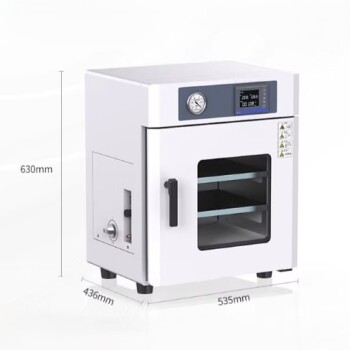
- 23L Laboratory Vacuum Drying Oven
- Laboratory Scientific Electric Heating Blast Drying Oven
- High Performance Laboratory Freeze Dryer
- High Performance Laboratory Freeze Dryer for Research and Development
People Also Ask
- Why is a laboratory vacuum drying oven recommended for rice straw residues? Protect Your Biomass Integrity
- What role does a laboratory vacuum drying oven play in the preparation of modified multi-walled carbon nanotubes?
- What is the importance of using a laboratory vacuum drying oven? Preserving Slow-Release Microcapsule Integrity
- Why is a Laboratory Vacuum Drying Oven recommended for PBAT microspheres? Protect Sensitive Polymer Integrity
- What role does a laboratory vacuum drying oven play in processing nanoparticle powder samples? Protect Sample Integrity