The primary function of a laboratory oven or vacuum drying oven in the sol-gel process is to facilitate the controlled removal of solvents and moisture from the gel matrix. Rather than simply drying the material, these devices regulate the heating program to slowly eliminate volatile substances, thereby stabilizing the initial gel network and preventing structural collapse before the final calcination stage.
Core Takeaway In the sol-gel method, drying is not merely about water removal; it is a structural preservation step. The oven ensures the fragile gel network transitions to a solid state without collapsing or agglomerating, establishing the essential foundation for a high-performance nanocomposite.
The Critical Role of Controlled Drying
Stabilizing the Gel Network Structure
The transition from a wet gel to a solid precursor is the most delicate phase of the sol-gel process. The primary reference highlights that a laboratory oven allows you to precisely regulate the heating program.
This control allows volatile substances to evaporate slowly. By moderating the rate of evaporation, the oven stabilizes the gel network structure initially, ensuring it maintains its integrity as it solidifies.
Preventing Structural Collapse
If a sol-gel material is dried too rapidly, the capillary forces generated by evaporating solvents can be destructive.
The oven prevents the structural collapse that often results from uncontrolled, rapid drying. By managing the thermal environment, the oven mitigates the stress on the pore structure, preserving the desired porosity of the nanomaterial.
Minimizing Nanoparticle Agglomeration
Rapid removal of solvents can force nanoparticles to clump together, ruining the dispersion necessary for effective nanocomposites.
Controlled drying in an oven prevents severe agglomeration. This ensures that the nanoparticles remain distinct and well-distributed, which is a prerequisite for achieving high performance in the final composite material.
Specific Application Contexts
Uniformity via Forced Convection
For specific composite materials, such as those involving cellulose, uniformity is paramount.
As noted in the supplementary data, a laboratory blast drying oven utilizes forced air convection. This ensures that the composite materials dry evenly at constant low temperatures (e.g., 50°C), preventing thermal gradients that could warp the material.
Substrate Preparation and Cleaning
The oven's utility extends to the pre-treatment phase, specifically when preparing substrates like carbon fibers.
Before the sol-gel impregnation occurs, ovens are used to thoroughly remove residual moisture from cleaned raw materials. This creates a dry, chemically clean substrate, ensuring that the precursor solution coats the fiber surfaces uniformly during subsequent steps.
Protecting Heat-Sensitive Components
Not all nanocomposites can withstand the high temperatures of immediate calcination.
Ovens provide a constant, low-temperature environment to remove residual water and ethanol without damaging organic components. This prevents degradation of sensitive materials (like cellulose) or unwanted changes in nanoparticle properties that excessive heat would cause.
Understanding the Trade-offs
The Risk of Rapid Heating
While ovens offer control, user error in setting the ramp rate can be detrimental. Increasing the temperature too quickly, even within an oven, can mimic the effects of air drying, leading to cracking or warping of the monolithic structure due to uneven shrinkage.
Vacuum vs. Convection
There is a functional trade-off between vacuum ovens and standard convection ovens.
- Vacuum Ovens: ideal for lowering the boiling point of solvents, allowing for drying at lower temperatures to protect sensitive molecules, but they lack the airflow that helps carry moisture away in bulk.
- Convection Ovens: excellent for temperature uniformity and bulk drying, but the presence of oxygen and higher required temperatures may not be suitable for easily oxidized nanomaterials.
Making the Right Choice for Your Goal
To maximize the quality of your nanocomposites, align your drying strategy with your material's specific needs:
- If your primary focus is structural integrity: Prioritize a slow, ramped heating program to minimize capillary stress and prevent pore collapse.
- If your primary focus is organic/inorganic hybrids: Use a blast drying oven at low temperatures (approx. 50°C) to remove solvents without degrading the organic components.
- If your primary focus is coating adhesion: Ensure you use the oven to pre-dry your substrate thoroughly before introducing the precursor solution.
Success in the sol-gel method depends less on how hot you can get the material, and more on how gently you can guide it from a liquid to a solid state.
Summary Table:
| Feature | Function in Sol-Gel Process | Primary Benefit |
|---|---|---|
| Controlled Heating | Regulates evaporation rate of volatiles | Stabilizes the initial gel network |
| Structural Preservation | Mitigates capillary forces during drying | Prevents pore collapse and cracking |
| Agglomeration Control | Maintains nanoparticle dispersion | Ensures high-performance composite properties |
| Forced Convection | Provides uniform thermal distribution | Prevents warping and thermal gradients |
| Substrate Pre-drying | Removes moisture from raw materials | Enhances coating adhesion and uniformity |
Elevate Your Material Research with KINTEK
Maximize the quality of your nanocomposites by choosing the right thermal environment. KINTEK specializes in high-precision laboratory equipment designed for the most delicate sol-gel applications.
Our extensive portfolio includes:
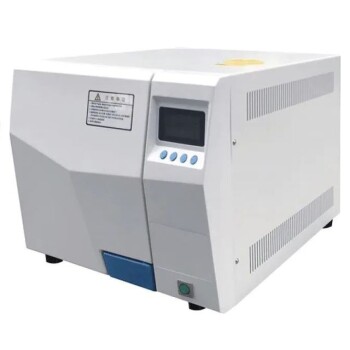
- Advanced Laboratory Ovens: Convection and blast drying solutions for unmatched temperature uniformity.
- Vacuum Drying Ovens: Ideal for protecting heat-sensitive organic-inorganic hybrids.
- High-Temperature Furnaces: Muffle and tube furnaces for the final calcination stage.
- Comprehensive Lab Tools: From crushing and milling systems to hydraulic presses and high-quality crucibles.
Don't let structural collapse or agglomeration compromise your results. Let our experts help you select the ideal equipment to guide your materials from liquid to solid with absolute precision.
Contact KINTEK Today for a Tailored Solution!
References
- Tetiana Dontsova, Ihor Astrelin. Metaloxide Nanomaterials and Nanocomposites of Ecological Purpose. DOI: 10.1155/2019/5942194
This article is also based on technical information from Kintek Solution Knowledge Base .
Related Products
- Laboratory Scientific Electric Heating Blast Drying Oven
- 23L Laboratory Vacuum Drying Oven
- 56L Vertical Laboratory Vacuum Drying Oven
- 1200℃ Muffle Furnace Oven for Laboratory
- 1700℃ Muffle Oven Furnace for Laboratory
People Also Ask
- How does a laboratory electric drying oven contribute to the formation of the initial coating? Expert Insights
- What role does a precision laboratory drying oven play in the synthesis of GO-PANI nanocomposites? Protect Material Integrity
- What role does a laboratory drying oven play in the preparation of zinc oxide nanoparticle precursors?
- What is the necessity of using a laboratory drying oven when processing MoO3/GO composite nanopowders? Find out here.
- What is the role of a laboratory drying oven in cellulose citrate production? Ensure Material Stability & Purity