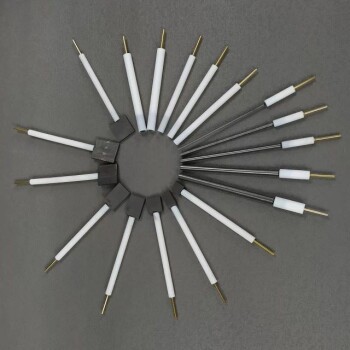
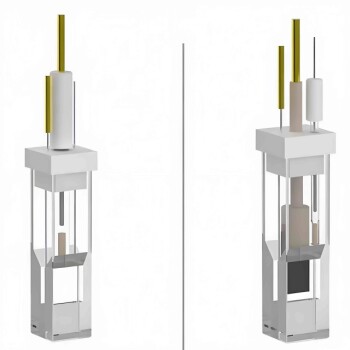
The primary function of an electrochemical test unit is to provide a quantitative analysis of corrosion dynamics by employing a three-electrode system to monitor steel specimens in SRB-containing media. It specifically functions to capture potential shifts related to cathodic depolarization and to measure how effectively chemical agents suppress anodic and cathodic reactions.
The unit serves as a translation device, converting biological activity into measurable electrical data (Open Circuit Potential and polarization curves) to determine the exact impact of bacteria and inhibitors on metal corrosion.
The Core Mechanism of Measurement
The Three-Electrode Configuration
To evaluate the influence of elements on Sulfate-Reducing Bacteria (SRB), the unit utilizes a three-electrode system.
This setup allows for the precise isolation and measurement of the working electrode (the steel specimen) within a specific growth medium, such as Postgate B.
Monitoring Open Circuit Potential (OCP)
One of the unit's fundamental tasks is the continuous monitoring of the Open Circuit Potential.
By tracking the voltage difference between the reference electrode and the steel specimen, the unit establishes a baseline for thermodynamic stability before and during bacterial activity.
Detecting Bacterial and Chemical Influence
Identifying Cathodic Depolarization
The unit is designed to detect specific electrochemical signatures, most notably cathodic depolarization.
SRB activity often accelerates corrosion by removing hydrogen from the cathode surface; the test unit captures the resulting potential shifts, confirming bacterial involvement in the corrosion process.
Quantifying Reaction Suppression
Beyond detection, the unit performs a critical evaluative function for chemical inhibitors.
It generates data that allows researchers to quantitatively determine how well a specific element or inhibitor suppresses both anodic (metal dissolution) and cathodic (reduction) corrosion reactions.
Understanding the Limitations
Dependence on Media Conditions
The accuracy of the data is heavily influenced by the specific culture medium used, such as Postgate B.
Results obtained in one medium may not perfectly replicate real-world environments, as the electrochemical baseline is defined by the fluid's specific chemical composition.
Indirect Observation of Biological Activity
It is important to note that the unit measures electrochemical consequences, not the bacteria themselves.
While it accurately captures the effect of SRB (potential shifts), it infers biological activity through electrical changes rather than direct biological counting.
How to Apply This to Your Project
To maximize the utility of an electrochemical test unit for your specific goals:
- If your primary focus is determining corrosion mechanisms: Analyze the polarization curves to identify if the dominant driver is cathodic depolarization caused by bacterial metabolism.
- If your primary focus is screening trace elements or inhibitors: Focus on the quantitative suppression data to see if the additive successfully reduces the rate of anodic and cathodic reactions.
By correlating potential shifts with chemical inputs, you move from theoretical assumptions to data-driven conclusions about SRB corrosion.
Summary Table:
| Function | Mechanism | Key Metric/Outcome |
|---|---|---|
| Corrosion Monitoring | Three-Electrode System | Real-time analysis of steel specimen dynamics in media |
| Stability Baseline | Open Circuit Potential (OCP) | Tracking thermodynamic stability and potential shifts |
| Bacterial Detection | Cathodic Depolarization | Identifying electrochemical signatures of SRB activity |
| Inhibitor Evaluation | Reaction Suppression | Quantifying the reduction of anodic and cathodic reactions |
Elevate Your Corrosion Research with KINTEK Precision
Are you studying the complex interactions of Sulfate-Reducing Bacteria (SRB) or testing the efficacy of novel chemical inhibitors? KINTEK provides the specialized laboratory equipment necessary for high-accuracy electrochemical analysis.
From high-performance electrolytic cells and electrodes specifically designed for sensitive measurements to a comprehensive range of laboratory autoclaves and high-temperature reactors for sample preparation, our solutions empower researchers to convert biological activity into actionable electrical data.
Unlock precise data-driven insights for your project—Contact KINTEK today to discuss your equipment needs!
References
- Л. М. Пуріш, G.O. Iutynska. Inhibitors of Corrosion Induced by Sulfate-Reducing Bacteria. DOI: 10.15407/microbiolj83.06.095
This article is also based on technical information from Kintek Solution Knowledge Base .
Related Products
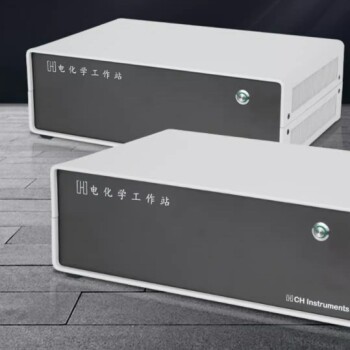
- Lab Electrochemical Workstation Potentiostat for Laboratory Use
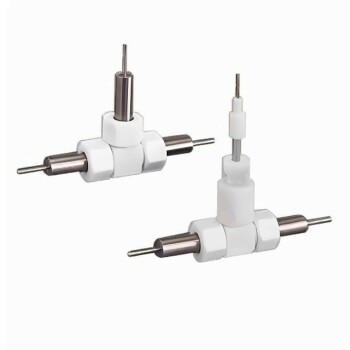
- Sample Support Body for Electrochemical Tests
- Customizable Swagelok Type Test Cells for Advanced Battery Research Electrochemical Analysis
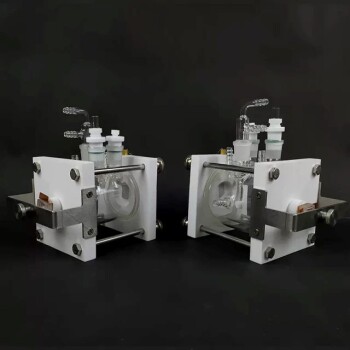
- Electrolytic Electrochemical Cell for Coating Evaluation
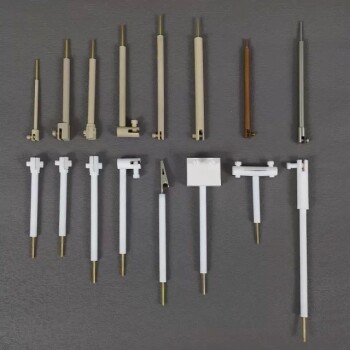
- Electrode Fixture for Electrochemical Experiments
People Also Ask
- How does an electrochemical workstation assist in assessing corrosion resistance? Quantify Laser-Remelted Steel Performance
- How does an electrochemical testing system evaluate mesoporous oxide electrodes? Precision Analysis for Battery Research
- What are the primary functions of an electrochemical workstation (Potentiostat)? Expert Titanium Alloy Corrosion Analysis
- What is the primary function of a high-precision electrochemical workstation? Optimize Your Reactor Performance
- What role do electrochemical workstations play in researching the corrosion resistance of carbon coatings? Expert Guide