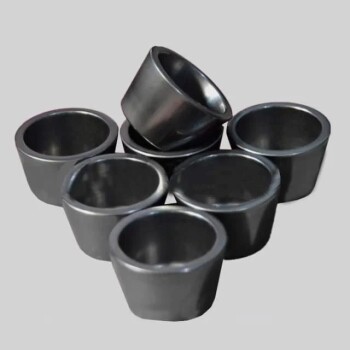
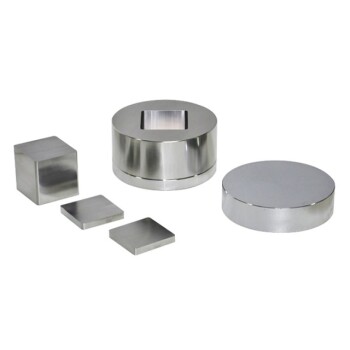
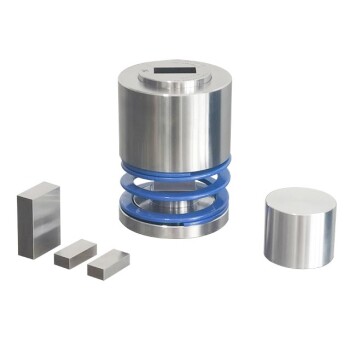
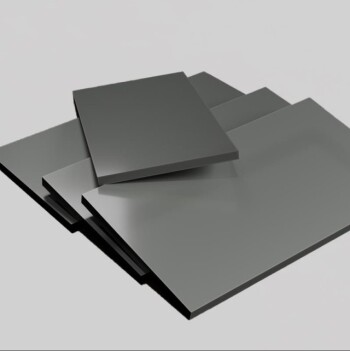
High-purity graphite molds serve as the critical interface between raw materials and the final product. In the hot-press sintering of diamond tools, they act not merely as passive containers, but as active components of the manufacturing process. Their primary functions are to shape the diamond and metal powder mixture, generate and transfer the necessary heat as conductive elements, and withstand the immense pressure required to densify the tool.
Core Takeaway High-purity graphite molds function as a dual-purpose vessel and heating element. They simultaneously define the tool's geometry, convert electrical current into thermal energy to sinter the powder, and transmit the hydraulic pressure needed to create a dense, durable diamond tool.
The Three Core Functions in Sintering
To understand the value of high-purity graphite in this process, you must view the mold as a dynamic part of the machine's energy system, rather than just a shaped cup.
1. The Geometric Container
The most immediate function is to hold the loose mixture of diamond and metal powders. The mold defines the macroscopic shape and dimensions of the final tool.
Because the process involves loose powder, the mold must maintain strict dimensional stability. It prevents the mixture from scattering before consolidation occurs.
2. The Active Heating Element
Unlike processes where heat is applied externally (like an oven), hot-press sintering often relies on the mold itself to generate heat.
Electrical to Thermal Conversion Under conditions of low voltage and high current, the graphite mold acts as a resistor. It efficiently converts the electrical current passing through it into thermal energy.
Uniform Heat Transfer Graphite possesses excellent thermal conductivity. It transfers the generated heat directly to the diamond and metal powders inside, ensuring the sintering temperature is reached uniformly throughout the mixture.
3. The Pressure Transmission Medium
Sintering is not just about heat; it is about pressure. The mold must physically compress the powder to eliminate voids and create a solid metallurgical bond.
Mechanical Strength at High Temperatures The mold must withstand significant axial pressure (often tens of Megapascals) without fracturing or deforming.
Densification By maintaining its structural integrity, the mold allows the external hydraulic force to be transmitted directly to the powder. This compression is vital for achieving the high density required for effective diamond tools.
Understanding the Trade-offs
While high-purity graphite is the industry standard for this application, it is not without limitations. Understanding these constraints is essential for process optimization.
Oxidation Vulnerability
Graphite is susceptible to oxidation at high temperatures in oxygen-rich environments. This can degrade the mold's surface and alter the dimensions of the final product.
To mitigate this, processes like vacuum hot pressing are often used. This minimizes oxidative loss, extending the service life of the mold and reducing production costs.
Balancing Strength and Conductivity
There is often a subtle trade-off between electrical resistivity and mechanical strength.
A mold with higher density generally offers better strength for high-pressure applications but may alter the heating characteristics. Selecting the specific grade of graphite requires balancing the need for rapid heating against the need for extreme pressure transmission.
Making the Right Choice for Your Goal
When selecting graphite molds or troubleshooting your sintering process, consider your specific manufacturing priorities.
- If your primary focus is Dimensional Precision: Prioritize high-density graphite grades that offer superior mechanical strength to prevent deformation under high axial loads.
- If your primary focus is Heating Efficiency: Ensure the graphite grade has consistent electrical resistivity to function effectively as a heating element under your specific voltage parameters.
- If your primary focus is Cost Reduction: Implement vacuum or protective atmosphere environments to reduce oxidation, thereby extending the reuse cycle of each mold.
By treating the graphite mold as an active component of your thermal and mechanical system, you ensure higher quality and consistency in your diamond tools.
Summary Table:
| Function | Description | Key Performance Requirement |
|---|---|---|
| Geometric Containment | Defines the shape and prevents powder scatter. | Dimensional stability at high heat. |
| Active Heating | Converts electrical current to thermal energy (Resistive heating). | High thermal conductivity & consistent resistivity. |
| Pressure Transmission | Transfers hydraulic force to densify the diamond/metal mixture. | High mechanical strength & fracture resistance. |
| Oxidation Control | Minimizes material degradation in controlled environments. | Compatibility with vacuum/inert atmospheres. |
Maximize Your Sintering Efficiency with KINTEK
Achieve unmatched precision and durability in your diamond tool production with KINTEK’s premium graphite solutions. Our high-purity molds are designed to withstand extreme pressures and provide uniform heating, ensuring every tool meets your exact standards.
Beyond graphite molds, KINTEK specializes in laboratory equipment including high-temperature furnaces (vacuum, CVD, atmosphere), hydraulic presses, and crushing systems tailored for advanced material research and industrial manufacturing. Let our experts help you select the ideal tools for your laboratory or production line.
Contact Us Today to Optimize Your Process!
Related Products
- High Purity Pure Graphite Crucible for Evaporation
- High Purity Pure Graphite Crucible for Electron Beam Evaporation
- Special Shape Press Mold for Lab
- Ball Press Mold for Lab
- CVD Diamond Dressing Tools for Precision Applications
People Also Ask
- Why are high-purity graphite crucibles preferred for sulfide solid electrolytes? Achieve Superior Material Purity
- Why is a high-purity graphite crucible required for Chromel-TaC composites? Ensure Peak Purity at 1400°C
- What role do high-purity graphite crucibles play in molten salt corrosion research? Ensure Reactor-Grade Precision
- Why are high-purity graphite crucibles used for magnesium distillation? Ensure 3N8 Purity & Thermal Stability
- Why is a high-purity graphite crucible ideal for nitrogen-doped graphene at 1500 °C? Maximize Purity and Stability