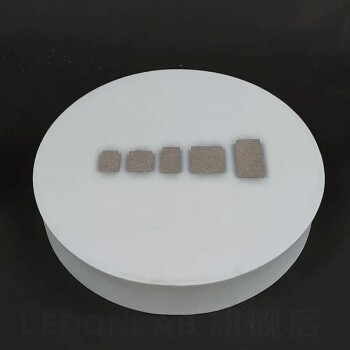
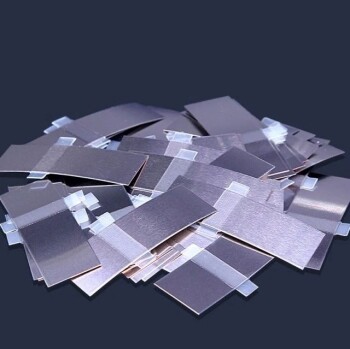
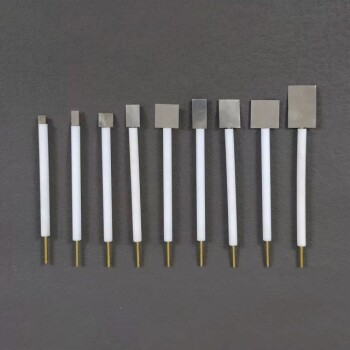
Metallic mesh materials primarily serve as dual-purpose structural supports for electrocatalysts and as highly efficient current collectors. In the manufacturing of electrodes for electrolysis, metals like nickel and titanium are utilized to create a three-dimensional porous framework. This architecture is fundamental to optimizing the electrochemical interface where the splitting of substances occurs.
The decisive advantage of metallic mesh lies in its open pore structure, which minimizes "bubble shielding"—the accumulation of gas bubbles that block reaction sites. By facilitating rapid bubble detachment and maximizing the active surface area, mesh electrodes significantly outperform solid plate alternatives in maintaining consistent catalytic activity.
The Structural Role of Metallic Mesh
Serving as an Electrocatalyst Support
Metallic mesh acts as a robust physical skeleton for the electrode. It provides a stable foundation upon which electrocatalysts are applied.
The mesh secures the catalytic material, ensuring it remains mechanically stable during the vigorous chemical environment of electrolysis. This setup allows the catalyst to function effectively without being washed away or degraded by the flow of the electrolyte.
Functioning as a Current Collector
Beyond physical support, the metallic mesh functions as a current collector. It distributes the direct current (DC) from the power source across the entire electrode assembly.
Because metals like nickel and titanium have specific conductive properties, the mesh ensures that electrical energy is delivered efficiently to the catalyst sites. This promotes a uniform reaction rate across the entire geometric area of the electrode.
Optimizing Electrochemical Efficiency
Maximizing Effective Surface Area
Unlike a flat metal plate, a metallic mesh offers a three-dimensional porous structure. This geometry dramatically increases the effective surface area available for electrochemical reactions.
A higher surface area means there are more active sites where ions from the electrolyte can migrate and react. This density of active sites directly correlates to improved efficiency and higher reaction rates per unit of volume.
Mitigating Bubble Shielding
During electrolysis, gases such as hydrogen and oxygen are generated at the electrode surfaces. On a solid surface, these bubbles can stick, covering the active sites and blocking the flow of current. This is known as bubble shielding.
The highly open pores of metallic mesh resolve this issue. They facilitate the rapid detachment and removal of these gas bubbles. By clearing bubbles quickly, the mesh ensures that the electrolyte maintains constant contact with the electrode surface.
Ensuring Uniform Current Distribution
The accumulation of bubbles can cause fluctuations in resistance, leading to "hot spots" or uneven reactions.
By continuously venting gas through its pores, the mesh maintains a consistent environment. This ensures a uniform current distribution across the electrode surface, preventing localized degradation and extending the operational life of the electrode.
Understanding the Trade-offs
Mechanical Durability Considerations
While the porous structure offers superior chemical efficiency, mesh is generally less mechanically rigid than solid metal plates.
Engineers must ensure the mesh gauge is sufficient to withstand the physical stresses of the specific electrolytic cell design. Extremely fine meshes, while offering high surface area, may require additional structural framing.
Complexity of Catalyst Application
Applying a uniform coating of electrocatalyst onto a complex, 3D mesh is more technically demanding than coating a flat surface.
If the coating process is not optimized, the inner surfaces of the pores may not receive adequate catalyst coverage. This would reduce the theoretical efficiency gains provided by the increased surface area.
Making the Right Choice for Your Process
When selecting electrode materials for your specific electrolysis application, consider the primary operational constraints of your system.
- If your primary focus is maximizing reaction density: Prioritize mesh designs with high porosity and smaller pore sizes to maximize the effective surface area for the catalyst.
- If your primary focus is high-rate gas evolution: Select a mesh with slightly larger open pores to ensure the rapid evacuation of large volumes of hydrogen or oxygen bubbles, preventing voltage spikes.
By integrating metallic mesh, you transition from a simple conductive surface to a dynamic, three-dimensional reaction engine capable of sustaining high-efficiency electrolysis.
Summary Table:
| Feature | Function in Electrolysis | Benefit |
|---|---|---|
| 3D Porous Structure | Increases active surface area | Higher reaction density and efficiency |
| Open Pore Geometry | Facilitates rapid gas bubble detachment | Prevents bubble shielding and voltage spikes |
| Conductive Skeleton | Acts as a current collector | Ensures uniform DC distribution across catalyst |
| Catalyst Support | Provides a mechanical foundation | Secures electrocatalysts against electrolyte flow |
Elevate Your Electrochemical Research with KINTEK Precision
Maximize the performance of your electrolysis systems with high-quality materials from KINTEK. As experts in laboratory equipment and consumables, we provide the essential tools required for advanced material science, including specialized electrolytic cells and electrodes.
Whether you are developing next-generation hydrogen fuel cells or industrial electrolysis processes, our portfolio offers the durability and conductivity your project demands. From titanium and nickel meshes to our comprehensive range of high-temperature furnaces, hydraulic presses, and ceramic crucibles, KINTEK is your partner in laboratory excellence.
Ready to optimize your electrode architecture? Contact KINTEK Today to Request a Quote
References
- Samina Aslam, Nisar Ahmed. Electrochemical hydrogen production: sustainable hydrogen economy. DOI: 10.1039/d3gc02849f
This article is also based on technical information from Kintek Solution Knowledge Base .
Related Products
- Nickel Foam for Industrial and Laboratory Applications
- Copper Nickel Foam Metal Sheet
- Electrode Polishing Material for Electrochemical Experiments
- Conductive Carbon Cloth Carbon Paper Carbon Felt for Electrodes and Batteries
- Nickel Aluminum Tabs for Soft Pack Lithium Batteries
People Also Ask
- What procedures should be followed after using nickel or copper foam? A Guide to Reliable Reuse and Performance
- What is nickel foam used for? A Guide to Its Electrochemical Applications
- In which fields is nickel foam widely used? A Key Material for Advanced Engineering
- What procedures should be followed before using nickel or copper foam? Ensure Optimal Performance and Reliability
- What are the advantages of using high-porosity Nickel Foam or Nickel Mesh? Boost Your MEC Performance