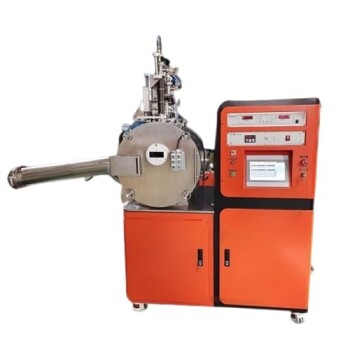
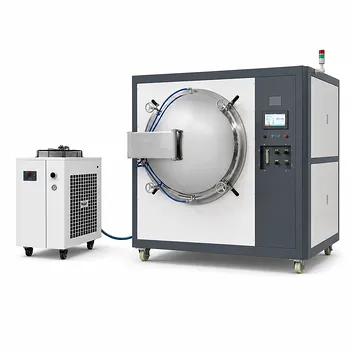
The integration of vacuum systems and inert gas supplies is fundamental to the successful sintering of NiTiCu alloys. Vacuum systems serve to eliminate atmospheric contaminants like oxygen and moisture that would otherwise react with highly sensitive titanium powders. Inert gas supplies, typically high-purity argon, are subsequently introduced to prevent the evaporation of alloying elements and suppress the formation of brittle oxides that degrade the material's mechanical properties.
The synergy between vacuum evacuation and inert gas backfilling ensures the chemical purity and structural integrity of NiTiCu alloys. By removing reactive gases and then providing a pressurized protective envelope, these systems prevent oxidation and elemental loss, which are critical for maintaining the alloy's shape memory characteristics.
The Critical Function of Vacuum Systems
Eliminating Atmospheric Contaminants
Titanium is extremely reactive and readily forms oxides or nitrides when exposed to air at elevated temperatures. Vacuum systems evacuate the sintering chamber to ultra-low pressures (often reaching 10⁻⁴ mbar or lower) to remove residual oxygen, nitrogen, and moisture. This step is vital to prevent the contamination of the active metal powders, ensuring the final alloy maintains its intended chemical composition.
Reducing Micro-Porosity and Interstitial Gases
During the powder metallurgy process, gases often become trapped in the interstices between powder particles. High-vacuum environments assist in extracting these adsorbed gases, which significantly reduces micro-porosity in the final sintered body. Lower porosity directly correlates to improved electrical conductivity and superior mechanical stability in the NiTiCu matrix.
Facilitating Thermal Cleaning and Debinding
At lower temperature stages (approximately 250°C), the vacuum system plays a secondary role in removing paraffin lubricants or binders used during the molding process. This "thermal cleaning" ensures that carbon residues do not interfere with the atomic diffusion process during the high-temperature sintering phase.
The Role of Inert Gas Backfilling
Inhibiting Elemental Volatilization
At the high temperatures required for sintering (often exceeding 950°C), certain elements like titanium can begin to volatilize or "boil off" in a pure vacuum. Introducing high-purity argon gas creates a controlled partial pressure that inhibits this volatilization. This ensures the alloy retains the precise stoichiometric balance necessary for its shape memory effect.
Preventing Brittle Phase Formation
Even small amounts of residual oxygen can lead to the formation of brittle oxide phases within the NiTiCu structure. Argon circulation provides a continuous protective atmosphere that acts as a barrier against oxidation. This suppression of harmful impurity phases is essential for maintaining the ductility and fatigue resistance of the alloy.
Enhancing Thermal Management
In specific processes like hot-pressing or spark plasma sintering, the inert gas can assist in uniform heat transfer across the sintering compact. This contributes to a more consistent microstructure and prevents localized overheating, which could lead to non-uniform grain growth or secondary phase precipitation.
Understanding the Trade-offs
Balancing Vacuum Depth and Elemental Loss
While a deeper vacuum (e.g., 10⁻⁵ Pa) more effectively removes contaminants, it also increases the risk of losing volatile alloying elements. Engineers must carefully time the transition from vacuum to inert gas backfill to maximize purity without compromising the alloy's chemical accuracy.
The Cost of Ultra-High Purity
Maintaining an ultra-pure environment requires high-purity argon (often 99.999% or higher) and sophisticated pumping systems like mechanical and diffusion pump combinations. The primary trade-off is between material performance and production cost, as the equipment and gas consumption required for "clean" sintering represent a significant portion of the manufacturing overhead.
How to Apply This to Your Project
Recommendations for Sintering Optimization
- If your primary focus is Maximum Ductility: Prioritize the vacuum stage to 10⁻⁴ mbar to ensure all interstitial oxygen is removed before heating begins.
- If your primary focus is Chemical Precision: Focus on early backfilling with argon to prevent the loss of titanium or copper through volatilization at temperatures above 800°C.
- If your primary focus is Reducing Porosity: Utilize a vacuum system capable of maintaining low pressure during the initial heating ramp to extract trapped gases effectively.
By meticulously controlling the balance between vacuum evacuation and inert gas protection, you can produce NiTiCu alloys with the precise microstructures required for demanding engineering applications.
Summary Table:
| System/Process | Key Function | Impact on NiTiCu Alloy |
|---|---|---|
| Vacuum System | Atmospheric Evacuation | Removes oxygen/nitrogen to prevent brittle oxide formation. |
| Vacuum System | Gas Extraction | Eliminates trapped gases to reduce micro-porosity. |
| Inert Gas (Argon) | Pressure Control | Inhibits volatilization of titanium and copper elements. |
| Inert Gas (Argon) | Protective Envelope | Acts as a barrier against oxidation, maintaining ductility. |
Elevate Your Material Research with KINTEK Precision
Achieving the perfect stoichiometric balance in NiTiCu alloys requires absolute control over your thermal environment. KINTEK specializes in high-performance laboratory equipment designed to meet the rigorous demands of advanced powder metallurgy.
Our comprehensive portfolio includes:
- High-Temperature Furnaces: Vacuum, atmosphere, tube, muffle, and induction melting systems for precise sintering.
- Advanced Reactors: CVD, PECVD, and MPCVD systems, alongside high-pressure autoclaves.
- Preparation Tools: Crushing systems, milling equipment, and hydraulic presses (pellet, hot, isostatic).
- Essential Consumables: High-purity ceramics, crucibles, and PTFE products.
Whether you are focusing on maximizing ductility or ensuring chemical precision, KINTEK provides the reliable technology and expert support you need to eliminate contamination and optimize material performance.
Ready to refine your sintering process? Contact KINTEK today for a tailored solution!
References
- Waheed Gul, Aqib Ali. Development and Characterization of NiTiCu Alloy using Powder Metallurgy Route. DOI: 10.5281/zenodo.8330735
This article is also based on technical information from Kintek Solution Knowledge Base .
Related Products
- Vacuum Heat Treat and Molybdenum Wire Sintering Furnace for Vacuum Sintering
- Vacuum Heat Treat and Sintering Furnace with 9MPa Air Pressure
- Vacuum Dental Porcelain Sintering Furnace
- Small Vacuum Heat Treat and Tungsten Wire Sintering Furnace
- Vacuum Heat Treat and Pressure Sintering Furnace for High Temperature Applications
People Also Ask
- What is the pressure for vacuum sintering? Achieve Optimal Material Purity and Density
- What is vacuum hardness? Unlock Superior Material Performance with Vacuum Processing
- What are the critical functions of the vacuum system in a sintering furnace for Cu/Ti3SiC2/C/MWCNTs composites?
- What critical process conditions does a vacuum sintering furnace provide for titanium? Expert Diffusion Bonding Guide
- How does a vacuum environment benefit the purification of matrix powders? Optimize Diamond Tool Sintering Efficiency