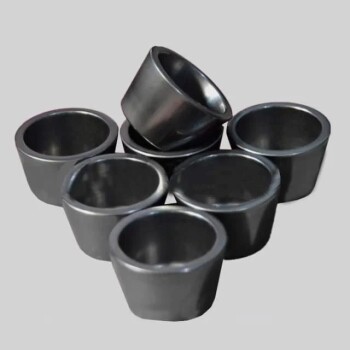
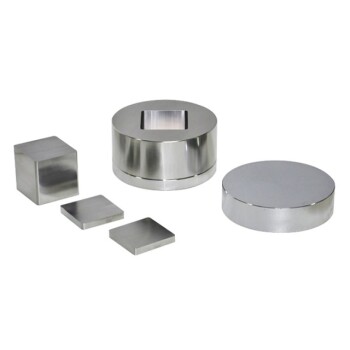
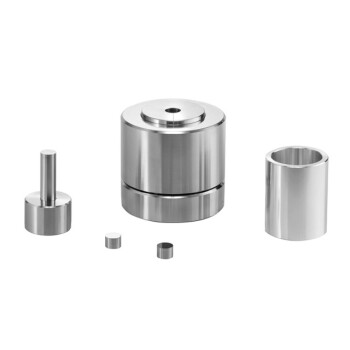
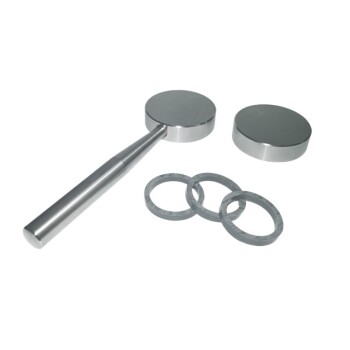
Graphite molds serve as the critical structural and thermal interface in the vacuum hot-press sintering of Pr, Y:SrF2 transparent ceramics. Their specific functions are to physically contain the powder to define its geometry (such as 16mm diameter disks), transmit significant uniaxial pressure (specifically 30 MPa), and ensure the uniform distribution of heat throughout the material to achieve transparency.
Core Takeaway Graphite molds are not passive containers; they are active components that facilitate densification by enabling the simultaneous application of high mechanical pressure and uniform heat, which drives particle rearrangement and eliminates porosity in the final ceramic.
The Mechanics of Densification
Geometric Definition and Containment
The most immediate function of the graphite mold is to act as a precision container.
It holds the loose Pr, Y:SrF2 ceramic powder, defining the final shape and dimensions of the sample.
In this specific context, the mold is often configured to produce specific geometries, such as disks with a 16mm diameter.
Transmission of Uniaxial Pressure
Beyond shaping, the mold serves as the transmission medium for external force.
It must withstand and transfer a mechanical pressure of 30 MPa from the hydraulic press directly to the ceramic powder.
This pressure transmission is vital for promoting particle rearrangement and plastic deformation, mechanisms that are essential for reducing internal voids.
Thermal Regulation and Uniformity
Ensuring Uniform Heat Distribution
Graphite possesses superior thermal conductivity, which is a functional requirement for this process.
The mold absorbs heat from the furnace elements and distributes it evenly around and into the Pr, Y:SrF2 powder.
This prevents thermal gradients that could lead to uneven sintering or structural defects within the ceramic.
High-Temperature Structural Stability
The process requires the mold to operate effectively at elevated temperatures (typically around 1000°C).
The graphite must maintain its structural integrity and high strength under these conditions without deforming.
This resistance ensures that the pressure applied remains constant and the dimensions of the ceramic remain accurate throughout the heating cycle.
Critical Dependencies and Trade-offs
The Necessity of Material Strength
The effectiveness of the process is entirely dependent on the mechanical grade of the graphite used.
If the mold lacks sufficient strength, it will fail to transmit the required 30 MPa pressure uniformly, leading to incomplete densification.
Thermal Conductivity vs. Insulation
While high thermal conductivity is desired for uniformity, it also means the mold equilibrates quickly with the environment.
This requires precise control of the furnace ramp rates, as the mold offers little insulating protection against rapid temperature changes.
Making the Right Choice for Your Goal
To maximize the quality of Pr, Y:SrF2 transparent ceramics, consider the following focus areas:
- If your primary focus is Optical Transparency: Ensure the mold assembly allows for perfectly uniform pressure transmission to eliminate residual pores and maximize density.
- If your primary focus is Dimensional Accuracy: Prioritize high-strength graphite grades that resist deformation under 30 MPa loads at 1000°C to maintain precise geometric shape.
The ultimate role of the graphite mold is to provide a stable, high-pressure, isothermal environment that forces the ceramic material to reach its theoretical density limit.
Summary Table:
| Function | Description | Impact on Pr, Y:SrF2 Ceramic |
|---|---|---|
| Geometric Containment | Defines 16mm disk shape and dimensions | Ensures dimensional accuracy and near-net-shape results |
| Pressure Transmission | Transfers 30 MPa uniaxial force to powder | Promotes particle rearrangement and eliminates porosity |
| Thermal Regulation | Distributes heat uniformly at ~1000°C | Prevents thermal gradients and ensures optical transparency |
| Structural Stability | Resists deformation under high stress/temp | Maintains consistent pressure and geometric integrity |
Elevate Your Advanced Ceramic Production with KINTEK
Precision in vacuum hot-pressing starts with the right equipment and high-performance consumables. KINTEK specializes in high-tier laboratory solutions designed to help researchers and manufacturers achieve theoretical density in transparent ceramics and advanced materials.
Our extensive portfolio includes:
- High-Temperature Vacuum Furnaces & Hot Presses: Engineered for stable, high-pressure sintering environments.
- Precision Crushing, Milling & Sieving Systems: To ensure your starting powders meet the highest standards.
- Specialized Consumables: High-strength graphite molds, ceramics, and crucibles tailored for 1000°C+ applications.
- Comprehensive Lab Tools: From hydraulic pellet presses to cooling solutions and battery research consumables.
Whether you are focusing on optical transparency or dimensional accuracy, our team is ready to provide the specialized tools your lab demands. Contact KINTEK today to discuss your project requirements!
Related Products
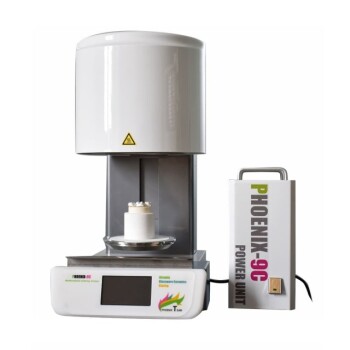
- Dental Porcelain Zirconia Sintering Ceramic Vacuum Press Furnace
- Vacuum Dental Porcelain Sintering Furnace
- Dental Porcelain Zirconia Sintering Ceramic Furnace Chairside with Transformer
- Ultra-High Temperature Graphite Vacuum Graphitization Furnace
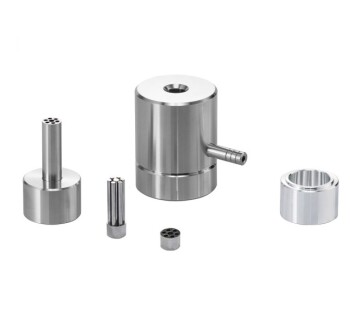
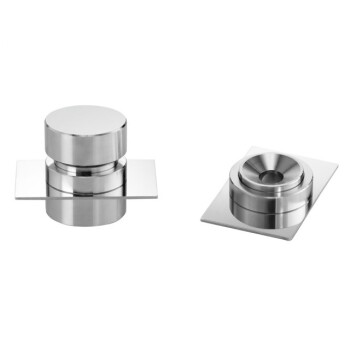
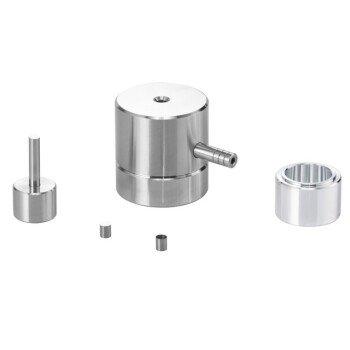
- Special Shape Press Mold for Lab
People Also Ask
- What does sintering do to zirconia? Unlock Its Full Strength and Aesthetic Potential
- What is the shrinkage of zirconia during sintering? Mastering the 20-25% Dimensional Change
- What is the sintering temperature of zirconia ceramic? Mastering the 1400°C-1600°C Thermal Profile
- What is the price of zirconia sintering furnace? Invest in Precision, Not Just a Price Tag
- What factors are important to consider when choosing a dental sintering furnace? Match Your Workflow for Optimal Results