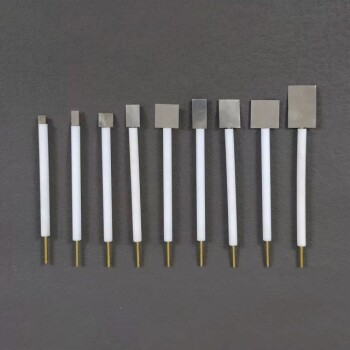
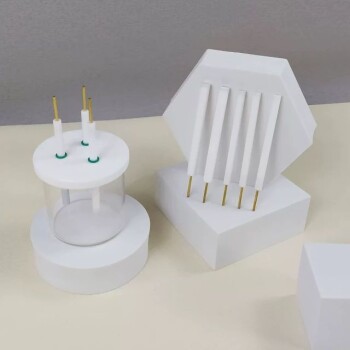
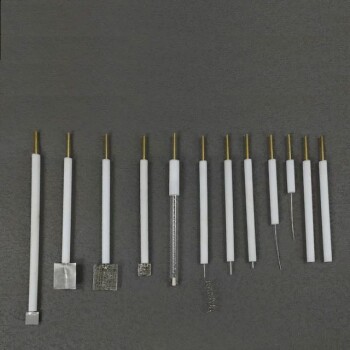
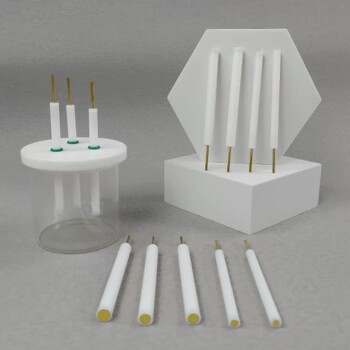
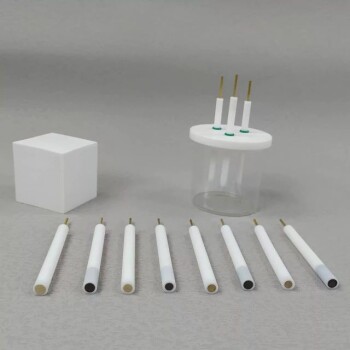
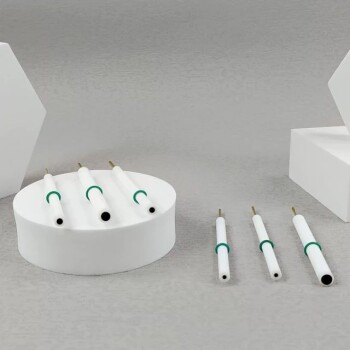
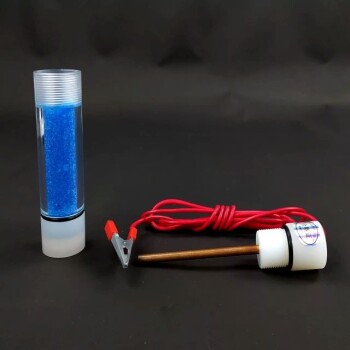
The precision of electrochemical analysis relies on the separation of current flow and potential measurement. In a three-electrode configuration, the platinum (Pt) electrode acts as the counter (auxiliary) electrode, completing the electrical circuit to facilitate charge transmission. The mercury/mercury oxide (Hg/HgO) electrode serves as the reference electrode, providing a stable, constant potential baseline that allows for the accurate measurement of the working electrode's behavior.
By isolating the current-carrying duties from the potential-sensing duties, this setup ensures that the data collected reflects the intrinsic properties of the material under study, rather than artifacts caused by the testing environment.
The Platinum Electrode: The Engine of the Circuit
Completing the Current Loop
The primary function of the platinum electrode is to serve as the counter electrode (CE). It provides a path for the current to flow from the working electrode through the electrolyte, completing the electrical circuit required for electrochemical reactions to occur.
Chemical Inertness and Stability
Platinum is selected for its exceptional chemical inertness and high electrical conductivity. These properties ensure that the electrode does not dissolve or introduce unwanted metallic ions into the electrolyte, which would otherwise contaminate the test results or interfere with the polarization behavior of the system.
Facilitating Balancing Reactions
To maintain charge balance, the platinum electrode facilitates a complementary redox reaction—typically the hydrogen evolution reaction (HER) or oxygen evolution reaction (OER). Because platinum is a highly efficient catalyst for these reactions, it operates with low overpotential, minimizing the energy lost at the counter electrode interface.
The Hg/HgO Electrode: The Precise Baseline
Providing a Stable Reference Potential
The mercury/mercury oxide (Hg/HgO) electrode acts as the reference electrode (RE). Its sole purpose is to provide a fixed, known electrical potential that remains constant throughout the experiment, regardless of the current flowing through the rest of the system.
Optimization for Alkaline Environments
While other reference electrodes like Silver/Silver Chloride (Ag/AgCl) are common, the Hg/HgO electrode is the gold standard for alkaline electrolytes (high pH). It maintains superior stability in basic solutions, ensuring that the measured potential of the working electrode does not drift during long-term testing.
Eliminating Measurement Interference
Because the reference electrode is connected to a high-impedance circuit, virtually no current flows through it. This isolation eliminates the "iR drop" (voltage drop due to resistance) and potential fluctuations, allowing the researcher to monitor the true potential response of the working electrode material independently.
Understanding the Trade-offs
Material Limitations and Maintenance
Despite its stability, the Hg/HgO electrode contains mercury, requiring careful handling and disposal according to environmental regulations. Furthermore, the porous frit at the tip must be kept wet and clear of precipitates to ensure a consistent liquid junction with the electrolyte.
Platinum Surface Area and Polarization
If the surface area of the platinum counter electrode is too small relative to the working electrode, it can become a bottleneck. This leads to excessive polarization, which may exceed the voltage limits of the electrochemical workstation (potentiostat), potentially terminating the experiment prematurely.
How to Apply This to Your Project
Making the Right Choice for Your Goal
- If your primary focus is high-current testing: Ensure your platinum electrode has a significantly larger surface area (e.g., a large plate or mesh) than your working electrode to prevent current-limiting polarization.
- If your primary focus is testing in basic solutions (KOH/NaOH): Use the mercury/mercury oxide (Hg/HgO) electrode to ensure the most stable potential baseline and avoid the chloride contamination associated with Ag/AgCl electrodes.
- If your primary focus is material purity: Always use high-purity platinum (99.99%) to prevent the leaching of trace metals that could catalyze unintended side reactions on your sample.
Selecting the correct electrode configuration is the most critical step in ensuring that your electrochemical data is both reproducible and scientifically valid.
Summary Table:
| Electrode Type | Primary Role | Key Advantage | Best Use Case |
|---|---|---|---|
| Platinum (Pt) | Counter Electrode (CE) | High conductivity & chemical inertness | Completing the circuit without contamination |
| Mercury/Mercury Oxide (Hg/HgO) | Reference Electrode (RE) | Stable, fixed potential baseline | High-pH/Alkaline environments (KOH/NaOH) |
Elevate Your Electrochemical Precision with KINTEK
Don't let unstable potentials or electrode contamination compromise your research. KINTEK specializes in providing high-purity electrolytic cells and electrodes, including 99.99% platinum and specialized Hg/HgO reference electrodes designed for rigorous alkaline testing.
Beyond electrodes, we offer a comprehensive suite of laboratory solutions, from high-temperature reactors and autoclaves to crushing systems and hydraulic presses. Whether you are working on battery research or advanced material synthesis, our expert-grade consumables (PTFE, ceramics, and crucibles) ensure your data is reproducible and valid.
Ready to optimize your testing setup? Contact KINTEK today to discuss your specific application and find the perfect equipment for your lab!
References
- Shumeng Qin, Shicheng Zhang. In Situ N, O Co-Doped Nanoporous Carbon Derived from Mixed Egg and Rice Waste as Green Supercapacitor. DOI: 10.3390/molecules28186543
This article is also based on technical information from Kintek Solution Knowledge Base .
Related Products
- Platinum Sheet Electrode for Laboratory and Industrial Applications
- Rotating Platinum Disk Electrode for Electrochemical Applications
- Platinum Auxiliary Electrode for Laboratory Use
- Platinum Sheet Electrode for Battery Lab Applications
- Reference Electrode Calomel Silver Chloride Mercury Sulfate for Laboratory Use
People Also Ask
- What is a common use for a platinum sheet electrode? As a Reliable Counter Electrode in Electrochemical Cells
- What is the most critical guideline for immersing a platinum sheet electrode in an electrolyte? Ensure Accurate Electrochemical Measurements
- What is the purity of the platinum sheet in a platinum sheet electrode? The Key to Reliable Electrochemical Data
- What is the expected lifespan of a platinum sheet electrode? Maximize Your Electrode's Service Life
- What are the available specifications for platinum sheet electrodes? Find the Perfect Fit for Your Electrochemical Needs