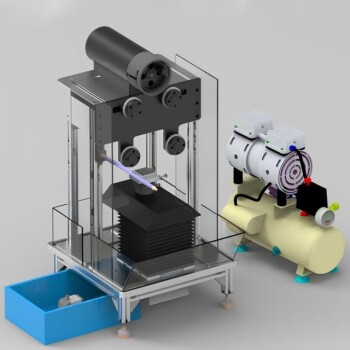
A precision disc cutter serves as the foundational tool for preparing the active components in solid-state battery assembly. Its primary function is to punch dried Lithium Iron Phosphate (LFP) cathode sheets and lithium metal foils into uniform circular discs, typically measuring 6 mm or 8 mm in diameter.
The cutter does more than just shape materials; it is the gatekeeper for electrode quality. It ensures edges are completely burr-free and dimensions are exact, which is critical for matching the electrode to the solid-state electrolyte pellet and optimizing internal interface contact.
Preparing Core Battery Materials
Handling Specific Chemistries
The precision disc cutter is specifically engineered to process distinct battery materials without damaging them. It is used to cut dried Lithium Iron Phosphate (LFP) cathode sheets, which can be brittle and require careful handling.
Processing Lithium Metal
In addition to cathodes, the equipment is used to shape lithium metal foils. These foils often serve as the anode in solid-state configurations and require clean cuts to maintain their structural integrity.
Achieving Specific Dimensions
The tool allows for the creation of discs with precise diameters. Common specifications include 6 mm or 8 mm discs. This standardization is essential for ensuring consistency across different test cells and production batches.
Ensuring Interface Quality and Performance
Creating Smooth, Burr-Free Edges
One of the most critical uses of the cutter is to ensure the electrode edges are smooth and burr-free. Rough edges or metal burrs can lead to internal short circuits or compromise the safety of the cell.
Matching Electrolyte Pellets
In solid-state batteries, the contact between layers is paramount. The cutter ensures the electrode sizes precisely match the solid-state electrolyte pellets.
Optimizing Internal Contact
By guaranteeing an exact fit between the electrode and the electrolyte, the cutter optimizes the internal interface contact. Superior contact improves ion transport and ensures the overall quality of the battery packaging.
Understanding the Trade-offs
The Cost of Imprecision
While manual cutting or lower-quality tools may seem faster, they often fail to achieve a burr-free finish. Even microscopic burrs can prevent flush contact between solid-state layers, significantly degrading battery performance.
Material Waste vs. Quality
Precision cutting prioritizes the quality of the individual disc over speed. While this ensures the battery packaging is secure and the interface is optimized, it requires careful alignment to minimize waste of expensive lithium foils and cathode sheets.
Making the Right Choice for Your Goal
To select the right cutting approach for your solid-state assembly, consider your specific research or production needs:
- If your primary focus is Cell Performance: Prioritize a cutter that guarantees burr-free edges to maximize internal interface contact.
- If your primary focus is Standardization: Ensure the equipment can consistently produce the specific diameters (e.g., 6 mm or 8 mm) required to match your electrolyte pellets.
Precision cutting is not merely a shaping step; it is a quality control measure that dictates the mechanical fit and electrochemical efficiency of your final solid-state cell.
Summary Table:
| Feature | Specific Application in Solid-State Assembly |
|---|---|
| Material Processing | Cutting dried LFP cathode sheets and lithium metal foils |
| Dimensional Control | Producing uniform 6 mm or 8 mm diameter discs |
| Edge Quality | Ensuring burr-free edges to prevent internal short circuits |
| Interface Optimization | Matching electrodes to electrolyte pellets for maximum ion transport |
| Quality Control | Maintaining structural integrity of brittle active materials |
Elevate Your Battery Research with KINTEK Precision
Don’t let microscopic burrs compromise your solid-state battery performance. KINTEK specializes in high-precision laboratory equipment designed for the rigorous demands of material science. From our precision disc cutters that ensure flawless electrode interfaces to our comprehensive range of high-temperature furnaces, hydraulic pellet presses, and battery research tools, we provide the end-to-end solutions necessary for next-generation energy storage.
Whether you are processing LFP cathodes or delicate lithium metal foils, our tools guarantee the consistency your research deserves. Contact KINTEK today to optimize your laboratory assembly line!
Related Products
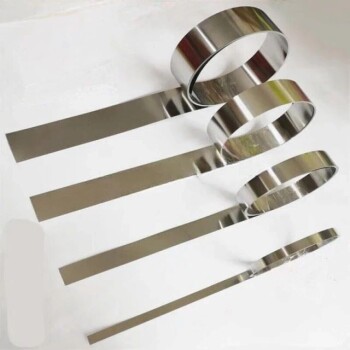
- Battery Lab Equipment 304 Stainless Steel Strip Foil 20um Thick for Battery Test
- CVD Diamond Cutting Tool Blanks for Precision Machining
- Button Battery Disassembly and Sealing Mold for Lab Use
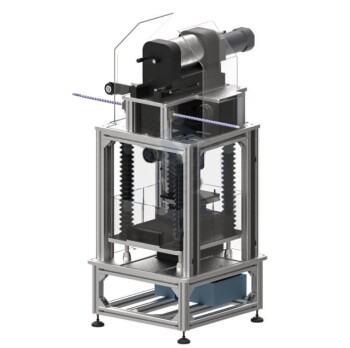
- Precision Wire Saw Laboratory Cutting Machine with 800mm x 800mm Workbench for Diamond Single Wire Circular Small Cutting
- High Precision Diamond Wire Cutting Machine Laboratory Saw Precision Wire EDM Cutting Machine
People Also Ask
- How is a galvanostat used to evaluate F-rGO layers? Quantifying Protective Performance in Lithium Metal Batteries
- What is the sputtering cathode method? A Guide to Thin Film Deposition Technology
- What is sputtering target material? The Blueprint for High-Quality Thin Film Coatings
- What is organic thin film? A Guide to Engineered Molecular Layers for Advanced Tech
- What are the target materials for sputtering? From Metals to Ceramics for Precise Thin Films