In thermal evaporation, a source is the component that holds and heats a material until it vaporizes within a vacuum chamber. This vapor then travels and condenses onto a cooler substrate, forming a thin, uniform film. The source is the engine of the entire process, directly responsible for creating the material vapor needed for deposition.
The term "thermal evaporation source" refers to more than just a single component; it defines a method of generating heat. While all sources serve to vaporize material, the choice between a simple resistive boat and a complex electron beam dictates the cost, purity, and range of materials you can successfully deposit.
The Fundamental Role of the Source
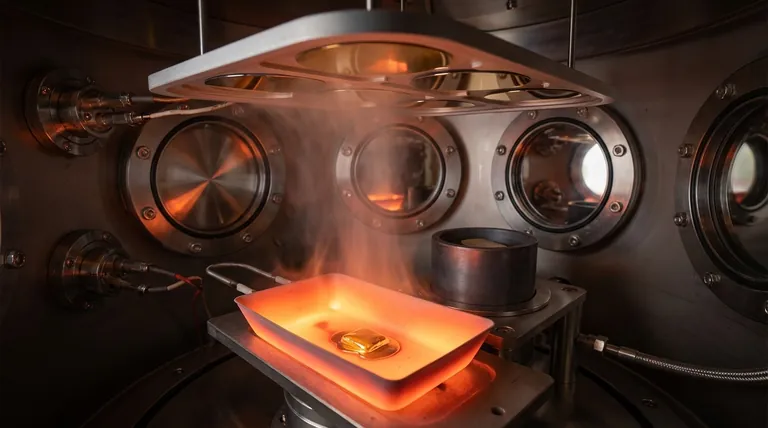
A source is at the heart of any thermal evaporation system, performing a sequence of critical functions to enable thin-film deposition. It operates within a high-vacuum chamber, which ensures the vaporized material can travel to the substrate without colliding with air molecules.
Holding the Evaporant Material
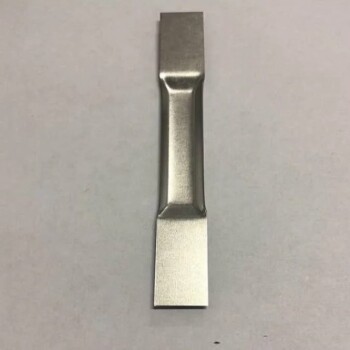
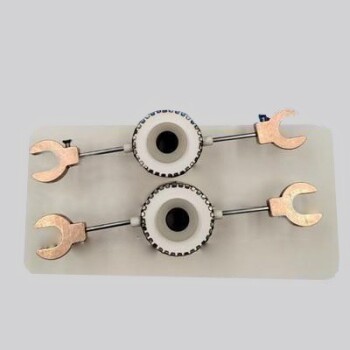
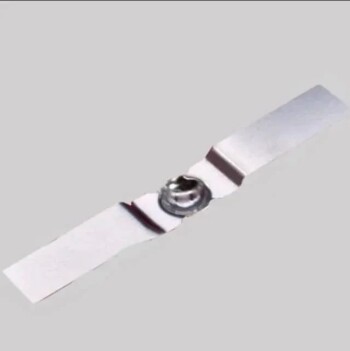
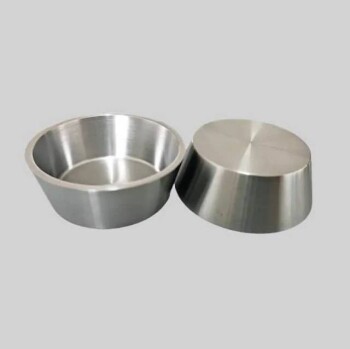
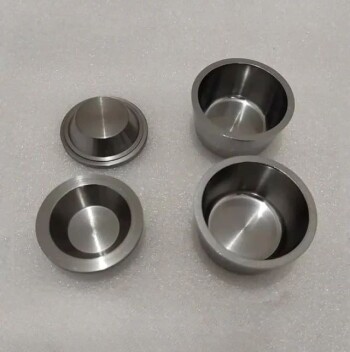
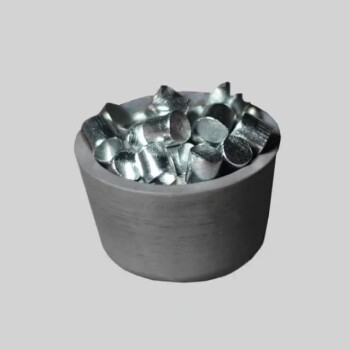
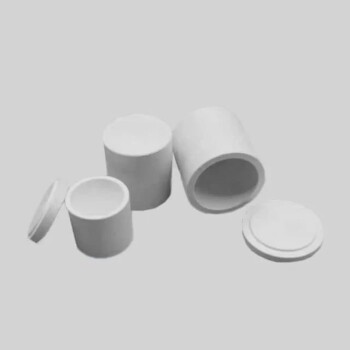
The source acts as a container for the solid material you intend to deposit, known as the evaporant. This container is often a small crucible or a shaped piece of metal referred to as a "boat."
Generating Intense Heat
The primary function is to generate extremely high temperatures. In the most common method, resistive heating, a large electrical current is passed through the source itself. The source's natural electrical resistance causes it to heat up rapidly, much like the filament in an incandescent light bulb.
Creating Material Vapor
This intense heat is transferred to the evaporant, causing it to first melt and then evaporate (or sublime directly from a solid to a gas). This creates a cloud of vapor that expands upwards through the vacuum chamber.
Coating the Substrate
The vapor travels in a straight line until it makes contact with the cooler substrate—such as a silicon wafer or glass slide—which is held in a fixture above the source. Upon contact, the vapor rapidly cools and condenses, forming a solid, thin film on the substrate's surface.
Common Types of Thermal Evaporation Sources
The method used to generate heat defines the type of source. The choice depends entirely on the material being deposited, the required purity of the film, and the desired deposition rate.
Resistive Heating Sources
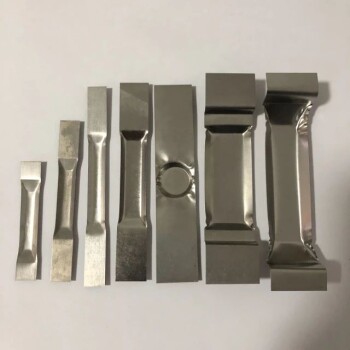
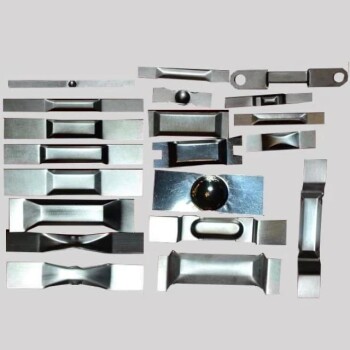
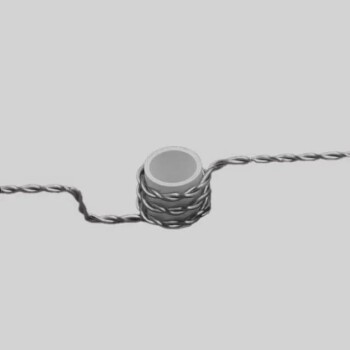
This is the most straightforward and widely used technique. A filament or boat made of a high-melting-point metal (like tungsten or molybdenum) holds the evaporant and also serves as the heating element.
It is ideal for depositing materials with relatively low melting points, such as single metals like aluminum, gold, or silver, making it perfect for creating electrical contacts on electronic devices.
Electron Beam (E-Beam) Evaporation
For materials with very high melting points, resistive heating is often insufficient. E-beam evaporation uses a high-energy beam of electrons, guided by magnetic fields, to heat the evaporant material directly.
This method allows for the deposition of ceramics and refractory metals. Because the crucible holding the material is water-cooled, only the evaporant itself is heated, leading to a much purer film with less contamination from the source.
Specialized Sources
Other, more specialized techniques exist for specific research or production needs. Flash evaporation is used for depositing alloys, while Knudsen cells offer exceptionally precise temperature control for creating ultra-pure films in molecular beam epitaxy (MBE).
Understanding the Trade-offs
No single source type is universally superior. The decision to use one over another involves balancing cost, complexity, and performance to meet the goals of a specific application.
Simplicity vs. Control (Resistive Sources)
The key advantage of resistive sources is their simplicity and low cost. The equipment is relatively easy to operate and maintain.
However, they offer less control over deposition rate and can be a source of contamination, as the boat material may also evaporate slightly. They are also unsuitable for depositing alloys with different vapor pressures or high-temperature materials.
Power vs. Complexity (E-Beam Sources)
E-beam sources provide the power to evaporate almost any material and produce very high-purity films. This makes them essential for advanced optical and electronic applications.
This capability comes at the cost of much higher complexity and expense. E-beam systems require more sophisticated power supplies, magnetic guidance systems, and cooling infrastructure.
The Vacuum Imperative
Regardless of the source type, all thermal evaporation requires a high-vacuum environment. Achieving and maintaining this vacuum adds significant cost and operational complexity to the overall process.
Making the Right Choice for Your Goal
Selecting a source is the most critical decision in planning a thermal evaporation process. Your choice directly enables—or limits—the types of materials and quality of films you can produce.
- If your primary focus is cost-effective deposition of simple metals: A standard resistive thermal source is your most direct and economical solution.
- If your primary focus is depositing high-melting-point materials or alloys with high purity: An electron-beam (e-beam) source is necessary despite its higher complexity and cost.
- If your primary focus is fundamental research or growing complex molecular structures: You will need a specialized, highly stable source like a Knudsen cell to achieve the required precision.
Ultimately, understanding the capabilities and limitations of each source type is the critical first step in engineering a successful and repeatable thin-film deposition process.
Summary Table:
| Source Type | Heating Method | Best For | Key Advantage |
|---|---|---|---|
| Resistive Heating | Electrical current through a metal boat/filament | Low-melting-point metals (Al, Au, Ag) | Simple, cost-effective |
| Electron Beam (E-Beam) | Focused electron beam | High-melting-point materials, ceramics | High purity, versatile |
| Specialized (e.g., Knudsen Cell) | Precise thermal control | Research, ultra-pure films | Exceptional temperature stability |
Ready to optimize your thin-film deposition process? KINTEK specializes in high-quality lab equipment and consumables, including thermal evaporation sources tailored to your laboratory's unique needs. Whether you're depositing simple metals or advanced ceramics, our experts can help you select the right source for superior film quality and efficiency. Contact us today to discuss your project and discover how KINTEK can support your research and production goals!
Visual Guide

Related Products
- Molybdenum Tungsten Tantalum Evaporation Boat for High Temperature Applications
- Aluminized Ceramic Evaporation Boat for Thin Film Deposition
- Evaporation Boat for Organic Matter
- Hemispherical Bottom Tungsten Molybdenum Evaporation Boat
- E Beam Crucibles Electron Gun Beam Crucible for Evaporation
People Also Ask
- What are the sources of thermal evaporation? A Guide to Resistive vs. E-Beam Heating
- How does a molybdenum evaporation source function in H2S for MoS2 synthesis? Master Reactive Film Deposition
- Is thermal evaporation used to deposit a thin metal film? A Guide to This Foundational PVD Technique
- What is the thermal evaporation method in thin film? A Guide to Simple, Cost-Effective PVD
- What is the difference between thermal evaporation and e beam evaporation? Choose the Right Method for Your Thin Film