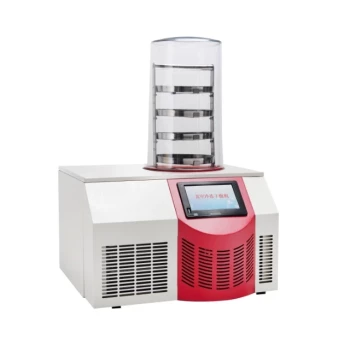
A vacuum drying oven serves as the critical final purification step in preparing Na3FePO4CO3 cathode electrodes. By baking PTFE-bonded electrode sheets at 120°C under negative pressure, it efficiently strips away residual organic solvents and trace moisture. Crucially, the vacuum environment allows this high-temperature processing to occur without exposing the sensitive electrode materials to atmospheric oxygen, preventing oxidation before the battery is even assembled.
Core Takeaway The vacuum drying oven acts as a chemical safeguard, transforming a "wet" electrode sheet into a stable, dry component. By lowering solvent boiling points and excluding air, it ensures the electrode is free of contaminants that would otherwise trigger destructive side reactions and degrade battery performance.
The Dual Mechanism of Purification
Deep Solvent Extraction
The primary function of this process is the removal of residual organic solvents used during the electrode coating process.
By maintaining a temperature of 120°C, the oven forces these volatile compounds to evaporate. The vacuum environment is essential here, as it lowers the boiling point of solvents, ensuring they are drawn out from deep within the electrode’s micropores.
Total Moisture Elimination
Trace moisture is a major contaminant in battery chemistry, particularly for sodium-based systems.
The vacuum drying oven eliminates water that may have adsorbed onto the surface or within the binder matrix. Removing this moisture is non-negotiable, as its presence would later react with the electrolyte or anode, causing increased impedance.
Preserving Chemical Stability
Preventing Atmospheric Oxidation
Heating electrode materials to 120°C in a standard oven would risk significant oxidation.
The vacuum drying oven removes atmospheric air from the chamber. This allows you to apply the necessary heat to dry the PTFE-bonded sheets without triggering reactions between the electrode material and oxygen.
Ensuring Long-Term Quality
The ultimate goal of this step is to prevent internal side reactions after battery assembly.
Any residual solvent or moisture left in the Na3FePO4CO3 electrode can decompose during cycling. By removing these early, the vacuum oven ensures the long-term cycling stability and structural integrity of the final battery cell.
Understanding the Trade-offs
Process Duration vs. Throughput
Vacuum drying is not an instant process; it requires an "extended period" (often overnight or up to 12 hours) to be effective.
Rushing this step to increase manufacturing throughput is a common pitfall. Insufficient drying time leaves solvent residues deep in the micropores, which will inevitably degrade electrochemical performance.
Temperature Management
While 120°C is the standard for these PTFE-bonded sheets, precise control is vital.
Excessive heat can degrade the binder or alter the crystal structure of the active material. The vacuum allows for effective drying at temperatures that are safe for the material but still high enough to be efficient.
Making the Right Choice for Your Goal
- If your primary focus is Cycle Life: Prioritize extended drying times under high vacuum to ensure absolute removal of moisture, which is the leading cause of long-term degradation.
- If your primary focus is Manufacturing Efficiency: Optimize the vacuum pressure to lower the solvent boiling point as much as possible, allowing for slightly faster evaporation without raising temperatures to unsafe levels.
The vacuum drying oven is not merely a dryer; it is a chemical stabilization tool that defines the baseline quality of your cathode.
Summary Table:
| Feature | Role in Electrode Preparation | Impact on Battery Quality |
|---|---|---|
| Deep Solvent Extraction | Lowers boiling points to pull volatiles from micropores | Prevents internal side reactions and degradation |
| Moisture Elimination | Removes adsorbed water from surface/binder | Reduces impedance and improves electrochemical stability |
| Vacuum Environment | Eliminates atmospheric oxygen during 120°C heating | Prevents oxidation of sensitive cathode materials |
| Binder Compatibility | Optimized for PTFE-bonded sheets | Maintains structural integrity without material damage |
Elevate Your Battery Research with KINTEK Precision
Don’t let trace moisture or oxidation compromise your energy storage breakthroughs. KINTEK specializes in high-performance laboratory equipment tailored for advanced material science. Our premium vacuum drying ovens provide the precise temperature control and negative pressure environments essential for stabilizing Na3FePO4CO3 cathodes and other sensitive battery components.
From high-temperature furnaces and vacuum systems to specialized hydraulic presses and battery research tools, KINTEK offers the comprehensive solutions your lab needs to ensure long-term cycling stability and structural integrity. Partner with KINTEK today for reliable lab results—Contact us now!
Related Products
- 56L Vertical Laboratory Vacuum Drying Oven
- 23L Laboratory Vacuum Drying Oven
- Laboratory Scientific Electric Heating Blast Drying Oven
- Benchtop Laboratory Vacuum Freeze Dryer
- Dental Porcelain Zirconia Sintering Ceramic Vacuum Press Furnace
People Also Ask
- Why is a laboratory vacuum drying oven recommended for rice straw residues? Protect Your Biomass Integrity
- What role does a laboratory vacuum drying oven play in the preparation of modified multi-walled carbon nanotubes?
- What is the importance of using a laboratory vacuum drying oven? Preserving Slow-Release Microcapsule Integrity
- Why is a Laboratory Vacuum Drying Oven recommended for PBAT microspheres? Protect Sensitive Polymer Integrity
- What role does a laboratory vacuum drying oven play in processing nanoparticle powder samples? Protect Sample Integrity