Knowledge What role does vacuum drying equipment play in sulfide electrolyte solvent testing? Ensure Precise Data Integrity
Author avatar

Tech Team · Kintek Solution

Updated 2 days ago

What role does vacuum drying equipment play in sulfide electrolyte solvent testing? Ensure Precise Data Integrity


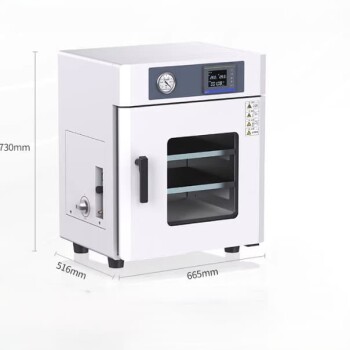
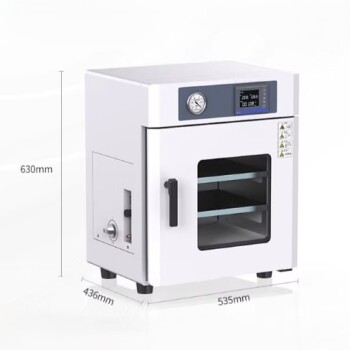
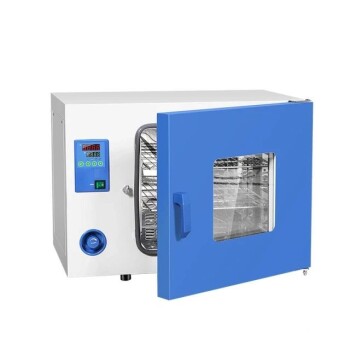
Vacuum drying equipment is the linchpin of accurate solvent compatibility testing for sulfide solid electrolytes because it decouples solvent removal from thermal stress. By significantly reducing ambient pressure, this equipment allows solvents to evaporate completely at much lower temperatures—typically around 60°C—ensuring the heat-sensitive electrolyte materials remain chemically intact during the drying phase.

Core Insight: The integrity of your compatibility data depends entirely on the drying process. Vacuum drying prevents false negatives by ensuring that any degradation observed in analysis is caused by the solvent itself, not by the heat used to remove it.

The Mechanism of Preservation

Lowering the Boiling Point

The fundamental advantage of vacuum drying is thermodynamic. By creating a vacuum environment, the equipment lowers the boiling point of solvents. This allows for rapid evaporation without requiring the high temperatures that would be necessary at standard atmospheric pressure.

Preventing Thermal Decomposition

Sulfide solid electrolytes are notoriously heat-sensitive. Subjecting them to standard drying temperatures can cause the material structure to break down. Vacuum drying allows you to maintain a safe temperature ceiling (e.g., 60°C), effectively removing the solvent while keeping the electrolyte below its thermal decomposition threshold.

Ensuring Analytical Accuracy

Eliminating Solvent Residue

For accurate testing, the solvent must be completely removed after the exposure period. Any residual solvent can trigger ongoing side reactions or obscure data during analysis. Vacuum drying ensures the total removal of polar solvents, such as ethanol or methanol, leaving behind only the solid-state material.

Validating Crystal Structure

The ultimate goal of compatibility testing is often verified through X-ray diffraction (XRD) to check for structural changes. If the drying process alters the crystal structure due to heat, the XRD results become invalid. Vacuum drying preserves the original purity and crystallography of the material, ensuring that the XRD data reflects only the chemical impact of the solvent.

Understanding the Trade-offs

Process Speed vs. Material Safety

While high-heat drying is faster, it is destructive for sulfides. Vacuum drying requires a balance; it is faster than ambient air drying but may take longer than high-heat methods. However, in this context, speed must always be sacrificed for material stability.

Equipment Complexity

Unlike simple ovens, vacuum drying requires precise control over pressure levels. If the vacuum is insufficient, the boiling point will not drop enough to allow for safe low-temperature drying, potentially risking the sample.

Making the Right Choice for Your Goal

To ensure your research yields valid, reproducible results, align your drying parameters with your specific analytical needs.

  • If your primary focus is Structural Integrity (XRD): Prioritize maintaining a high vacuum level to keep drying temperatures strictly below the known decomposition threshold of your specific sulfide compound.
  • If your primary focus is Solvent Interaction Analysis: Ensure the drying time is sufficient to remove all trace solvents, preventing liquid residues from creating "phantom" incompatibility signals.

By strictly controlling the thermal and pressure environment, you transform drying from a risky processing step into a controlled variable that guarantees data confidence.

Summary Table:

Feature High-Heat Drying Vacuum Drying Benefit to Sulfide Testing
Temperature High (Destructive) Low (Typically 60°C) Prevents thermal decomposition
Mechanism Standard Evaporation Lowered Boiling Point Protects heat-sensitive materials
Solvent Removal Fast but risky Thorough and safe Eliminates residues & side reactions
Data Accuracy Potential False Negatives High Integrity Validates true solvent compatibility

Maximize Your Material Research Accuracy with KINTEK

Don't let thermal stress compromise your solid-state battery research. KINTEK provides high-precision laboratory solutions tailored for sensitive material synthesis, including advanced vacuum drying ovens, high-temperature reactors, and crushing systems. Whether you are validating sulfide electrolyte compatibility or optimizing electrode performance, our comprehensive range of battery research tools and ceramic consumables ensures your experimental data remains pure and reproducible.

Contact our technical experts today to equip your lab with the precision and durability KINTEK is known for worldwide.

Related Products

People Also Ask

Related Products

Laboratory Scientific Electric Heating Blast Drying Oven

Laboratory Scientific Electric Heating Blast Drying Oven

The desktop fast autoclave sterilizer is a compact and reliable device used for rapid sterilization of medical, pharmaceutical, and research items.

Benchtop Laboratory Freeze Dryer for Lab Use

Benchtop Laboratory Freeze Dryer for Lab Use

Premium benchtop laboratory freeze dryer for lyophilization, preserving samples with ≤ -60°C cooling. Ideal for pharmaceuticals & research.

Small Vacuum Heat Treat and Tungsten Wire Sintering Furnace

Small Vacuum Heat Treat and Tungsten Wire Sintering Furnace

The small vacuum tungsten wire sintering furnace is a compact experimental vacuum furnace specially designed for universities and scientific research institutes. The furnace features a CNC welded shell and vacuum piping to ensure leak-free operation. Quick-connect electrical connections facilitate relocation and debugging, and the standard electrical control cabinet is safe and convenient to operate.

Vacuum Heat Treat and Pressure Sintering Furnace for High Temperature Applications

Vacuum Heat Treat and Pressure Sintering Furnace for High Temperature Applications

Vacuum pressure sintering furnaces are designed for high temperature hot pressing applications in metal and ceramic sintering. Its advanced features ensure precise temperature control, reliable pressure maintenance, and a robust design for seamless operation.

High Pressure Laboratory Vacuum Tube Furnace Quartz Tubular Furnace

High Pressure Laboratory Vacuum Tube Furnace Quartz Tubular Furnace

KT-PTF High Pressure Tube Furnace: Compact split tube furnace with strong positive pressure resistance. Working temp up to 1100°C and pressure up to 15Mpa. Also works under controller atmosphere or high vacuum.

High Temperature Muffle Oven Furnace for Laboratory Debinding and Pre Sintering

High Temperature Muffle Oven Furnace for Laboratory Debinding and Pre Sintering

KT-MD High temperature debinding and pre-sintering furnace for ceramic materials with various molding processes. Ideal for electronic components such as MLCC and NFC.

Vertical Laboratory Tube Furnace

Vertical Laboratory Tube Furnace

Elevate your experiments with our Vertical Tube Furnace. Versatile design allows for operation under various environments and heat treatment applications. Order now for precise results!

Vertical High Temperature Graphite Vacuum Graphitization Furnace

Vertical High Temperature Graphite Vacuum Graphitization Furnace

Vertical high temperature graphitization furnace for carbonization and graphitization of carbon materials up to 3100℃.Suitable for shaped graphitization of carbon fiber filaments and other materials sintered in a carbon environment.Applications in metallurgy, electronics, and aerospace for producing high-quality graphite products like electrodes and crucibles.

1200℃ Muffle Furnace Oven for Laboratory

1200℃ Muffle Furnace Oven for Laboratory

Upgrade your lab with our 1200℃ Muffle Furnace. Achieve fast, precise heating with Japan alumina fibers and Molybdenum coils. Features TFT touch screen controller for easy programming and data analysis. Order now!

Dental Porcelain Zirconia Sintering Ceramic Furnace Chairside with Transformer

Dental Porcelain Zirconia Sintering Ceramic Furnace Chairside with Transformer

Experience top-notch sintering with Chairside Sintering Furnace with Transformer. Easy to operate, noise-free pallet, and automatic temperature calibration. Order now!

Circulating Water Vacuum Pump for Laboratory and Industrial Use

Circulating Water Vacuum Pump for Laboratory and Industrial Use

Efficient circulating water vacuum pump for labs - oil-free, corrosion-resistant, quiet operation. Multiple models available. Get yours now!

Stainless Steel Quick Release Vacuum Chain Three-Section Clamp

Stainless Steel Quick Release Vacuum Chain Three-Section Clamp

Discover our stainless steel quick release clamp vacuum clamp, Ideal for high vacuum applications, Strong connections, reliable sealing, Easy installation, and durable design.

Laboratory Ball Mill Jar Mill with Metal Alloy Grinding Jar and Balls

Laboratory Ball Mill Jar Mill with Metal Alloy Grinding Jar and Balls

Grind and mill with ease using metal alloy grinding jars with balls. Choose from 304/316L stainless steel or tungsten carbide and optional liner materials. Compatible with various mills and features optional functions.

Shaking Incubators for Diverse Laboratory Applications

Shaking Incubators for Diverse Laboratory Applications

Precision lab shaking incubators for cell culture & research. Quiet, reliable, customizable. Get expert advice today!

Custom PTFE Teflon Parts Manufacturer for Culture Dish and Evaporation Dish

Custom PTFE Teflon Parts Manufacturer for Culture Dish and Evaporation Dish

The PTFE culture dish evaporating dish is a versatile laboratory tool known for its chemical resistance and high-temperature stability. PTFE, a fluoropolymer, offers exceptional non-stick properties and durability, making it ideal for various applications in research and industry, including filtration, pyrolysis, and membrane technology.

Vibratory Sieve Shaker Machine Dry Three-Dimensional Vibrating Sieve

Vibratory Sieve Shaker Machine Dry Three-Dimensional Vibrating Sieve

The KT-V200 product focuses on solving common sieving tasks in the laboratory. It is suitable for sieving 20g-3kg dry samples.

Lab Blown Film Extrusion Three Layer Co-Extrusion Film Blowing Machine

Lab Blown Film Extrusion Three Layer Co-Extrusion Film Blowing Machine

Lab blown film extrusion is mainly used to detect the feasibility of film blowing of polymer materials and the colloid condition in the materials, as well as the dispersion of colored dispersions, controlled mixtures, and extrudates;

Evaporation Crucible for Organic Matter

Evaporation Crucible for Organic Matter

An evaporation crucible for organic matter, referred to as an evaporation crucible, is a container for evaporating organic solvents in a laboratory environment.

Laboratory manual slicer

Laboratory manual slicer

Manual microtome is a high-precision cutting device designed for laboratories, industry and medical fields. It is suitable for the preparation of thin slices of various materials such as paraffin samples, biological tissues, battery materials, food, etc.


Leave Your Message