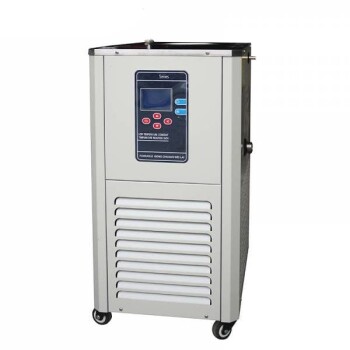
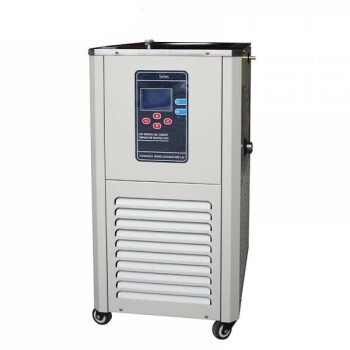
A laboratory-grade batch reactor establishes a strictly controlled synthesis environment defined by three specific experimental conditions: continuous magnetic stirring, an inert nitrogen atmosphere, and precise temperature regulation capable of heating reactants from room temperature up to 285 °C. These conditions are engineered to facilitate thermal decomposition while maintaining rigorous homogeneity throughout the mixture.
The reactor's primary function is not just heating, but preventing performance degradation. by creating a stable, oxidation-free environment, it ensures silver nanoparticles grow uniformly on the TiO2 substrate, directly unlocking the material's full antibacterial and photocatalytic potential.
Anatomy of the Controlled Environment
Precise Thermal Regulation
The reactor utilizes a specific heating range, taking reactants from room temperature (RT) up to 285 °C. This broad thermal window is critical for initiating and maintaining the thermal decomposition necessary for synthesis.
Inert Atmospheric Protection
To ensure chemical purity, the synthesis occurs strictly under a nitrogen atmosphere. This displaces oxygen, preventing the unwanted oxidation of the silver (Ag) component during the heating phase.
Mechanical Homogeneity
The system employs magnetic stirring throughout the process. This is not merely for mixing; it is a thermal safety mechanism that ensures heat is distributed evenly across the solution.
Impact on Ag-TiO2 Heterostructure Quality
Prevention of Localized Defects
Without constant agitation, "hot spots" can form within the reactor. The batch reactor's stirring mechanism prevents this local overheating, which is a primary cause of structural inconsistencies in nanomaterials.
Synergistic Growth
The controlled environment facilitates the uniform growth of silver nanoparticles onto the titanium dioxide (TiO2) substrate. This structural uniformity is required to create the active sites responsible for the material's enhanced performance.
Understanding the Trade-offs
Thermal Upper Limits
While the system is precise, it is strictly limited to a maximum temperature of 285 °C. This setup is unsuitable for precursors or ceramic transitions that require calcination temperatures exceeding this threshold.
Dependency on Mechanical Consistency
The quality of the final product is heavily dependent on the reliability of the magnetic stirring. Any interruption in agitation poses an immediate risk of local overheating, which can irreversibly degrade the catalytic performance of the batch.
Making the Right Choice for Your Goal
When configuring your synthesis parameters, prioritize the condition that aligns with your specific material requirements:
- If your primary focus is Structural Uniformity: Prioritize the calibration of the magnetic stirring speed to eliminate thermal gradients and prevent local overheating.
- If your primary focus is Chemical Purity: Ensure the nitrogen atmosphere is robust and leak-free to completely negate the risk of silver oxidation.
- If your primary focus is Activation: Utilize the full range of the temperature control to reach the optimal point of thermal decomposition without exceeding the 285 °C limit.
Success in synthesizing Ag-TiO2 heterostructures relies on balancing thermal energy with mechanical stability to foster synergistic growth.
Summary Table:
| Condition | Parameter/Range | Primary Function |
|---|---|---|
| Temperature Control | RT to 285 °C | Facilitates precise thermal decomposition and activation |
| Atmosphere | Inert Nitrogen ($N_2$) | Prevents silver oxidation and ensures chemical purity |
| Agitation | Magnetic Stirring | Ensures thermal homogeneity and prevents localized hot spots |
| Reactor Type | Lab-grade Batch | Provides a strictly controlled, closed synthesis environment |
Elevate Your Nanomaterial Synthesis with KINTEK
Precise control is the difference between a high-performance heterostructure and a degraded batch. KINTEK specializes in advanced laboratory solutions designed for rigorous research, offering everything from high-precision batch reactors and autoclaves to specialized crushing and milling systems.
Whether you are developing antibacterial Ag-TiO2 surfaces or pioneering new photocatalytic materials, our equipment ensures the chemical purity and structural uniformity your project demands. Explore our comprehensive portfolio of high-temperature reactors, vacuum systems, and essential lab consumables today.
Contact KINTEK for a Professional Consultation
References
- Francesca Fierro, María Sarno. Multifunctional leather finishing vs. applications, through the addition of well-dispersed flower-like nanoparticles. DOI: 10.1038/s41598-024-51775-4
This article is also based on technical information from Kintek Solution Knowledge Base .
Related Products
- Customizable Laboratory High Temperature High Pressure Reactors for Diverse Scientific Applications
- Stainless High Pressure Autoclave Reactor Laboratory Pressure Reactor
- High Pressure Laboratory Autoclave Reactor for Hydrothermal Synthesis
- Mini SS High Pressure Autoclave Reactor for Laboratory Use
- Customizable High Pressure Reactors for Advanced Scientific and Industrial Applications
People Also Ask
- How do high-pressure and high-temperature reactors ensure the effective treatment of lignocellulosic wastewater in WAO?
- What equipment is required for high-pressure high-temperature reactions? Master Extreme Chemistry Safely
- How do you control high pressure in a reactor? A Guide to Safe & Stable Operation
- Why is argon better than nitrogen for inert atmosphere? Ensure Absolute Reactivity & Stability
- How does initial oxygen pressure affect the wet oxidation of pharmaceutical sludge? Master Your Oxidation Depth