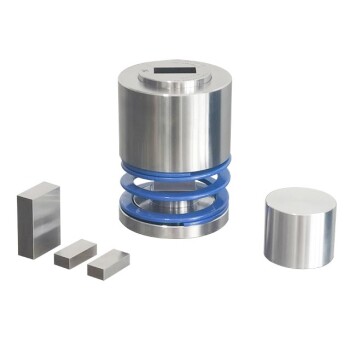
High-pressure reactors provide specific, controlled atmospheres containing ozone or nitric acid vapors to study chemical corrosion. This setup allows researchers to subject cross-linked epoxy resins to elevated pressures, effectively simulating the aggressive chemical environment created by electrical partial discharges.
By replicating the active by-products of electrical discharges under pressure, these reactors enable the accelerated observation of specific oxidation processes. This provides critical data on the long-term chemical resistance of insulation materials in harsh operational environments.
Simulating Harsh Operational Environments
Creating Controlled Chemical Atmospheres
The primary function of these reactors is to generate a specific, controlled chemical erosion environment. Instead of relying on ambient conditions, the reactor is filled with atmospheres rich in active impurities like ozone or nitric acid vapors.
Replicating Partial Discharge By-products
These chemical conditions are not arbitrary; they are designed to mimic real-world stressors. The presence of ozone and nitric acid simulates the active by-products generated during electrical partial discharges in high-voltage equipment.
Pressurization for Accelerated Testing
The use of high pressure is critical for the simulation. By applying pressure, the reactor intensifies the interaction between the vapors and the epoxy, allowing for a more rigorous assessment of the material's durability than standard atmospheric testing would permit.
Analyzing the Degradation Mechanism
Tracking the Oxidation Process
The experimental conditions provided by these reactors allow researchers to observe specific chemical changes at the molecular level. Specifically, they enable the monitoring of the hydroxyl-to-carbonyl oxidation process.
Assessing Material Resistance
Understanding this oxidation mechanism is the key to evaluating material longevity. By observing how the cross-linked epoxy resins react to these forced oxidation effects, engineers can determine the insulation material's overall chemical resistance.
Understanding the Limitations
Isolation of Chemical Factors
While these reactors are excellent for studying chemical corrosion, it is important to note that they isolate chemical erosion from other factors.
In a real-world partial discharge event, materials face thermal and mechanical stresses alongside chemical attack. Therefore, data derived from these reactors represents the material's chemical resilience specifically, rather than its total multi-physics durability.
Making the Right Choice for Your Goal
To effectively utilize high-pressure reactors for epoxy testing, align your experimental focus with your specific engineering requirements:
- If your primary focus is Understanding Degradation Mechanisms: Concentrate on monitoring the conversion rate of hydroxyl groups to carbonyl groups to identify the exact pathway of material failure.
- If your primary focus is Material Selection: Use the reactor to compare different cross-linked epoxy formulations to identify which specific blend offers the highest resistance to ozone and nitric acid vapors.
These experimental conditions provide a definitive window into the chemical stability of your insulation materials, ensuring they can withstand the invisible but destructive forces of electrical partial discharges.
Summary Table:
| Feature | Experimental Condition Details |
|---|---|
| Atmosphere Composition | Rich in active impurities (Ozone $O_3$ or Nitric Acid $HNO_3$ vapors) |
| Pressure Levels | Elevated pressures to accelerate chemical interaction and erosion |
| Simulation Target | By-products of electrical partial discharges in high-voltage equipment |
| Key Metric | Hydroxyl-to-carbonyl oxidation rate in cross-linked epoxy resins |
| Primary Goal | Isolation and assessment of chemical resilience vs. thermal/mechanical stress |
Elevate Your Material Research with KINTEK Precision
Are you looking to simulate the harshest operational environments with accuracy? KINTEK specializes in advanced laboratory solutions designed for rigorous material testing. Our industry-leading high-temperature high-pressure reactors and autoclaves provide the precise controlled atmospheres and pressure stability required to study chemical corrosion and degradation mechanisms in epoxy resins and insulation materials.
Whether you are focusing on high-voltage equipment durability or selecting the most resilient cross-linked formulations, KINTEK offers the comprehensive tools you need—from crushing and milling systems to specialized high-temperature furnaces and essential consumables like ceramics and crucibles.
Ready to accelerate your oxidation studies and ensure material longevity?
Contact KINTEK experts today to find the perfect reactor for your lab!
References
- Wei-Feng Sun, Zhong Chen. A Reactive Molecular Dynamics Study on Crosslinked Epoxy Resin Decomposition under High Electric Field and Thermal Aging Conditions. DOI: 10.3390/polym15030765
This article is also based on technical information from Kintek Solution Knowledge Base .
Related Products
- Customizable Laboratory High Temperature High Pressure Reactors for Diverse Scientific Applications
- Customizable High Pressure Reactors for Advanced Scientific and Industrial Applications
- Stainless High Pressure Autoclave Reactor Laboratory Pressure Reactor
- Mini SS High Pressure Autoclave Reactor for Laboratory Use
- High Pressure Laboratory Autoclave Reactor for Hydrothermal Synthesis
People Also Ask
- How do high-pressure and high-temperature reactors ensure the effective treatment of lignocellulosic wastewater in WAO?
- What equipment is required for high-pressure high-temperature reactions? Master Extreme Chemistry Safely
- How do you control high pressure in a reactor? A Guide to Safe & Stable Operation
- How does initial oxygen pressure affect the wet oxidation of pharmaceutical sludge? Master Your Oxidation Depth
- Why is argon better than nitrogen for inert atmosphere? Ensure Absolute Reactivity & Stability