Knowledge What factors are considered when choosing Glassy Carbon or Alumina crucibles? Optimize Molten Salt Corrosion Studies
Author avatar

Tech Team · Kintek Solution

Updated 14 hours ago

What factors are considered when choosing Glassy Carbon or Alumina crucibles? Optimize Molten Salt Corrosion Studies


The selection of Glassy Carbon or Alumina crucibles hinges primarily on chemical inertness relative to the specific molten salt composition. These materials are chosen to prevent the container from leaching impurities into the experiment, ensuring that observed corrosion is caused solely by the salt-alloy interaction rather than contamination from the crucible itself.

Core Takeaway To obtain valid corrosion data, the crucible must be "invisible" to the chemical process. The priority is establishing a high-purity setup where the container exhibits total thermal and chemical stability, preventing external metal ion interference from skewing results regarding elemental precipitation or spallation.

The Imperative of Chemical Inertness

Preventing Experimental Contamination

The primary factor driving the choice of crucible material is the prevention of leaching. Molten salts, particularly chlorides above 973 K (700°C), are highly chemically aggressive.

If a crucible reacts with the salt, it introduces impurities into the molten environment. Glassy Carbon and Alumina are selected because they resist this degradation, maintaining a pure environment for the duration of the test.

Isolating Corrosion Variables

The goal of these experiments is to measure how alloys (like stainless steel or nickel-based alloys) degrade. To accurately attribute corrosion phenomena—such as spallation or elemental precipitation—to the salt, the baseline environment must be stable.

High-purity crucibles ensure that any changes observed in the alloy are the result of the specific salt chemistry, not a reaction with the container wall.

Matching Material to Salt Environment

Glassy Carbon for Aggressive Chlorides

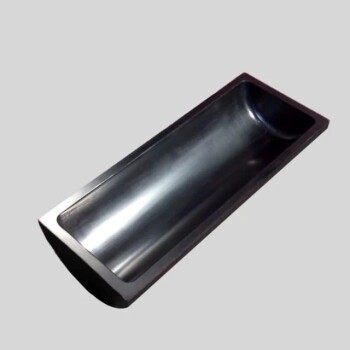
Glassy Carbon is frequently chosen for molten chloride environments, such as those operating at 700°C. Its vitreous structure offers exceptional resistance to chemical attack in these aggressive mediums.

This material is ideal when the experiment demands a container that will not react with either the molten salt or the alloy samples suspended within it.

Alumina for Versatile Stability

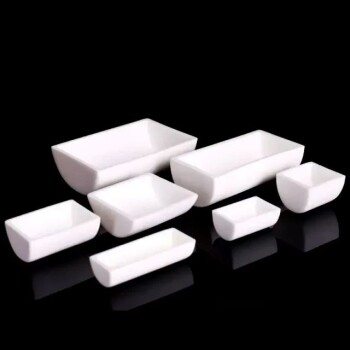
High-purity Alumina is utilized for its dual capability in both chloride and nitrate environments. It demonstrates robust stability in molten chloride salts above 973 K.

Additionally, Alumina is the standard choice for molten nitrate salts (such as Solar Salt mixtures) at temperatures up to 600°C, where it effectively prevents the introduction of impurities into the solution.

Understanding the Trade-offs

The Risk of Data Corruption

The most significant trade-off in crucible selection is not mechanical failure, but data invalidation. Using a crucible with insufficient inertness leads to "external metal ion interference."

This interference changes the chemical potential of the salt, rendering long-term corrosion data regarding the alloy's lifespan scientifically useless.

Thermal thresholds

While both materials are thermally stable, they must be matched to the operating temperature. Glassy Carbon and Alumina are validated for high-heat scenarios (up to and exceeding 973 K), but exceeding the specific thermal limits of the chosen grade can induce physical failure or increased reactivity.

Making the Right Choice for Your Goal

To ensure the validity of your corrosion data, align your crucible choice with your specific chemical environment:

  • If your primary focus is Molten Chloride Salts: Select Glassy Carbon or Alumina to withstand temperatures above 973 K and prevent chloride-induced leaching.
  • If your primary focus is Molten Nitrate Salts: Select High-purity Alumina, which is proven to remain inert in nitrate mixtures like Solar Salt up to 600°C.

Ultimately, the correct crucible is one that allows you to study the alloy and the salt as if the container were not there at all.

Summary Table:

Factor Glassy Carbon High-Purity Alumina
Primary Salt Compatibility Aggressive Chlorides Chlorides & Nitrates (Solar Salt)
Max Operating Temp (Salt) Typically >700°C (973 K) Up to 600°C (Nitrates) / >700°C (Chlorides)
Key Advantage Superior resistance to chemical attack Versatile stability across salt types
Main Goal Zero metal ion leaching Prevention of external impurities
Corrosion Focus High-temperature chloride stability Long-term data validity

Secure the Integrity of Your Corrosion Research with KINTEK

Don't let crucible contamination compromise your experimental results. KINTEK specializes in high-performance laboratory equipment and consumables designed for the most demanding environments. Whether you require Glassy Carbon for aggressive chlorides or high-purity Alumina for nitrate stability, we provide the precision-engineered solutions you need.

Our extensive portfolio includes:

  • High-Temperature Crucibles: Glassy Carbon, Alumina, and Ceramics.
  • Advanced Systems: High-temperature furnaces (muffle, vacuum, CVD), crushing and milling systems, and hydraulic presses.
  • Research Tools: High-temperature high-pressure reactors, autoclaves, and specialized electrolytic cells.

Ensure your data is "invisible" to the container and focused entirely on your alloy's performance. Contact KINTEK today for expert guidance and a tailored quote to elevate your laboratory's efficiency!

References

  1. Daniel K. Schreiber, S.J. McCormack. Materials properties characterization in the most extreme environments. DOI: 10.1557/s43577-022-00441-z

This article is also based on technical information from Kintek Solution Knowledge Base .

Related Products

People Also Ask

Related Products

Engineering Advanced Fine Ceramics Alumina Crucibles (Al2O3) for Thermal Analysis TGA DTA

Engineering Advanced Fine Ceramics Alumina Crucibles (Al2O3) for Thermal Analysis TGA DTA

TGA/DTA thermal analysis vessels are made of aluminum oxide (corundum or aluminum oxide). It can withstand high temperature and is suitable for analyzing materials that require high temperature testing.

Alumina Al2O3 Ceramic Crucible Semicircle Boat with Lid for Engineering Advanced Fine Ceramics

Alumina Al2O3 Ceramic Crucible Semicircle Boat with Lid for Engineering Advanced Fine Ceramics

Crucibles are containers widely used for melting and processing various materials, and semicircular boat-shaped crucibles are suitable for special smelting and processing requirements. Their types and uses vary by material and shape.

Engineering Advanced Fine Ceramics Alumina Al2O3 Crucible With Lid Cylindrical Laboratory Crucible

Engineering Advanced Fine Ceramics Alumina Al2O3 Crucible With Lid Cylindrical Laboratory Crucible

Cylindrical Crucibles Cylindrical crucibles are one of the most common crucible shapes, suitable for melting and processing a wide variety of materials, and are easy to handle and clean.

Arc-Shaped Alumina Ceramic Crucible High Temperature Resistant for Engineering Advanced Fine Ceramics

Arc-Shaped Alumina Ceramic Crucible High Temperature Resistant for Engineering Advanced Fine Ceramics

In the journey of scientific exploration and industrial production, every detail is crucial. Our arc-shaped alumina ceramic crucibles, with their excellent high temperature resistance and stable chemical properties, have become a powerful assistant in laboratories and industrial fields. They are made of high-purity alumina materials and manufactured through precision processes to ensure excellent performance in extreme environments.

Engineering Advanced Fine Alumina Al2O3 Ceramic Crucible for Laboratory Muffle Furnace

Engineering Advanced Fine Alumina Al2O3 Ceramic Crucible for Laboratory Muffle Furnace

Alumina ceramic crucibles are used in some materials and metal melting tools, and flat-bottomed crucibles are suitable for melting and processing larger batches of materials with better stability and uniformity.

Custom Machined and Molded PTFE Teflon Parts Manufacturer with PTFE Crucible and Lid

Custom Machined and Molded PTFE Teflon Parts Manufacturer with PTFE Crucible and Lid

PTFE crucibles, made from pure Teflon, offer chemical inertness and resistance from -196°C to 280°C, ensuring compatibility with a wide range of temperatures and chemicals. These crucibles feature machine-finished surfaces for easy cleaning and prevention of contamination, making them ideal for precise laboratory applications.

Electron Beam Evaporation Coating Tungsten Crucible and Molybdenum Crucible for High Temperature Applications

Electron Beam Evaporation Coating Tungsten Crucible and Molybdenum Crucible for High Temperature Applications

Tungsten and molybdenum crucibles are commonly used in electron beam evaporation processes due to their excellent thermal and mechanical properties.

Evaporation Crucible for Organic Matter

Evaporation Crucible for Organic Matter

An evaporation crucible for organic matter, referred to as an evaporation crucible, is a container for evaporating organic solvents in a laboratory environment.

Electron Beam Evaporation Coating Gold Plating Tungsten Molybdenum Crucible for Evaporation

Electron Beam Evaporation Coating Gold Plating Tungsten Molybdenum Crucible for Evaporation

These crucibles act as containers for the gold material evaporated by the electron evaporation beam while precisely directing the electron beam for precise deposition.

Electron Beam Evaporation Coating Oxygen-Free Copper Crucible and Evaporation Boat

Electron Beam Evaporation Coating Oxygen-Free Copper Crucible and Evaporation Boat

Electron Beam Evaporation Coating Oxygen-Free Copper Crucible enables precise co-deposition of various materials. Its controlled temperature and water-cooled design ensure pure and efficient thin film deposition.

Desktop Fast High Pressure Laboratory Autoclave Sterilizer 16L 24L for Lab Use

Desktop Fast High Pressure Laboratory Autoclave Sterilizer 16L 24L for Lab Use

The desktop fast steam sterilizer is a compact and reliable device used for rapid sterilization of medical, pharmaceutical, and research items.

Laboratory High Pressure Horizontal Autoclave Steam Sterilizer for Lab Use

Laboratory High Pressure Horizontal Autoclave Steam Sterilizer for Lab Use

The horizontal autoclave steam sterilizer adopts the gravity displacement method to remove the cold air in the inner chamber, so that the inner steam and cold air content is less, and the sterilization is more reliable.

Boron Nitride (BN) Crucible for Phosphorous Powder Sintered

Boron Nitride (BN) Crucible for Phosphorous Powder Sintered

Phosphorus powder sintered boron nitride (BN) crucible has a smooth surface, dense, pollution-free and long service life.

Electron Beam Evaporation Coating Conductive Boron Nitride Crucible BN Crucible

Electron Beam Evaporation Coating Conductive Boron Nitride Crucible BN Crucible

High-purity and smooth conductive boron nitride crucible for electron beam evaporation coating, with high temperature and thermal cycling performance.

Desktop Fast Laboratory Autoclave Sterilizer 35L 50L 90L for Lab Use

Desktop Fast Laboratory Autoclave Sterilizer 35L 50L 90L for Lab Use

The desktop fast steam sterilizer is a compact and reliable device used for rapid sterilization of medical, pharmaceutical, and research items. It efficiently sterilizes surgical instruments, glassware, medicines, and resistant materials, making it suitable for various applications.

Shaking Incubators for Diverse Laboratory Applications

Shaking Incubators for Diverse Laboratory Applications

Precision lab shaking incubators for cell culture & research. Quiet, reliable, customizable. Get expert advice today!

Engineering Advanced Fine Alumina (Al₂O₃) Ceramic Positioning Pin Straight Bevel for Precision Applications

Engineering Advanced Fine Alumina (Al₂O₃) Ceramic Positioning Pin Straight Bevel for Precision Applications

Alumina ceramic positioning pin has the characteristics of high hardness, wear resistance and high temperature resistance.

Custom PTFE Teflon Parts Manufacturer F4 Conical Flask Triangular Flask 50 100 250ml

Custom PTFE Teflon Parts Manufacturer F4 Conical Flask Triangular Flask 50 100 250ml

The PTFE triangular flask, also known as a Teflon reagent bottle, is a robust, chemical-resistant alternative to traditional glass bottles, suitable for handling both acids and alkalis. These bottles are unbreakable, lightweight, and feature a leak-proof screw cap, making them ideal for laboratory use.

Laboratory Sterilizer Lab Autoclave Pulsating Vacuum Desktop Steam Sterilizer

Laboratory Sterilizer Lab Autoclave Pulsating Vacuum Desktop Steam Sterilizer

The pulsating vacuum desktop steam sterilizer is a compact and reliable device used for rapid sterilization of medical, pharmaceutical, and research items.

Molybdenum Disilicide (MoSi2) Thermal Elements Electric Furnace Heating Element

Molybdenum Disilicide (MoSi2) Thermal Elements Electric Furnace Heating Element

Discover the power of Molybdenum Disilicide (MoSi2) Heating Element for high-temperature resistance. Unique oxidation resistance with stable resistance value. Learn more about its benefits now!


Leave Your Message