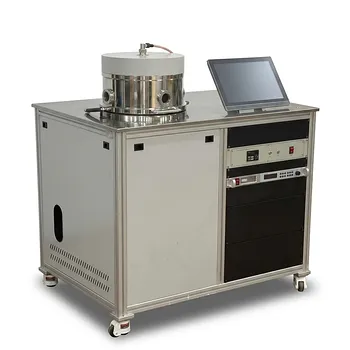
The horizontal tubular quartz reactor functions as the primary containment vessel that creates the thermal and chemical conditions necessary for thin film deposition. In a hot-wall CVD system, this component withstands temperatures between 923 K and 1073 K while maintaining a high-integrity vacuum seal, allowing precursor vapors to undergo pyrolysis and deposit materials such as Silicon Carbide (SiC) onto a substrate.
The reactor serves as the critical interface between the external heating elements and the internal chemical process, providing a pure, inert environment where volatile gases can be reliably transformed into solid coatings.
The Critical Role of the Quartz Material
Thermal Endurance
The reactor is engineered to operate within a specific high-temperature window, typically ranging from 923 K to 1073 K.
Chemical Inertness
Quartz is selected because it does not react with the volatile precursor compounds used in the process. This inertness ensures that the chemical reactions remain pure, preventing contaminants from the reactor walls from interfering with the deposition of high-purity coatings like SiC.
Vacuum Integrity
The tubular design allows the system to maintain a strict vacuum environment. This is essential for controlling the flow of gases and ensuring the chemical reactions occur at the correct pressure without atmospheric contamination.
Implications of the "Hot-Wall" Configuration
Simultaneous Heating
In a hot-wall configuration, the heaters are positioned around the reactor walls, heating both the quartz tube and the substrate inside.
Uniform Pyrolysis
Because the entire heating zone is brought to temperature, the precursor vapors passing through the tube are subjected to uniform thermal energy. This facilitates proper pyrolysis (thermal decomposition), ensuring the gas-to-solid transformation happens consistently across the zone.
Understanding the Trade-offs
Unintended Deposition
A specific characteristic of hot-wall systems is that the reactor walls are heated alongside the substrate.
Maintenance Requirements
Because the walls are hot, film deposition occurs on the interior of the quartz tube as well as on the target substrate. This requires regular cleaning or replacement of the quartz tube to prevent particulate contamination or flaking in subsequent runs.
Operational Considerations for Your Process
If you are evaluating the use of a horizontal tubular quartz reactor for your CVD process, consider the following factors:
- If your primary focus is high-purity coatings: The chemical inertness of quartz is your greatest asset, as it prevents the vessel from altering the stoichiometry of materials like SiC.
- If your primary focus is process consistency: The hot-wall design ensures excellent thermal uniformity, but you must account for the accumulation of material on the tube walls over time.
By balancing thermal stability with chemical isolation, the quartz reactor acts as the reliable workhorse of the high-temperature CVD process.
Summary Table:
| Feature | Function in Hot-Wall CVD System |
|---|---|
| Containment | Acts as a high-integrity vacuum vessel for precursor gas flow. |
| Thermal Range | Operates reliably between 923 K and 1073 K for uniform pyrolysis. |
| Material Purity | Inert quartz prevents chemical contamination of thin films like SiC. |
| Wall Condition | Facilitates simultaneous heating of walls and substrates for thermal stability. |
| Maintenance | Requires periodic cleaning due to characteristic wall deposition in hot-wall setups. |
Optimize Your CVD Deposition with KINTEK Precision
Achieving high-purity coatings like Silicon Carbide requires equipment that can withstand rigorous thermal and chemical demands. KINTEK specializes in advanced laboratory solutions, providing high-performance high-temperature tube furnaces, CVD systems, and PECVD reactors specifically designed for research and industrial scalability.
Our extensive portfolio supports every stage of material science, from crushing and milling systems to high-pressure reactors and precision ceramic consumables. Whether you are refining battery research or developing advanced thin films, our team ensures your lab is equipped with durable, high-integrity quartz reactors and heating solutions.
Ready to elevate your material synthesis? Contact KINTEK today to discuss your system requirements and find the perfect configuration for your research goals.
References
- Guilhaume Boisselier, F. Schuster. SiC coatings grown by liquid injection chemical vapor deposition using single source metal-organic precursors. DOI: 10.1016/j.surfcoat.2012.10.070
This article is also based on technical information from Kintek Solution Knowledge Base .
Related Products
- Customer Made Versatile CVD Tube Furnace Chemical Vapor Deposition Chamber System Equipment
- Cylindrical Resonator MPCVD Machine System Reactor for Microwave Plasma Chemical Vapor Deposition and Lab Diamond Growth
- Microwave Plasma Chemical Vapor Deposition MPCVD Machine System Reactor for Lab and Diamond Growth
- Multi Heating Zones CVD Tube Furnace Machine Chemical Vapor Deposition Chamber System Equipment
- Laboratory Rapid Thermal Processing (RTP) Quartz Tube Furnace
People Also Ask
- What is a CVD tube furnace? A Complete Guide to Thin-Film Deposition
- What is the function of a high-temperature CVD tube furnace in 3D graphene foam prep? Master 3D Nanomaterial Growth
- What are the technical advantages of using a CVD tube furnace? Optimize Silicon-Carbon Battery Anodes
- How does a CVD tube furnace inhibit the sintering of silver supports? Boost Membrane Durability and Performance
- What is the function of a tube furnace in CVD SiC synthesis? Achieving Ultra-Pure Silicon Carbide Powders