High-purity nitrogen functions primarily as an inert carrier gas during the Aerosol-Assisted Chemical Vapor Deposition (AACVD) of titanium dioxide thin films. Its dual purpose is to physically transport atomized aerosol droplets to the reaction chamber at a controlled rate and to chemically shield the precursor from reacting before it reaches the target substrate.
High-purity nitrogen is the control variable that ensures the precursor arrives at the substrate chemically intact and spatially uniform. It separates the mechanics of transport from the chemistry of deposition, preventing premature reactions that would compromise film quality.
The Mechanics of Aerosol Transport
Deliberate Delivery
In AACVD, the precursor material is atomized into a fine mist or aerosol. High-purity nitrogen acts as the vehicle that sweeps these droplets out of the generation zone and into the reactor. Without this continuous carrier flow, the aerosol would not effectively reach the heated substrate surface where the deposition occurs.
Ensuring Uniformity
The gas is not merely a push; it serves as a regulating force. By maintaining a constant flow rate (such as 1.5 L/min), the nitrogen ensures the precursor is delivered evenly across the substrate. This consistent supply is critical for achieving a uniform film thickness and avoiding structural irregularities.
Preserving Chemical Integrity
Creating an Inert Environment
The chemical precursors used for titanium dioxide are often highly reactive. High-purity nitrogen creates a non-reactive blanket around these precursors as they move through the system. This inert environment effectively isolates the chemistry of the aerosol from the surrounding atmosphere during transit.
Preventing Premature Oxidation
The critical reaction must occur only when the precursor contacts the heated substrate. Nitrogen prevents uncontrolled oxidation within the transport tubing. If oxygen were present during transport, the precursor could react inside the lines, leading to clogging or the deposition of unwanted particles rather than a clean, conformal thin film.
Understanding the Critical Dependencies
The Purity Requirement
The designation "high-purity" is not a suggestion; it is a functional requirement. If the nitrogen contains contaminants (such as moisture or trace oxygen), the inert protection fails. This leads to defects in the crystalline structure of the titanium dioxide or unintended chemical byproducts within the film.
Flow Rate Sensitivity
While nitrogen enables transport, the velocity of that transport dictates efficiency. Deviating from the optimal flow rate disrupts the thermodynamic balance at the substrate. A flow that is too erratic will result in uneven "patchy" coverage, regardless of how effective the chemical reaction itself might be.
Making the Right Choice for Your Goal
To optimize your AACVD process for titanium dioxide, consider the following based on your specific objectives:
- If your primary focus is film uniformity: Prioritize precision mass flow controllers to maintain a strictly constant nitrogen flow rate (e.g., 1.5 L/min) to eliminate thickness gradients.
- If your primary focus is chemical stoichiometry: Ensure the nitrogen source is certified high-purity to strictly prevent oxidation inside the delivery lines and preserve the precursor's intended composition.
By strictly controlling the carrier gas, you transition from simply moving chemicals to precision-engineering the deposition environment.
Summary Table:
| Function | Description | Impact on Film Quality |
|---|---|---|
| Inert Carrier Gas | Physically transports atomized droplets to the substrate. | Ensures consistent and efficient deposition. |
| Uniformity Control | Maintains constant flow rate (e.g., 1.5 L/min). | Eliminates thickness gradients and irregularities. |
| Chemical Shielding | Creates a non-reactive blanket around precursors. | Prevents premature oxidation and system clogging. |
| Purity Assurance | Eliminates trace moisture and oxygen contaminants. | Preserves crystalline structure and stoichiometry. |
Elevate Your Thin Film Deposition with KINTEK
Precision in AACVD requires more than just high-purity gas; it demands high-performance equipment. KINTEK specializes in advanced laboratory solutions, including state-of-the-art CVD and PECVD systems, high-precision mass flow controllers, and durable ceramic crucibles designed to withstand the most demanding thermal environments.
Whether you are refining titanium dioxide stoichiometry or scaling up battery research, our comprehensive range of high-temperature furnaces, hydraulic presses, and cooling solutions provides the reliability your research deserves. Optimize your laboratory workflow and ensure superior material purity—contact KINTEK today for a personalized consultation!
References
- Megan Taylor, Clara Piccirillo. Nanostructured titanium dioxide coatings prepared by Aerosol Assisted Chemical Vapour Deposition (AACVD). DOI: 10.1016/j.jphotochem.2020.112727
This article is also based on technical information from Kintek Solution Knowledge Base .
Related Products
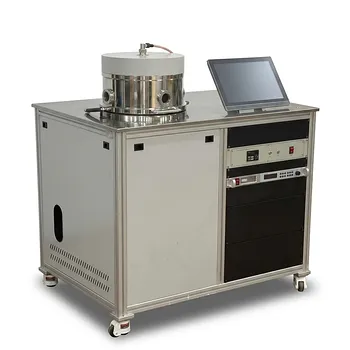
- RF PECVD System Radio Frequency Plasma-Enhanced Chemical Vapor Deposition RF PECVD
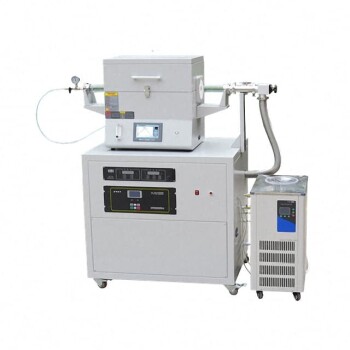
- Chemical Vapor Deposition CVD Equipment System Chamber Slide PECVD Tube Furnace with Liquid Gasifier PECVD Machine
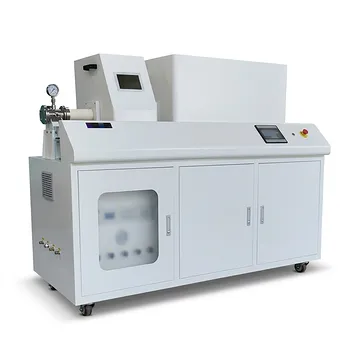
- Split Chamber CVD Tube Furnace with Vacuum Station Chemical Vapor Deposition System Equipment Machine
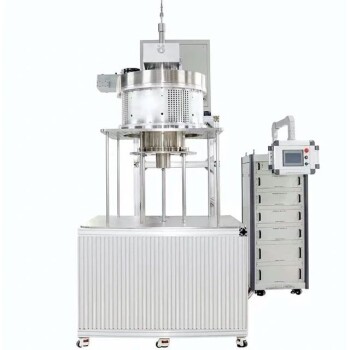
- HFCVD Machine System Equipment for Drawing Die Nano-Diamond Coating
- Multi Heating Zones CVD Tube Furnace Machine Chemical Vapor Deposition Chamber System Equipment
People Also Ask
- What is plasma enhanced chemical vapour deposition PECVD used for? Enable Low-Temp Thin Films for Electronics & Solar
- What is the role of RF-PECVD in VFG preparation? Mastering Vertical Growth and Surface Functionality
- What is an example of PECVD? RF-PECVD for High-Quality Thin Film Deposition
- What is plasma enhanced chemical Vapour deposition process used for fabrication of? A Guide to Low-Temperature Thin Films
- What is plasma CVD? Unlock Low-Temperature Thin Film Deposition for Sensitive Materials