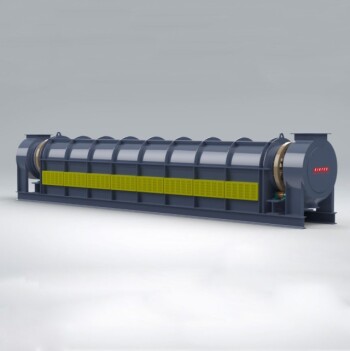
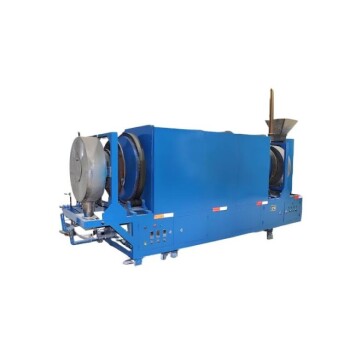
The primary advantage of multi-stage split tube furnaces in methane pyrolysis is their ability to establish a precise, uniform temperature field through independent control zones. By segmenting the heating elements, these furnaces can specifically compensate for the heat absorption that occurs as methane bubbles rise, ensuring the reactor maintains the critical temperatures required for optimal chemical conversion.
Core Takeaway: Methane pyrolysis is an endothermic process that naturally cools the reactor as it progresses. Multi-stage furnaces solve this by applying targeted heat to specific zones, maintaining the necessary >1100°C environment to guarantee high methane conversion efficiency and hydrogen purity.
Achieving Thermal Precision
Independent Zone Control
The defining feature of a "multi-stage" furnace is the division of the heating area into separate, independently controlled zones.
Unlike single-zone furnaces that apply a blanket temperature, this architecture allows operators to fine-tune the thermal profile along the entire length of the reactor tube.
Superior Temperature Uniformity
Tube furnaces are engineered to provide excellent temperature uniformity across the heated section.
This ensures that the methane gas experiences consistent thermal energy regardless of its position within the tube, eliminating cold spots that could stall the reaction.
Rapid Thermal Response
These furnaces are capable of executing rapid temperature changes.
This responsiveness allows the system to quickly adapt to fluctuations in process conditions or to accelerate heating and cooling cycles during testing phases.
Overcoming Reaction Challenges
Counteracting Heat Absorption
As methane bubbles rise through the reactor, the pyrolysis process absorbs significant amounts of heat (endothermic reaction).
In a standard furnace, this would cause a temperature drop near the top of the reactor. A multi-stage system compensates by increasing power to those specific upper zones to neutralize the heat loss.
Maintaining Critical Reaction Thresholds
Successful methane pyrolysis typically requires temperatures exceeding 1100°C.
The segmented control ensures that the reaction zone never dips below this threshold, preventing the formation of byproducts associated with incomplete pyrolysis.
Enhancing Output Quality
The stability provided by the segmented heating directly impacts the final product.
By keeping the temperature constant despite the cooling effect of the rising bubbles, the system maximizes methane conversion efficiency and ensures the purity of the produced hydrogen.
Understanding the Trade-offs
Operational Complexity
While multi-stage systems offer precision, they introduce higher complexity compared to single-zone alternatives.
Managing multiple independent controllers requires more sophisticated monitoring to ensure all zones work in harmony rather than fighting against each other.
Scale Limitations
Tube furnaces are generally most effective for processing small samples or lab-scale reactors.
While they offer rapid temperature changes and high precision, scaling this specific multi-stage tube architecture to massive industrial volumes can present challenges regarding uniform heat penetration into larger reactor diameters.
Making the Right Choice for Your Goal
To determine if a multi-stage split tube furnace is the correct solution for your application, consider your primary objectives:
- If your primary focus is Product Purity: Prioritize this furnace type to maintain the strict >1100°C profile required to eliminate incomplete conversion byproducts.
- If your primary focus is Process Stability: Use the multi-stage capability to specifically counter thermal gradients caused by the endothermic bubble rise.
The ability to dynamically balance heat load against chemical absorption makes this technology the standard for high-efficiency methane pyrolysis.
Summary Table:
| Feature | Single-Zone Furnace | Multi-Stage Split Tube Furnace | Benefit to Methane Pyrolysis |
|---|---|---|---|
| Temperature Control | Uniform blanket heating | Independent zonal control | Counteracts endothermic heat loss as bubbles rise |
| Thermal Uniformity | Moderate | Superior across tube length | Prevents cold spots and incomplete conversion |
| Response Time | Slower | Rapid heating/cooling | Adapts quickly to process fluctuations |
| Purity Control | Potential for byproducts | Optimized for >1100°C | Guarantees high methane conversion and H2 purity |
| Operational Goal | Simple batch heating | Precision thermal profiling | Maintains stable reaction thresholds for high-grade output |
Maximize Your Reactor Performance with KINTEK Precision
Don't let endothermic heat loss compromise your research outcomes. KINTEK specializes in advanced laboratory equipment, offering high-performance multi-stage split tube furnaces, rotary furnaces, and vacuum systems designed to maintain the rigorous thermal profiles required for methane pyrolysis and CVD processes.
Whether you are scaling battery research, optimizing hydrogen production, or developing advanced ceramics, our comprehensive range of high-temperature furnaces and laboratory-scale reactors ensures consistent, high-purity results. Our expert team is ready to help you select the ideal furnace configuration or milling system for your specific application.
Ready to elevate your lab's efficiency? Contact KINTEK today for a customized solution!
References
- Brandon José Leal Pérez, Fausto Gallucci. Methane pyrolysis in a molten gallium bubble column reactor for sustainable hydrogen production: Proof of concept & techno-economic assessment. DOI: 10.1016/j.ijhydene.2020.11.079
This article is also based on technical information from Kintek Solution Knowledge Base .
Related Products
- Rotary Tube Furnace Split Multi Heating Zone Rotating Tube Furnace
- Multi-zone Laboratory Tube Furnace
- Split Chamber CVD Tube Furnace with Vacuum Station Chemical Vapor Deposition System Equipment Machine
- 1200℃ Split Tube Furnace with Quartz Tube Laboratory Tubular Furnace
- Multi Heating Zones CVD Tube Furnace Machine Chemical Vapor Deposition Chamber System Equipment
People Also Ask
- What are the process advantages of using a rotary tube furnace for WS2 powder? Achieve Superior Material Crystallinity
- What are the advantages of using a rotary tube furnace for MoVOx catalysts? Elevate Uniformity and Crystallinity
- Why is a rotary tube furnace preferred over a fixed tube furnace for the carbonization of asphaltenes? Superior Quality
- Why is a rotary tube furnace recommended for the calcination stage of potassium vanadium oxide catalysts? Optimize Purity
- What is a rotary tube furnace? Achieve Superior Uniformity for Powders and Granules