Knowledge What is the difference between a single-stage and a two-stage rotary vane pump? Choosing the Right Vacuum Depth
Author avatar

Tech Team · Kintek Solution

Updated 4 days ago

What is the difference between a single-stage and a two-stage rotary vane pump? Choosing the Right Vacuum Depth


The fundamental difference lies in internal construction and vacuum depth capability. A single-stage pump utilizes a single rotor mechanism to exhaust gas directly, limiting its ultimate vacuum level. A two-stage pump connects the exhaust of the first rotor to the intake of a second rotor in series, enabling it to achieve a significantly lower ultimate vacuum and maintain higher volumetric flow rates at lower pressures.

Core Takeaway Ideally, the choice comes down to a specific pressure threshold: 1 Torr. If your application requires a rough vacuum above 1 Torr, a single-stage pump offers identical performance to a two-stage model for significantly less cost. However, for deep vacuum applications below 1 Torr, a two-stage design is mandatory.

The Mechanics of Vacuum Generation

How the Stages Connect

The defining feature of a two-stage pump is the series connection.

The gas is compressed by the first rotor and, rather than being expelled immediately, is fed into the intake of a second rotor.

The Impact on Pressure

This second stage acts as a "polisher."

By compressing the gas a second time, the pump can achieve a much lower ultimate vacuum—typically reaching levels around 0.001 Torr for oil-sealed units.

A single-stage pump lacks this secondary compression, limiting it to "rough" vacuum levels.

Flow Rate Efficiency

Vacuum pumps lose efficiency as pressure drops.

A two-stage design mitigates this efficiency loss, maintaining a higher volumetric flow rate even as the system approaches deep vacuum.

Selecting Based on Application

The Case for Single-Stage

Single-stage pumps are the standard for rough vacuum environments.

If your process operates where pressure does not need to drop below 1 Torr, a single-stage pump provides the exact same performance as a two-stage unit.

Because they are mechanically simpler, they are approximately 30% to 50% less expensive.

The Case for Two-Stage

Two-stage pumps are necessary for high-vacuum applications.

This includes laboratory settings and processes requiring deep vacuum levels that a single rotor simply cannot physically achieve.

They are generally heavier and more complex, but they provide the deep pressure pull required for sensitive operations.

Understanding the Trade-offs

Cost vs. Necessity

The biggest trade-off is financial efficiency versus vacuum capability.

Using a two-stage pump for a rough vacuum application (e.g., holding or clamping) is an unnecessary expense. You are paying a premium for a capability (deep vacuum) that you will never utilize.

Stage Count vs. Build Quality

Do not confuse "two-stage" with "heavy-duty."

A cheap two-stage pump may still suffer from poor build quality, using small threaded ports (e.g., 1/2 inch NPT) that restrict flow.

High-end industrial pumps, regardless of stage count, utilize large-diameter flanges (like NW25 or NW40) and are constructed from materials designed for continuous operation and rebuilding.

Making the Right Choice for Your Goal

To select the correct pump, look strictly at your required vacuum level and budget:

  • If your primary focus is rough vacuum (>1 Torr): Choose a single-stage pump to save 30-50% on cost without sacrificing any relevant performance.
  • If your primary focus is deep vacuum (<1 Torr): Choose a two-stage pump, as a single-stage unit will physically fail to reach the necessary pressure levels.
  • If your primary focus is heavy-duty reliability: Ignore the stage count initially and look for industrial-grade flanges (NW25/40) and rebuildable designs rather than disposable, low-cost models.

Match the pump's stage count to your pressure requirements to ensure you are paying only for the performance you actually need.

Summary Table:

Feature Single-Stage Pump Two-Stage Pump
Ultimate Vacuum Rough Vacuum (> 1 Torr) Deep Vacuum (< 0.001 Torr)
Internal Design Single rotor mechanism Two rotors connected in series
Efficiency Drops as pressure decreases Maintains high flow at low pressure
Cost 30% - 50% Less expensive Higher premium for deep vacuum
Best Use Case Holding, clamping, roughing Lab research, high-vacuum processes

Elevate Your Lab Efficiency with KINTEK Precision Vacuum Solutions

Choosing the right vacuum pump is critical for the success of your research and industrial processes. At KINTEK, we specialize in providing high-performance laboratory equipment, including industrial-grade rotary vane pumps designed for durability and precision.

Whether you need a cost-effective single-stage pump for rough vacuum applications or a high-end two-stage unit for deep vacuum performance, our experts are here to help you select the perfect match for your needs. Beyond vacuum solutions, we offer a comprehensive range of high-temperature furnaces (muffle, vacuum, CVD), crushing and milling systems, and high-pressure reactors to support your entire workflow.

Ready to optimize your vacuum system? Contact KINTEK today for expert guidance and tailored quotes!

Related Products

People Also Ask

Related Products

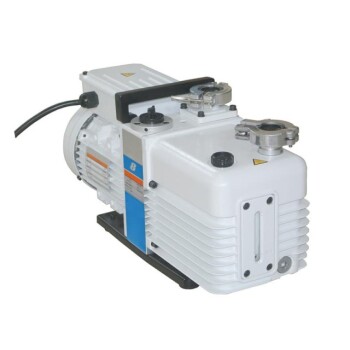
Laboratory Rotary Vane Vacuum Pump for Lab Use

Laboratory Rotary Vane Vacuum Pump for Lab Use

Experience high vacuum pumping speed and stability with our UL-certified Rotary Vane Vacuum Pump. Two-shift gas ballast valve and dual oil protection. Easy maintenance and repair.

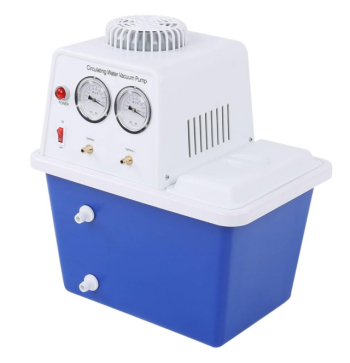
Circulating Water Vacuum Pump for Laboratory and Industrial Use

Circulating Water Vacuum Pump for Laboratory and Industrial Use

Efficient circulating water vacuum pump for labs - oil-free, corrosion-resistant, quiet operation. Multiple models available. Get yours now!

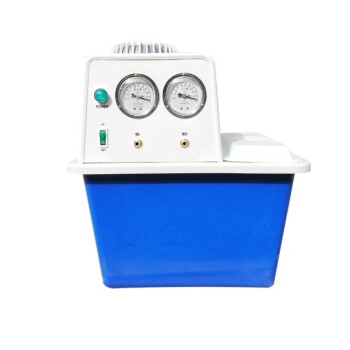
Laboratory Benchtop Water Circulating Vacuum Pump for Lab Use

Laboratory Benchtop Water Circulating Vacuum Pump for Lab Use

Need a water circulating vacuum pump for your lab or small-scale industry? Our Benchtop Water Circulating Vacuum Pump is perfect for evaporation, distillation, crystallization, and more.

Oil Free Diaphragm Vacuum Pump for Laboratory and Industrial Use

Oil Free Diaphragm Vacuum Pump for Laboratory and Industrial Use

Oil-free diaphragm vacuum pump for labs: clean, reliable, chemical-resistant. Ideal for filtration, SPE, and rotary evaporation. Maintenance-free operation.

Electric Heated Hydraulic Vacuum Heat Press for Lab

Electric Heated Hydraulic Vacuum Heat Press for Lab

The Electric Vacuum Heat Press is a specialized heat press equipment that operates in a vacuum environment, utilizing advanced infrared heating and precise temperature control for high quality, rugged and reliable performance.

Vacuum Hot Press Furnace Machine for Lamination and Heating

Vacuum Hot Press Furnace Machine for Lamination and Heating

Experience clean and precise lamination with Vacuum Lamination Press. Perfect for wafer bonding, thin-film transformations, and LCP lamination. Order now!

Heated Hydraulic Press Machine with Heated Plates for Vacuum Box Laboratory Hot Press

Heated Hydraulic Press Machine with Heated Plates for Vacuum Box Laboratory Hot Press

Enhance your lab's precision with our lab press for vacuum box. Press pills and powders with ease and precision in a vacuum environment, reducing oxidation and improving consistency. Compact and easy to use with a digital pressure gauge.

Graphite Vacuum Continuous Graphitization Furnace

Graphite Vacuum Continuous Graphitization Furnace

High-temperature graphitization furnace is a professional equipment for graphitization treatment of carbon materials. It is a key equipment for the production of high-quality graphite products. It has high temperature, high efficiency and uniform heating. It is suitable for various high-temperature treatments and graphitization treatments. It is widely used in metallurgy, electronics, aerospace, etc. industry.

Vacuum Heat Treat Sintering Brazing Furnace

Vacuum Heat Treat Sintering Brazing Furnace

A vacuum brazing furnace is a type of industrial furnace used for brazing, a metalworking process that joins two pieces of metal using a filler metal that melts at a lower temperature than the base metals. Vacuum brazing furnaces are typically used for high-quality applications where a strong, clean joint is required.

Laboratory Hydraulic Press Lab Pellet Press for Button Battery

Laboratory Hydraulic Press Lab Pellet Press for Button Battery

Efficiently prepare samples with our 2T Button Battery Press. Ideal for material research labs and small-scale production. Small footprint, lightweight, and vacuum-compatible.

Vacuum Bellows for Efficient Connection and Stable Vacuum in High-Performance Systems

Vacuum Bellows for Efficient Connection and Stable Vacuum in High-Performance Systems

Discover high-quality vacuum bellows for stable vacuum in high-performance systems. Made from 304 and 316 stainless steel, these bellows ensure efficient connections and excellent sealing. Ideal for

Vacuum Cold Trap Chiller Indirect Cold Trap Chiller

Vacuum Cold Trap Chiller Indirect Cold Trap Chiller

Boost vacuum system efficiency and prolong pump life with our Indirect Cold Trap. Built-in chilling system with no need for fluid or dry ice. Compact design and easy to use.

30T 40T Split Automatic Heated Hydraulic Press Machine with Heated Plates for Laboratory Hot Press

30T 40T Split Automatic Heated Hydraulic Press Machine with Heated Plates for Laboratory Hot Press

Discover our split automatic heated lab press 30T/40T for precise sample preparation in material research, pharmacy, ceramics, and electronics industries. With a small footprint and heating up to 300°C, it's perfect for processing under vacuum environment.

Vacuum Cold Mounting Machine for Sample Preparation

Vacuum Cold Mounting Machine for Sample Preparation

Vacuum Cold Mounting Machine for precise sample prep. Handles porous, fragile materials with -0.08MPa vacuum. Ideal for electronics, metallurgy, and failure analysis.

Small Vacuum Heat Treat and Tungsten Wire Sintering Furnace

Small Vacuum Heat Treat and Tungsten Wire Sintering Furnace

The small vacuum tungsten wire sintering furnace is a compact experimental vacuum furnace specially designed for universities and scientific research institutes. The furnace features a CNC welded shell and vacuum piping to ensure leak-free operation. Quick-connect electrical connections facilitate relocation and debugging, and the standard electrical control cabinet is safe and convenient to operate.

Vacuum Heat Treat Furnace with Ceramic Fiber Liner

Vacuum Heat Treat Furnace with Ceramic Fiber Liner

Vacuum furnace with polycrystalline ceramic fiber insulation liner for excellent heat insulation and uniform temperature field. Choose from 1200℃ or 1700℃ max. working temperature with high vacuum performance and precise temperature control.

1200℃ Controlled Atmosphere Furnace Nitrogen Inert Atmosphere Furnace

1200℃ Controlled Atmosphere Furnace Nitrogen Inert Atmosphere Furnace

Discover our KT-12A Pro Controlled atmosphere furnace - high precision, heavy duty vacuum chamber, versatile smart touch screen controller, and excellent temperature uniformity up to 1200C. Ideal for both laboratory and industrial application.

Graphite Vacuum Furnace High Thermal Conductivity Film Graphitization Furnace

Graphite Vacuum Furnace High Thermal Conductivity Film Graphitization Furnace

The high thermal conductivity film graphitization furnace has uniform temperature, low energy consumption and can operate continuously.

Graphite Vacuum Furnace Bottom Discharge Graphitization Furnace for Carbon Materials

Graphite Vacuum Furnace Bottom Discharge Graphitization Furnace for Carbon Materials

Bottom-out graphitization furnace for carbon materials, ultra-high temperature furnace up to 3100°C, suitable for graphitization and sintering of carbon rods and carbon blocks. Vertical design, bottom discharging, convenient feeding and discharging, high temperature uniformity, low energy consumption, good stability, hydraulic lifting system, convenient loading and unloading.

304 316 Stainless Steel Vacuum Ball Valve Stop Valve for High Vacuum Systems

304 316 Stainless Steel Vacuum Ball Valve Stop Valve for High Vacuum Systems

Discover 304/316 stainless steel vacuum ball valves, Ideal for high vacuum systems, Ensure precise control and durability. Explore now!


Leave Your Message