The fundamental difference between a two-plate and a three-plate mould lies in their construction and how they handle the plastic runner system. A two-plate mould has a single parting line and leaves the runner attached to the final part, requiring manual removal. In contrast, a three-plate mould uses two parting lines to create an additional space, which allows the runner system to be automatically separated from the part as the mould opens.
The choice between these mould types is a strategic decision that balances upfront tooling cost against production efficiency and part design freedom. A two-plate mould prioritizes simplicity and cost, while a three-plate mould prioritizes automation and superior gating options.
Deconstructing the Two-Plate Mould
A two-plate mould is the most common and straightforward type of injection mould construction. Its operation is defined by its simple, robust design.
Core Anatomy
The mould consists of two primary halves, or plates: the cavity plate (A-side) and the core plate (B-side).
When these plates separate, they create a single opening plane known as the parting line. The moulded part and the runner system are both ejected together from this single opening.
The Gating and Runner System
In a two-plate design, the runner—the channel that carries molten plastic to the part cavity—sits on the parting line.
This construction restricts the gate location (the entry point of the plastic into the cavity) to the perimeter of the part. After ejection, the runner remains attached and must be manually or mechanically removed in a secondary operation.
Ideal Use Cases
Two-plate moulds are best suited for parts where an edge gate is cosmetically and functionally acceptable. They are the default choice when minimizing initial tooling cost is the highest priority.
Understanding the Three-Plate Mould
The three-plate mould introduces a layer of complexity to solve the inherent limitations of the two-plate design, specifically regarding gating and automation.
Core Anatomy
As the name implies, this design adds a third plate, often called the runner plate or floating plate. This creates two distinct parting lines.
The mould opens in a specific sequence: the first opening separates the runner from the part, and the second opening allows the part itself to be ejected.
The Floating Runner System
The additional plate allows the runner system to exist on a separate plane from the part's parting line.
This is the key advantage, as it enables pin-point gating. The plastic can be injected directly into the top, center, or virtually any point on the part's surface, which is impossible with a standard two-plate mould.
Automatic Degating
As the mould opens, the runner is held back by the runner plate while the part moves with the core. This action shears the small pin-point gate, automatically separating the runner from the part.
This automatic degating eliminates the need for a secondary removal process, streamlining production significantly.
Key Trade-offs to Consider
Choosing the right mould is not about which is "better," but which is appropriate for the job. The decision involves clear trade-offs between cost, quality, and speed.
Design Flexibility and Part Quality
A three-plate mould offers vastly superior design flexibility due to its versatile gating options. Pin-point gating can improve the part's structural integrity, reduce cosmetic blemishes, and is often essential for complex geometries.
A two-plate mould is limited to the part's edge, which can affect aesthetics and the flow of plastic into the mould.
Cost and Complexity
The two-plate mould is the undisputed winner in this category. Its simpler design makes it faster and cheaper to manufacture, and easier to maintain over its operational life.
The three-plate mould is more complex, requiring more precise engineering and materials. This results in higher upfront tooling costs and potentially more complex maintenance.
Cycle Time and Automation
While a two-plate mould has a simpler mechanical action, the overall production cycle is often longer due to the required manual runner removal.
The three-plate mould's automatic degating feature makes it ideal for fully automated, high-volume production, leading to a faster and more consistent floor-to-floor cycle time.
Material Waste
The runner system in a three-plate mould is typically longer and more complex than in a two-plate design. This results in more plastic waste per cycle, which can be a significant cost factor, especially with expensive engineering resins.
Making the Right Choice for Your Project
Your project requirements will point directly to the optimal mould design. Consider your primary goal to make a clear decision.
- If your primary focus is minimizing upfront cost and tooling simplicity: A two-plate mould is the clear and logical choice for parts where edge gating is acceptable.
- If your primary focus is achieving optimal part quality and cosmetic appearance: A three-plate mould is necessary for the design freedom of pin-point gating.
- If your primary focus is high-volume, automated production: The automatic degating of a three-plate mould provides the efficiency required to minimize cycle time and labor costs.
Ultimately, understanding the core function of each plate system empowers you to control your manufacturing outcome from the very beginning.
Summary Table:
| Feature | Two-Plate Mould | Three-Plate Mould |
|---|---|---|
| Parting Lines | 1 | 2 |
| Runner Removal | Manual | Automatic |
| Gate Location | Part Edge | Anywhere (Pin-Point) |
| Tooling Cost | Lower | Higher |
| Ideal For | Cost-Sensitive Projects | High-Volume Automation |
Need Help Choosing the Right Mould for Your Project?
Understanding the difference between a two-plate and three-plate mould is the first step to optimizing your manufacturing process. The right choice balances cost, part quality, and production speed to meet your specific goals.
KINTEK specializes in precision lab equipment and consumables, serving the exacting needs of laboratories and production facilities. Whether you require robust two-plate simplicity or the advanced automation of a three-plate system, our expertise ensures you get the right solution for superior results.
Contact our experts today for a consultation and let us help you select the perfect mould design to enhance your lab's efficiency and output quality.
Visual Guide

Related Products
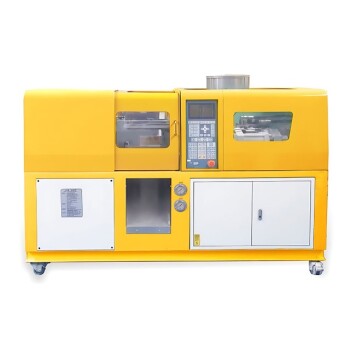
- Small Injection Molding Machine for Lab Use
- XRF Boric Acid Lab Powder Pellet Pressing Mold for Laboratory Use
- Lab Infrared Press Mold
- No Demolding Lab Infrared Press Mold for Laboratory Applications
- Ring Press Mold for Lab Applications
People Also Ask
- What are the 5 steps of injection molding? A Guide to Efficient, High-Quality Production
- What is short capacity of injection Moulding machine? Optimize Your Shot Size for Flawless Parts
- What machine makes molding? Injection Molding Machines for Mass Production
- What are the two common types of injection molding processes? Thermoplastic vs. Thermoset Explained
- What is the application of injection moulding machine? Powering Mass Production for Complex Parts