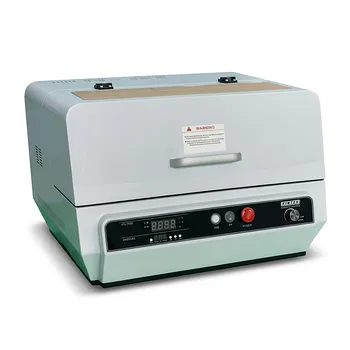
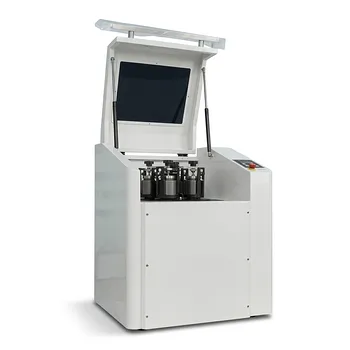
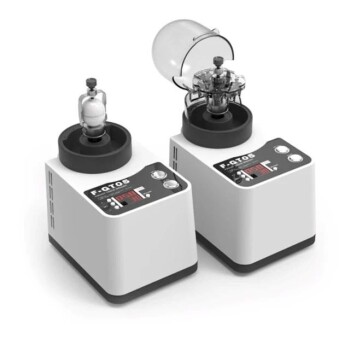
The ball mill functions as a critical mechanical activation tool in the synthesis of Lithium Aluminum Titanium Phosphate (LATP) solid electrolytes. It utilizes kinetic energy to simultaneously pulverize and blend raw powders—specifically lithium carbonate, titanium dioxide, ammonium dihydrogen phosphate, and aluminum oxide—into a highly reactive, uniform mixture.
Core Takeaway The ball mill does not merely mix ingredients; it refines them to the microscopic level to ensure chemical reactivity. By maximizing the contact area between particles, ball milling establishes the necessary foundation for forming a pure-phase, homogeneous LATP crystal structure during high-temperature sintering.
The Mechanisms of Precursor Preparation
High-Energy Mechanical Refining
The primary function of the ball mill is to apply impact and shear forces to the raw materials. As the grinding media collides with the powder, it physically breaks down coarse particles and disrupts their crystal lattice.
Breaking Down Agglomerates
Raw powders often stick together in clumps known as agglomerates. The ball milling process effectively shatters these clusters, ensuring that the individual components are free to interact. This is essential for creating a smooth, flowable precursor powder.
Microscopic Homogenization
Simple stirring is insufficient for solid-state reactions. Ball milling ensures a uniform distribution of components at the micron or even atomic scale. This uniformity prevents "hot spots" where one ingredient might be too concentrated, which would lead to impurities in the final ceramic.
Impact on Electrochemical Performance
Enhancing Reaction Activity
By reducing particle size, the ball mill significantly increases the specific surface area of the reactants. This increased surface energy makes the powders more reactive, allowing the solid-state reaction to proceed more efficiently when heat is applied.
Enabling Pure-Phase Formation
The ultimate goal of LATP synthesis is to achieve a specific crystal structure that conducts lithium ions. The deep mixing provided by the ball mill—typically over a duration of roughly six hours—is required to ensure that the final product is a pure-phase crystal rather than a mix of unwanted byproducts.
Influencing Final Density
The quality of the precursor powder directly dictates the quality of the final solid electrolyte. A well-milled, fine powder allows for tighter packing during the molding process, resulting in a denser ceramic pellet with higher ionic conductivity.
Understanding the Critical Dependencies
The Risk of Under-Milling
If the milling duration or speed is insufficient, the precursors will remain agglomerated. This leads to incomplete reactions during heating, resulting in a porous final product with poor conductivity.
The Role of Processing Parameters
Achieving the right result depends on optimizing variables such as rotational speed (e.g., 550 rpm) and time (e.g., 6 hours). These parameters must be tuned to provide enough energy to activate the materials without introducing excessive wear from the milling media.
Making the Right Choice for Your Goal
If your primary focus is Phase Purity: Prioritize longer milling durations to ensure the absolute homogenization of lithium, aluminum, titanium, and phosphate sources, preventing secondary phase formation.
If your primary focus is Ceramic Density: Focus on the refinement aspect of ball milling to minimize particle size, which will drive better compaction and sintering behavior in the final pellet.
The ball mill is not just a mixer; it is the architect of the material's potential, defining the upper limit of the electrolyte's performance before the furnace is even turned on.
Summary Table:
| Mechanism | Function in LATP Synthesis | Impact on Final Product |
|---|---|---|
| Mechanical Refining | Breaks down coarse particles and lattice | Increases reactivity for solid-state reactions |
| De-agglomeration | Shatters clusters and clumps | Ensures a smooth, flowable precursor powder |
| Microscopic Homogenization | Distributes Al, Ti, and P uniformly | Prevents impurities and ensures pure-phase crystals |
| Surface Area Increase | Maximizes contact between reactants | Drives higher ceramic density and conductivity |
Elevate Your Solid-State Battery Research with KINTEK
Precision in LATP synthesis begins with superior material processing. KINTEK specializes in high-performance laboratory equipment designed to meet the rigorous demands of battery research. From advanced crushing and milling systems that ensure perfect precursor homogenization to high-temperature muffle and vacuum furnaces for sintering pure-phase electrolytes, we provide the tools you need for electrochemical excellence.
Our comprehensive portfolio also includes hydraulic pellet presses, PTFE and ceramic consumables, and glovebox-ready equipment to safeguard your materials. Don't let processing inconsistencies limit your electrolyte's potential.
Contact KINTEK today to optimize your lab's workflow and achieve superior material performance!
Related Products
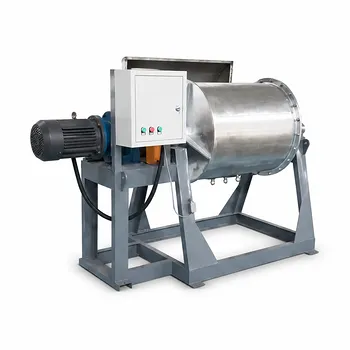
- Stainless Steel Laboratory Ball Mill for Dry Powder and Liquid with Ceramic Polyurethane Lining
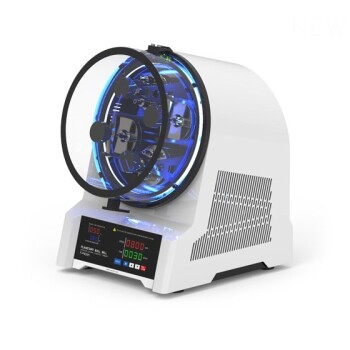
- High-Energy Omnidirectional Planetary Ball Mill Milling Machine for Laboratory
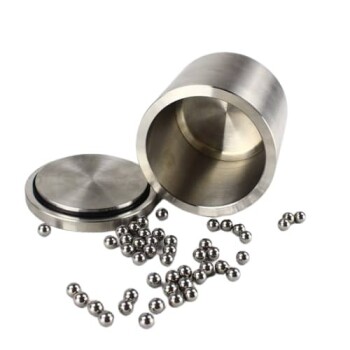
- Laboratory Ball Mill Jar Mill with Metal Alloy Grinding Jar and Balls
- High-Energy Omnidirectional Planetary Ball Mill Machine for Laboratory
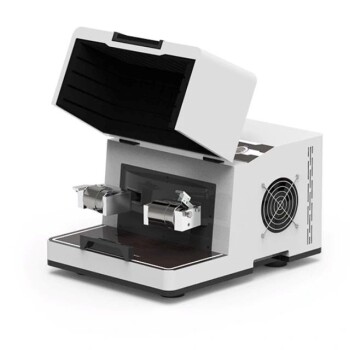
- Hybrid High Energy Vibratory Ball Mill for Lab Use
People Also Ask
- How do laboratory ball mills facilitate the mechanochemical synthesis of ZIF-8? Solvent-Free Synthesis Explained
- What is the primary function of a laboratory ball mill in the modification of sulfide-based solid electrolytes with LiPO2F2?
- How does a laboratory ball mill ensure the mixing quality of Mn3Zn0.8Sn0.2N and Ti? Achieve Perfect Homogeneity
- What is the function of a laboratory ball mill in the preparation of AMMCs? Optimize Dispersion & Grain Refinement
- In what way does a laboratory ball mill affect material properties when modifying PHBV/pulp fiber composites?